The Academy Awards are often seen as the final word on cinematic excellence, yet history frequently proves that the “Best Picture” winner isn’t always the film that endures. Over the decades, several movies have achieved legendary status, redefined genres, and captured the global imagination, only to lose the top prize to “safer” or more traditional choices. These upsets are rarely about a lack of quality in the winner, but rather a perceived failure by the Academy to recognize a film that was truly transformative for its time. From mid-century snubs to modern-day shocks, these are the ten films that many believe were truly robbed of the gold.
1. Saving Private Ryan (1999)
Steven Spielberg’s visceral World War II epic changed the visual language of war cinema forever, particularly with its harrowing 27-minute opening sequence on Omaha Beach. Despite sweeping the technical categories and Spielberg winning Best Director, the film famously lost Best Picture to the period rom-com Shakespeare in Love. Many analysts attribute this upset to an unprecedentedly aggressive marketing campaign by Miramax, which effectively pivoted the Academy’s attention toward a lighter, more traditional “Oscar-bait” narrative at the final hour.
2. Goodfellas (1991)
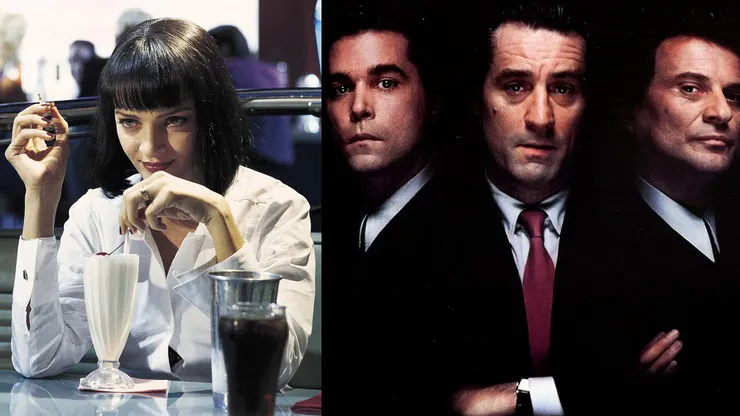
Martin Scorsese’s mob masterpiece is frequently cited as one of the greatest films ever made, known for its frenetic energy, innovative camerawork, and razor-sharp dialogue. However, the Academy opted for Kevin Costner’s sweeping Western Dances with Wolves, which fit the traditional mold of the “stately epic.” While Costner’s film was a massive success, the legacy of Goodfellas has only grown over time, with many film historians viewing its loss as a classic example of the Oscars favoring sentimentality over gritty, revolutionary filmmaking.
3. Brokeback Mountain (2006)
In what is widely considered the most controversial upset of the 21st century, Ang Lee’s groundbreaking queer Western was defeated by the ensemble drama Crash. Having won the Golden Globe, the BAFTA, and the DGA award, Brokeback Mountain was the clear frontrunner and a critical darling that shifted cultural conversations about masculinity. The shock of its loss was so profound that it became a catalyst for debates regarding the Academy’s internal biases and its occasional resistance to crowning socially progressive masterpieces.
4. Pulp Fiction (1995)
The 1995 Oscar race featured a showdown between the heartwarming nostalgia of Forrest Gump and the non-linear, hyper-stylized violence of Quentin Tarantino’s Pulp Fiction. While Forrest Gump was a box-office juggernaut that resonated with a wide demographic, Tarantino’s film fundamentally altered the trajectory of independent cinema and pop culture dialogue. Losing the top prize to a “safer” historical fable left many critics arguing that the Academy had missed a rare chance to honor a film that truly defined its era.
5. Citizen Kane (1942)
Orson Welles’ directorial debut is a staple at the top of “Greatest Movies of All Time” lists, yet it famously lost Best Picture to John Ford’s How Green Was My Valley. At the time, Welles was a brash Hollywood outsider whose thinly veiled portrayal of media mogul William Randolph Hearst led to a suppressive campaign against the film. While Ford’s drama remains a respected piece of work, it has largely been overshadowed by the technical and narrative innovations of Citizen Kane, which continues to be studied as the blueprint for modern cinema.
6. Raging Bull (1981)
Martin Scorsese faced another major “robbery” when his stark, black-and-white character study of boxer Jake LaMotta was passed over for Robert Redford’s Ordinary People. Though Redford’s directorial debut was a sensitive and well-crafted family drama, Scorsese’s work is now regarded as a visceral, operatic achievement in sound design and cinematography. This particular loss solidified the narrative of Scorsese being an Academy underdog—a streak that famously wouldn’t be broken for another 26 years until his win for The Departed.
7. The Social Network (2011)
David Fincher’s icy, rapid-fire examination of the founding of Facebook was hailed as the definitive film of the internet age, perfectly capturing a shifting global zeitgeist. Despite its critical dominance and Aaron Sorkin’s celebrated screenplay, the Academy chose the more comforting, traditional British period piece The King’s Speech. Critics often point to this as a moment where the Oscar voters favored a “safe” historical triumph over a challenging, contemporary work that accurately predicted the social complexities of the coming decade.
8. Singin’ in the Rain (1953)
Often called the greatest movie musical ever made, Singin’ in the Rain remarkably wasn’t even nominated for Best Picture at the 25th Academy Awards. The top prize that year went to Cecil B. DeMille’s circus epic The Greatest Show on Earth, a film that is now frequently ranked as one of the weakest winners in history. The complete exclusion of Gene Kelly’s masterpiece from the main category remains a baffling historical footnote, as the film’s joy and technical brilliance continue to enchant audiences nearly 75 years later.
9. Apocalypse Now (1980)
Francis Ford Coppola’s descent into the madness of the Vietnam War is an unparalleled achievement in atmosphere and grand-scale filmmaking. During a decade defined by gritty “New Hollywood” cinema, the film lost the Best Picture Oscar to the domestic divorce drama Kramer vs. Kramer. While the latter was a massive hit that captured a specific social shift in America, it lacked the sheer artistic ambition and enduring, soul-shattering power that has made Apocalypse Now a permanent pillar of world cinema.
10. La La Land (2017)
The 2017 ceremony provided the most literal “robbery” in history due to the infamous “Envelopegate” blunder. After Damien Chazelle’s vibrant musical was incorrectly announced as the winner and the producers had already begun their speeches, it was revealed that Moonlight was the actual victor. While Moonlight was a deeply deserving and historic winner, the chaotic nature of the correction forever linked the two films in a narrative of shared heartbreak and a “lost” moment of glory for the La La Land team.