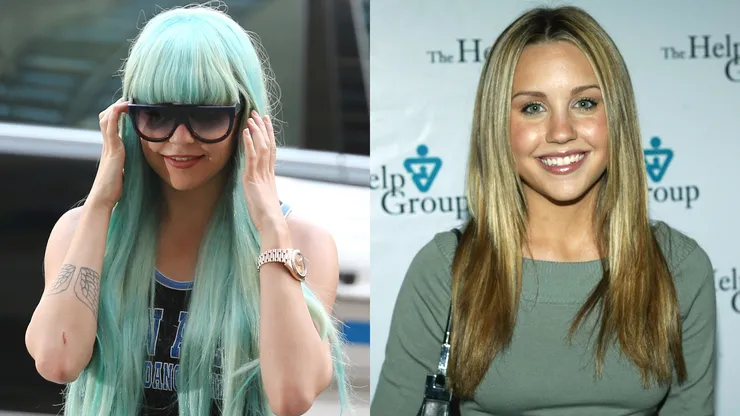
For a generation that grew up glued to Nickelodeon, Amanda Bynes wasn’t just another child star—she was the punchline, the heartbeat, the chaos behind some of the network’s most memorable sketches.
From the irreverent humor of The Amanda Show to her seamless transition into early-2000s teen comedies like She’s the Man, she built a career on razor-sharp comedic timing and an ability to command the screen with effortless charm.
But the arc of her story veered sharply off-script. A sudden retreat from acting in 2010 was followed by a series of highly publicized personal struggles, legal issues and mental health challenges that unfolded under an unforgiving spotlight.
The rise, fall and reinvention of Amanda Bynes
- 1986–1999: A child built for the spotlight
Born in Thousand Oaks, California, in 1986, Bynes entered entertainment before adolescence had fully formed. By the mid-’90s, she was already a standout on All That, a chaotic, fast-paced comedy playground that quietly introduced her to millions. Producers noticed something rare: timing that couldn’t be taught. That instinct would soon carry her beyond ensemble casts and into something far more defining.
- 1999–2006: The making of a teen comedy phenomenon
With The Amanda Show, she stopped being part of the joke and became its architect. The series turned her into one of Nickelodeon’s most recognizable faces, winning awards and shaping early-2000s humor.
A parallel evolution unfolded on What I Like About You, where she transitioned into a more traditional sitcom format. Film roles followed—Big Fat Liar and What a Girl Wants—cementing her as a bankable teen lead.
- 2006–2010: Hollywood peak, then a quiet fracture
By the late 2000s, Bynes was no longer a former child star—she was the moment. Performances in She’s the Man and Hairspray showcased a performer capable of anchoring both satire and ensemble musicals.
Even when projects faltered critically, her presence rarely did. The final act of this era arrived with Easy A—a supporting role that, in hindsight, feels like a curtain call. That same year, she stepped away from acting, abruptly and without a clear roadmap forward.
- 2010–2012: Withdrawal and early warning signs
The retreat from Hollywood didn’t translate into privacy. Instead, it marked the beginning of erratic public behavior and legal troubles. Arrests—including a DUI case—placed her name in headlines no longer tied to premieres.
Social media became both a stage and a signal, where unfiltered posts hinted at deeper instability. The narrative had shifted: from scripted comedy to something increasingly difficult to follow.
- 2013–2014: Collapse in public view
2013 became the year everything unraveled. Incidents stacked rapidly—legal issues, bizarre behavior, and a widely reported episode involving a fire in a stranger’s driveway.
A psychiatric hold followed, then a conservatorship led by her parents. Around the same time, she faced charges related to substance possession and erratic conduct. Public perception hardened, but behind it sat a more complex reality involving mental health struggles and substance abuse.
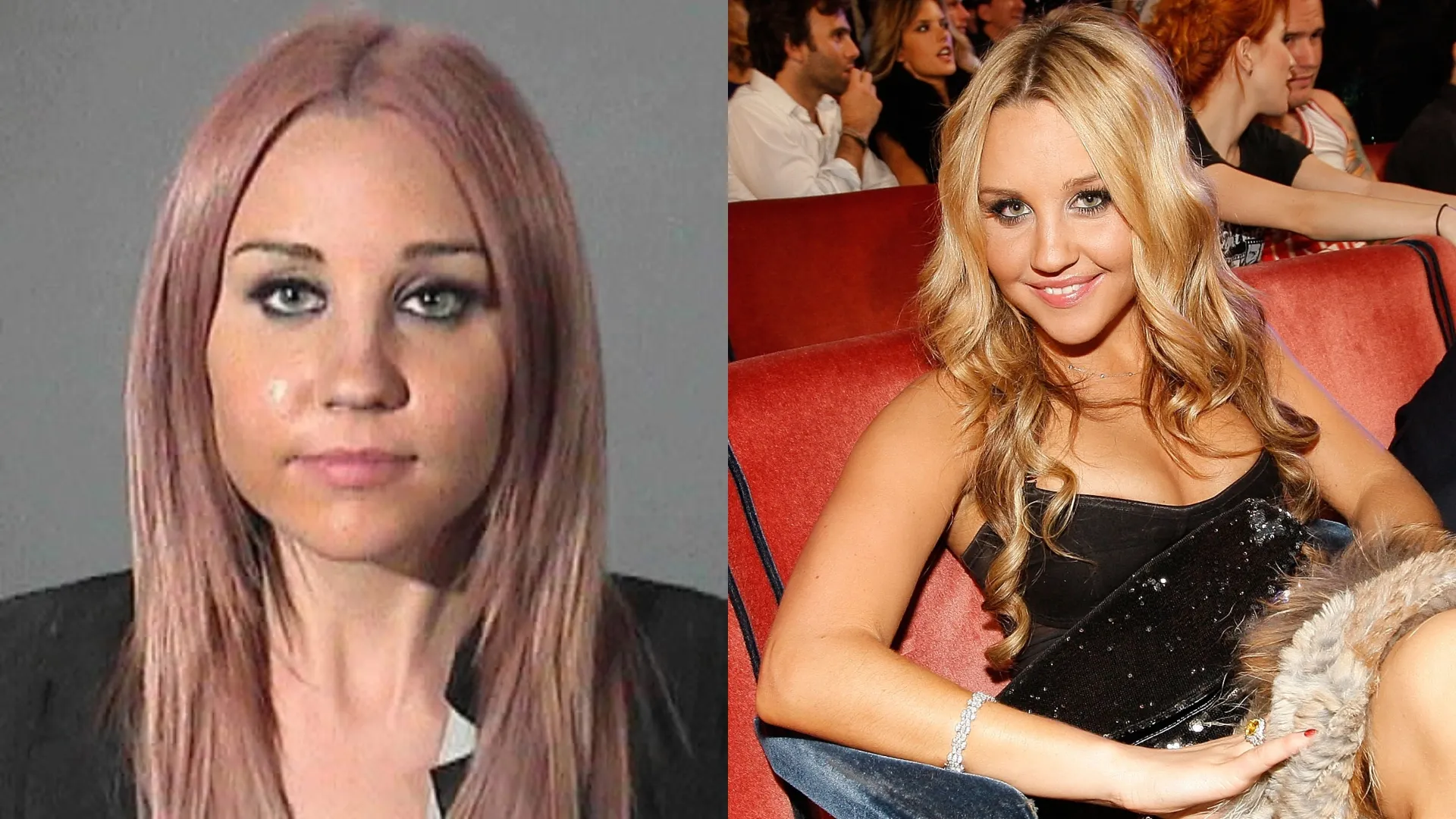
Amanda Bynes in 2012 and in 2009 (Source: Los Angeles County Sheriff’s Office via Getty Images — Christopher Polk/Getty Images)
- 2014–2018: Diagnosis, distance and reconstruction
The chaos gave way to structure. Bynes later revealed a diagnosis of bipolar disorder and acknowledged past substance misuse, including Adderall abuse during her career peak.
She enrolled at the Fashion Institute of Design & Merchandising, signaling a pivot away from acting toward design. By 2018, she described herself as sober and reflective, expressing regret over the public breakdown that had defined her earlier decade.
- 2019–2022: Education, control and legal independence
Graduation from fashion school marked a quieter milestone—one not accompanied by red carpets but by personal rebuilding. The conservatorship remained in place until 2022, when she petitioned to end it.
With her parents’ support, the court granted the request, restoring control over her life and finances after nearly a decade. The moment echoed broader cultural conversations about autonomy, especially in the wake of other high-profile conservatorship cases.
- 2023: A fragile return to the world
Freedom did not mean stability. In 2023, Bynes experienced multiple mental health crises, including psychiatric holds after episodes in Los Angeles. One incident involved her seeking help from a stranger before calling emergency services herself—an act that suggested awareness amid distress. A planned public comeback at a fan convention never materialized. Recovery, again, proved nonlinear.
- 2024–2026: Reinvention beyond fame
The most recent chapter resists easy categorization. Bynes stepped briefly into podcasting in 2023, only to abandon it after a single episode, choosing instead a more grounded path: pursuing a manicurist license and stable work.
She has also been open about depression, weight fluctuations, and cosmetic changes, documenting both setbacks and small victories publicly. In 2025, she joined OnlyFans—not as a return to spectacle, but as a controlled way to communicate directly with fans, explicitly rejecting explicit content.
Recent updates show a life still in motion: studying, experimenting with identity and navigating recovery in real time. The fame that once defined her now sits at the edges, no longer the center of gravity.