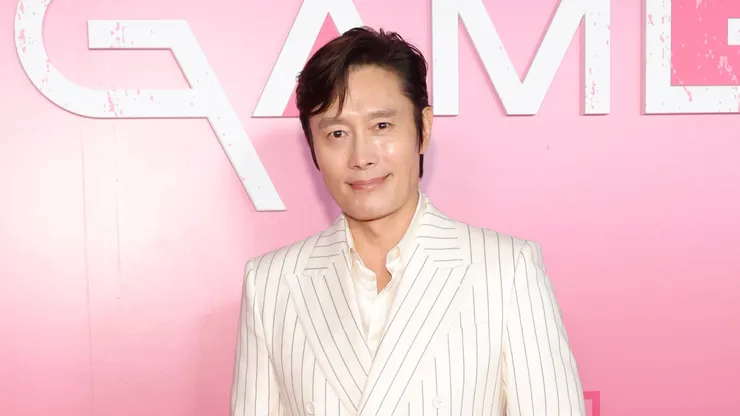
At 56, Lee Byung-hun is operating at a peak level of international reverence that most actors can only dream of. Coming off the massive, historic conclusion of Squid Game Season 3 last summer and his recent, critically adored Golden Globe nomination for Park Chan-wook’s black-comedy thriller No Other Choice, Lee has completely erased the borders between Eastern and Western entertainment. To celebrate his big day, we are breaking down the five powerhouse performances that define his legacy as a titan of the silver screen.
1. The Front Man (Hwang In-ho) in Squid Game (2021–2025)
For a vast portion of the Western world, Lee’s introduction was entirely faceless—yet his voice alone was enough to terrify millions. As Hwang In-ho, the enigmatic, jazz-loving Front Man running the deadly survival games, Lee weaponized pure posture and chilling vocal delivery for the majority of the first season.
When the mask finally dropped, it unlocked a complex, Shakespearean layer of tragedy. Across the highly anticipated second season (late 2024) and the definitive finality of Season 3 in June 2025, Lee transformed the character from a cold-blooded overseer into a deeply haunted, tragic figure caught between systemic loyalty and familial guilt, cementing his position at the absolute epicenter of modern pop culture.
2. Yoo Man-su in No Other Choice (2025) — The Award-Winning Rebirth
To understand Lee’s current 2026 status among the Hollywood elite, one must look at his spectacular cinematic team-up with legendary auteur Park Chan-wook. Premiering at the Venice Film Festival and dominating global theaters in late 2025, No Other Choice saw Lee play Yoo Man-su, a veteran paper mill worker who gets abruptly laid off after 25 years and launches a desperate, darkly hilarious campaign to literally assassinate his job competition.
The performance was a spectacular tour de force, perfectly blending tragic economic anxiety with pitch-black comedic violence. It earned Lee a historic Golden Globe nomination for Best Actor, proving his dramatic weight remains entirely unmatched.
3. Park Chang-yi (“The Bad”) in The Good, the Bad, the Weird (2008)
Long before he took over Netflix, Lee delivered what is widely considered one of the most stylish, unhinged villainous performances in Asian cinema history. In Kim Jee-woon’s spectacular Manchurian Western, Lee played The Bad, a slick, heavily eyeliner-wearing, and completely merciless bandit leader hunting down a buried treasure map.
Stripping away any remnants of his traditional romantic leading-man image, Lee infused the film with a sharp, razor-thin physical danger and manic intensity. His incredible sword-fighting proficiency and gun-slinging swagger proved he could carry an entire blockbuster on his back through sheer, menacing charisma.
4. Kim Sun-woo in A Bittersweet Life (2005) — The Neo-Noir Masterclass
The film that officially established Lee as the premier muse for Korea’s finest directors. Playing Kim Sun-woo, a fiercely loyal, meticulous hotel manager and mob enforcer whose world completely implodes when he refuses to execute his boss’s unfaithful mistress, Lee delivered a masterclass in silent, brooding intensity.
“Even a beautiful dream can bring sadness if it can never come true.” — A Bittersweet Life
The tragic, blood-soaked descent into vengeance showcased his extraordinary capacity for physical action, but it was his expressive, tear-filled eyes in the film’s quietest moments that caught the attention of international critics, earning the film a prestigious out-of-competition screening at the Cannes Film Festival.
5. Storm Shadow in the G.I. Joe Franchise (2009–2013) — The Hollywood Crossover
Breaking into Western studio systems as an Asian lead actor in the late 2000s came with a mountain of industry barriers, but Lee shattered them using pure martial arts discipline. Stepping into the immaculate white suit of the iconic ninja assassin Storm Shadow, Lee easily became the most visually striking and emotionally compelling highlight of both The Rise of Cobra and G.I. Joe: Retaliation.
Performing his own high-octane physical stunts and matching veteran Hollywood actors beat-for-beat, his crossover success laid the vital structural groundwork for Korean stars making the leap to Hollywood in the decades that followed.