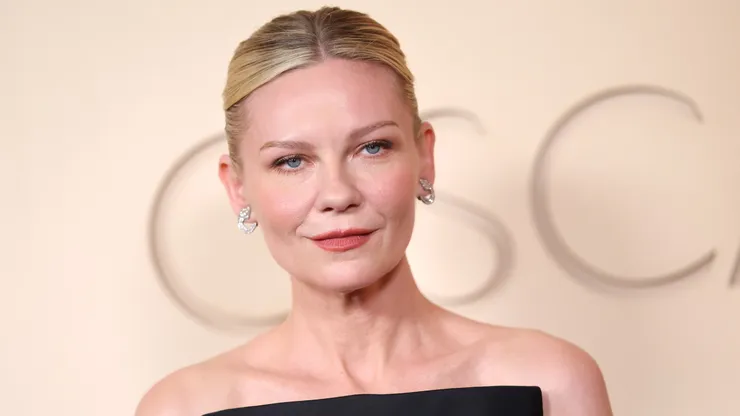
Long before prestige television and franchise fatigue reshaped Hollywood, Kirsten Dunst had already figured out how to move between worlds that rarely overlap. She went from stealing scenes in childhood dramas to becoming one of the defining faces of teen movies in the late ’90s and early 2000s, before eventually earning acclaim in darker, more emotionally demanding projects.
What separates her from many of her contemporaries is how often her roles became part of pop culture itself. Whether it was the sharp satire of Bring It On, the global phenomenon of Spider-Man, or the haunting atmosphere of The Virgin Suicides, her performances helped define entire eras of film.
Interview with the Vampire (1994)
Before she became a teen icon or blockbuster star, Dunst stunned Hollywood with her performance in Interview with the Vampire. At just 12 years old, she played Claudia, a child vampire trapped forever between innocence and adulthood.
Sharing scenes with Tom Cruise and Brad Pitt could have overwhelmed most young actors, but Dunst matched their intensity with astonishing confidence. Claudia’s anger, jealousy, loneliness, and cruelty all emerged through a performance that felt unnervingly mature for someone her age.
The role immediately changed her career trajectory. Dunst earned a Golden Globe nomination and widespread critical praise, while the film itself became a gothic box-office hit that grossed more than $220 million worldwide. Even now, more than three decades later, Claudia remains one of the most celebrated child performances in modern horror cinema.
The reason is simple: Dunst never played the character like a “movie child”. She approached Claudia with the emotional seriousness of an adult dramatic role, which made the tragedy at the center of the film feel disturbingly real.
Melancholia (2011)
There are performances that change careers, and then there are performances that completely alter how an actor is perceived. Melancholia belongs firmly in the second category for Dunst. Directed by Lars von Trier, the apocalyptic drama follows Justine, a woman sinking into depression while a massive planet approaches Earth.
Dunst approached the role with fearless emotional exposure, portraying mental illness not as exaggerated tragedy but as a numb, consuming state that slowly disconnects the character from reality. Her work in the film earned the Best Actress prize at Cannes and became one of the most acclaimed performances of her generation.
In interviews, Dunst later explained that her own experiences with depression helped her understand Justine’s emotional landscape, giving the performance an unusual authenticity.
What makes Melancholia endure is how strange and intimate it feels at the same time: a gigantic end-of-the-world film built almost entirely around human emotion. Dunst managed to carry both scales simultaneously, which is why many critics still consider it the finest work of her career.
The Virgin Suicides (1999)
Sofia Coppola’s debut feature, The Virgin Suicides, transformed Dunst into an indie-cinema icon almost overnight. Playing Lux Lisbon, the most charismatic and rebellious of the mysterious Lisbon sisters, she created a character who felt simultaneously distant and deeply intimate.
Much of the film unfolds through the memories and fantasies of neighborhood boys obsessed with the sisters, which gave Dunst the difficult task of portraying someone who exists partly as a real person and partly as mythology.
Rather than overexplaining Lux emotionally, Dunst leaned into ambiguity. A glance, a smile, or a moment of silence often communicated more than dialogue. That subtle approach helped establish the hypnotic tone that later became associated with Coppola’s filmmaking style.
Over time, The Virgin Suicides grew into one of the defining cult films of late-1990s independent cinema, influencing fashion, photography, and even music-video aesthetics. Dunst’s performance remains at the center of why the movie still feels haunting decades later.
Spider-Man Trilogy (2002–2007)
For millions of moviegoers, Kirsten Dunst will always be connected to Spider-Man and its sequels. Playing Mary Jane Watson opposite Tobey Maguire’s Peter Parker, she became part of one of the franchises that helped redefine superhero cinema before the Marvel era fully exploded.
Dunst brought warmth and emotional realism to a character who could have easily existed only as a romantic objective for the hero. Instead, Mary Jane felt ambitious, frustrated, vulnerable, and independent in ways that grounded the trilogy emotionally.
The films themselves became cultural landmarks, especially the first two entries directed by Sam Raimi. The upside-down rain kiss between Spider-Man and Mary Jane remains one of the most recognizable scenes in comic-book movie history, constantly referenced across pop culture.
While later superhero franchises leaned heavily into interconnected universes and large-scale mythology, Raimi’s trilogy succeeded partly because audiences cared about the relationships at its center. Dunst’s chemistry with Maguire played a major role in making that emotional core believable.
Bring It On (2000)
At first glance, Bring It On looked like another disposable teen comedy built around high-school stereotypes. Instead, it became one of the most quoted and influential comedies of the early 2000s.
As cheer captain Torrance Shipman, Dunst gave the film far more personality than expected, turning what could have been a generic popular-girl role into someone energetic, insecure, competitive, and surprisingly self-aware.
Her comedic timing became a major reason the movie connected with audiences beyond the cheerleading gimmick. The film also stood out because it addressed cultural appropriation and racial inequality in competitive cheerleading, themes that many teen comedies of the era ignored entirely.
Dunst helped keep the tone balanced, allowing the movie to remain playful while still engaging with more serious ideas underneath the humor. Over two decades later, Bring It On continues to survive through memes, internet references, and midnight screenings, which says a lot about how effectively its cast captured the chaotic confidence of turn-of-the-century teen culture.
The Power of the Dog (2021)
More than 25 years into her career, Dunst delivered one of her most devastating performances in The Power of the Dog. Directed by Jane Campion, the psychological western follows Rose Gordon, a widow who slowly breaks under manipulation and emotional isolation after marrying into a Montana ranching family.
Dunst approached the role with remarkable restraint, allowing small gestures, nervous expressions, and silences to reveal the character’s deterioration rather than relying on dramatic outbursts. The performance earned her first Academy Award nomination.
Interviews surrounding the film revealed how deeply she immersed herself in Rose’s emotional state, even learning piano pieces and rehearsing extensively to build the character’s fragile psychology.
Critics praised the way she conveyed shame, fear, and emotional dependency without making the performance feel theatrical. For many longtime fans, the film represented a culmination of everything Dunst had quietly perfected over decades: emotional subtlety, patience, and an ability to make damaged characters feel painfully human.
Marie Antoinette (2006)
When Sofia Coppola cast Dunst in Marie Antoinette, it marked the continuation of one of the most important actor-director collaborations of the 2000s. Instead of treating the infamous queen like a distant historical figure, the film reimagined her as an isolated teenager trapped inside endless luxury and expectation.
Dunst’s performance became the emotional center of Coppola’s modernized vision, balancing glamour with visible loneliness as the character slowly realizes the world around her is collapsing.
The movie initially divided critics because of its contemporary soundtrack, stylized visuals, and unconventional tone, yet over time it evolved into a cult favorite that heavily influenced fashion editorials and modern period dramas.
Dunst’s ability to make Marie Antoinette feel accessible was crucial to that transformation. She never played the role as a caricature of royalty; instead, she emphasized immaturity, curiosity, and emotional exhaustion. Years later, the film is often revisited as one of the boldest historical dramas of its era, and Dunst remains inseparable from its aesthetic identity.
Crazy/Beautiful (2001)
Released during the peak of Hollywood’s teen-romance boom, Crazy/Beautiful could have easily blended into the long list of early-2000s coming-of-age dramas. Instead, the movie gained a cult following largely because of Dunst’s performance as Nicole Oakley, a wealthy but deeply self-destructive teenager trying to navigate addiction, loneliness, and emotional instability.
She played the character with an unpredictability that constantly shifted between charm and recklessness, making Nicole feel far more complicated than the genre usually allowed. At the time, Dunst was already associated with lighter films like Bring It On, so the role helped expand public perception of what she could do onscreen.
Rather than leaning into the polished image Hollywood often pushed onto young actresses, she embraced messy and emotionally volatile material. Looking back, Crazy/Beautiful feels like an early bridge between the teen-star phase of her career and the darker, psychologically demanding performances she would later deliver in films like Melancholia and The Power of the Dog.
Hidden Figures (2016)
After years of playing emotionally fragile or sympathetic characters, Dunst surprised audiences with her role in Hidden Figures. In the NASA drama centered on Black female mathematicians during the Space Race, she portrayed Vivian Mitchell, a supervisor whose passive racism reflects the institutional barriers surrounding the protagonists.
Instead of turning the character into a cartoon villain, Dunst played her with restraint, which made the prejudice feel colder and more believable. Critics noted how unusual it was to see her step into a role built almost entirely on tension and discomfort.
The film itself became both a commercial and awards-season success, earning Oscar nominations and reigniting conversations about overlooked figures in American history. Dunst’s role may not have carried the emotional center of the story, but it demonstrated another side of her career: an ability to contribute to ensemble films without demanding attention.
By that point, she no longer needed to prove herself as a leading star, which allowed her to take supporting roles that strengthened a film’s atmosphere instead of dominating it. That flexibility became one of the reasons directors continued returning to her throughout different stages of her career.
Jumanji (1995)
By the mid-1990s, family adventure movies were becoming bigger, louder, and increasingly dependent on visual effects, but Jumanji succeeded because its cast treated the fantasy seriously. Jumanji gave Kirsten Dunst one of her earliest mainstream showcases as Judy Shepherd, a recently orphaned girl forced to survive a supernatural board game alongside Robin Williams.
While the film was packed with stampeding animals and jungle chaos, Dunst grounded the story emotionally, playing Judy with a mix of intelligence, fear, and quiet maturity that stood out against the spectacle. The movie eventually grossed more than $260 million worldwide and became a defining family classic of the decade.
What makes the performance interesting in retrospect is how naturally Dunst avoided the exaggerated style common among child actors of that era. Even at a young age, she projected a kind of realism that made her characters feel older than they were without losing vulnerability.
Fans still frequently mention Jumanji when discussing her career because it captured the beginning of a pattern that would follow her for decades: even in commercially driven films, she rarely disappeared into the background.