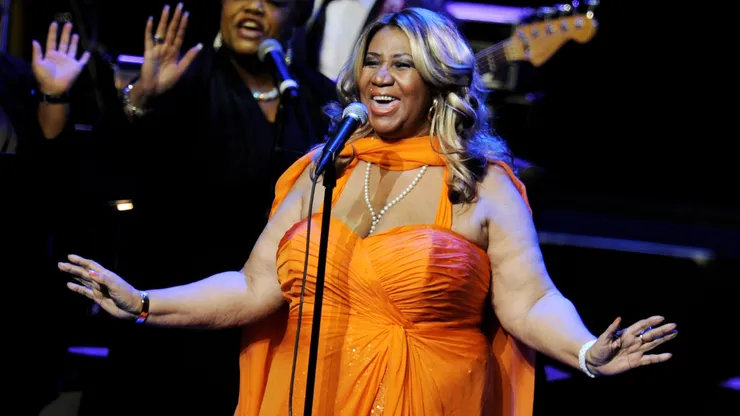
When Aretha Franklin stepped into a recording studio, she did more than make music: she redefined the very language of song. Born into a musical household in Memphis and honed in the gospel choirs of Detroit, her voice carried the gravitas of history itself, moving effortlessly from soul to R&B, jazz, blues, pop and beyond.
Over her career — which spans 38 studio albums and 112 charting singles — she did not simply hit the notes; she shaped them, turning tracks like Respect, Think and (You Make Me Feel Like) A Natural Woman into more than hits, but cultural landmarks that echoed the aspirations, struggles and rhythms of a generation.
“Respect”
Aretha Franklin’s version of Respect is often hailed as the moment she truly became the Queen of Soul. Originally written and recorded by Otis Redding in 1965, Franklin’s 1967 reimagining transformed the song into something far greater than its origins.
She didn’t just perform it, she reinvented it — adding the iconic “R‑E‑S‑P‑E‑C‑T” hook, spontaneous vocal shouts of “Sock it to me,” and backing vocals that charged the song with urgent confidence.
It shot to number one on both the Billboard Hot 100 and R&B charts and earned two Grammy Awards, cementing it as her signature anthem. What makes Respect so enduring is how it reshaped its own meaning: from a plea for attention into a universal demand for dignity and value.
Emerging at a blazing cultural moment during the civil rights and women’s movements, Franklin’s performance made the song a rallying cry for empowerment that transcended race and gender. Its influence extends far beyond radio play — it’s frequently ranked among the greatest songs of all time and continues to resonate in movements for equality.
“(You Make Me Feel Like) A Natural Woman”
Released in 1967 and written by Carole King and Gerry Goffin, A Natural Woman became one of Aretha Franklin’s most soulful love anthems. While King wrote the song with a particular emotional depth, Franklin’s delivery added a visceral layer of experience — a voice that feels both powerful and intimately vulnerable.
The track climbed into the Top 10 and would quickly become a defining moment in her catalog, celebrated for its emotional honesty and undeniable vocal clarity. The song’s enduring appeal lies in its ability to combine classic soul with universal relatability.
Franklin’s voice carries an almost spiritual quality here, elevating love beyond mere sentiment and framing it as an essential part of human identity. Over decades, A Natural Woman has been covered and celebrated across generations, becoming a cornerstone of Franklin’s status as a musical icon.
“I Say a Little Prayer”
Originally made popular by Dionne Warwick, I Say a Little Prayer found a transformative interpreter in Aretha Franklin when she recorded it in 1968. Her version channels the rhythm and depth of gospel, blending it with soul in a way that spoke not just to romantic devotion but to emotional ritual — this is a song about love entwined with every corner of life’s mundane moments.
The vocals are intimate yet grand, turning everyday routines into a quiet celebration of connection. Franklin’s rendition became one of her biggest hits in the UK and globally, giving her a number‑four peak there and confirming her broad international appeal.
The song’s structure — with its repetitive, prayer‑like chorus — turned layers of longing and hope into something both spiritual and deeply human. This version has endured across film, TV and playlists, often serving as a voice of tender yet profound love.
“Chain of Fools”
Co‑written by Don Covay and brought to life by Franklin in 1967, Chain of Fools marries gritty guitar riffs with an insistent groove to tell a story of liberation from emotional bondage. The song topped the R&B charts and reached number two on the Billboard Hot 100, highlighting Franklin’s ability to anchor pop appeal with deeply rooted soul authenticity.
Its tremolo guitar and rhythmic drive make it instantly recognizable, but it’s Franklin’s delivery that gives the song its bite — a blend of resilience and raw emotion. More than just a beat you can dance to, Chain of Fools carries an undercurrent of self‑assertion.
In the context of the late 1960s, when conversations about individual freedom and social upheaval were intensifying, the track resonated with listeners not just as a breakup song, but as a broader metaphor for breaking free from limiting circumstances. Its acclaim — including a Grammy and placement on Rolling Stone’s 500 Greatest Songs of All Time — reflects its deep cultural imprint.
“Think”
Recorded in 1968, Think stands out as a bold declaration of personal autonomy, delivering one of Franklin’s most spirited performances. Built on a tight groove and punctuated by sassy horn lines, the song’s lyrics demand respect — not just in love but in life’s broader decisions.
Its riff‑driven urgency and percussive vocal style make it one of the era’s most energizing soul tracks. Think also became synonymous with protest and empowerment, adopted in movies, commercials, and cultural moments that emphasize independence and self‑worth.
Franklin’s ability to channel both vulnerability and defiance in the same breath gives the song an enduring echo; it never sounds dated because its core message — to value oneself — remains timeless.
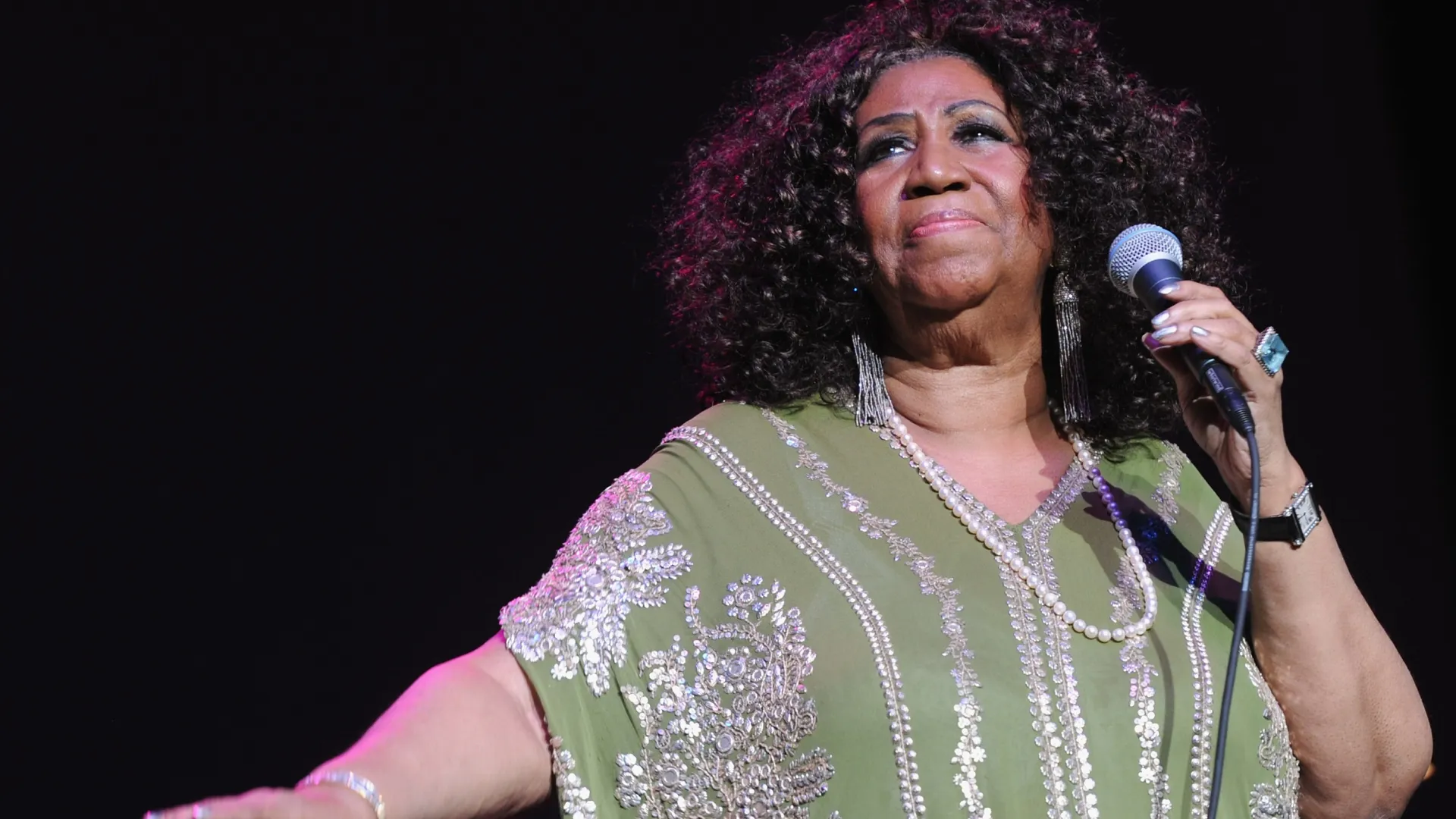
Aretha Franklin performs on March 5, 2012 (Source: Rick Diamond/Getty Images for The Fox Theatre)
“Rock Steady”
Released in 1971 from the album Young, Gifted and Black, Rock Steady marks a stylistic shift into funk without losing Franklin’s signature soul intensity. The track’s infectious groove — built on a tight rhythm section and punchy horn arrangements — propelled it to the Top 10 on the Billboard Hot 100 and number two on the R&B charts, proving that Franklin’s sound could evolve without sacrificing impact.
What makes Rock Steady particularly magnetic is how it marries sophistication with raw, danceable rhythm. It showcases Franklin’s adaptability as a musician — that she can lead a funk‑infused number with the same authority she brings to ballads or gospel‑leaning tracks. The result is a song that feels rooted in its era but still compelling decades later, used in films and sampled by artists across genres.
“Spanish Harlem”
Originally written by Jerry Leiber and Phil Spector and first recorded by Ben E. King in 1960, Spanish Harlem received new life in Aretha Franklin’s 1971 cover, which soared to number two on the Billboard Hot 100 and topped the R&B chart for weeks.
Franklin didn’t just perform the song — she subtly rewrote the lyrics to proclaim, “There’s a rose in Black ’n Spanish Harlem,” adding a layer of cultural resonance and identity to the romantic imagery.
Her version became a gold single and remains a prime example of how Franklin could take existing material and make it unmistakably hers. The blend of soulful grooves, textured instrumentation and Franklin’s rich vocals turns what was already a classic into a timeless celebration of place, beauty, and cultural pride.
“Until You Come Back to Me (That’s What I’m Gonna Do)”
Though originally recorded by Stevie Wonder in 1967, Until You Come Back to Me (That’s What I’m Gonna Do) became widely known through Aretha Franklin’s 1973 version, which reached number three on the Billboard Hot 100 and topped the R&B chart. Her interpretation transforms the song into a sweeping declaration of devotion — a vow to pursue love relentlessly, even in the face of heartbreak.
The track’s emotional depth lies in Franklin’s delivery: she infuses each line with urgency and sincerity, making every repeated refrain feel like a heartfelt plea rather than a simple lyric.
Though its theme of longing might verge on obsessive in another context, within the soulful framework Franklin builds, it becomes a testament to enduring love and vulnerability that listeners continue to connect with.
“I Never Loved a Man (The Way I Love You)”
I Never Loved a Man (The Way I Love You) stands as a milestone in Franklin’s early career, marking her first major hit after signing with Atlantic Records in 1967. The single reached number one on the R&B chart and number nine on the Billboard Hot 100, providing a breakthrough that helped establish her as a leading voice in soul. Its fusion of blues, gospel, and raw passion set the template for much of her subsequent work.
The song’s lyrical honesty — a visceral celebration of affection that refuses to be understated — paired with Franklin’s commanding vocals, made it feel both deeply personal and universally resonant. As a pivotal record in her evolution, it showcased her ability to turn emotional truths into powerful musical statements that listeners could feel as much as hear.
“Ain’t No Way”
Though less universally known than some of her other hits, Ain’t No Way demonstrates a side of Aretha Franklin rooted in delicate vulnerability and harmonic richness. The song — featuring lush backing vocals and an emotional depth that borders on spiritual — reveals Franklin’s capacity to express heartbreak and longing without losing her regal vocal control.
Critics and fans alike often point to this track as one of Franklin’s most moving performances, not because it dominated the charts, but because it captures her ability to blend nuanced emotion with technical excellence. Here, she doesn’t just sing — she inhabits the story, leaving a lasting imprint on anyone who listens.