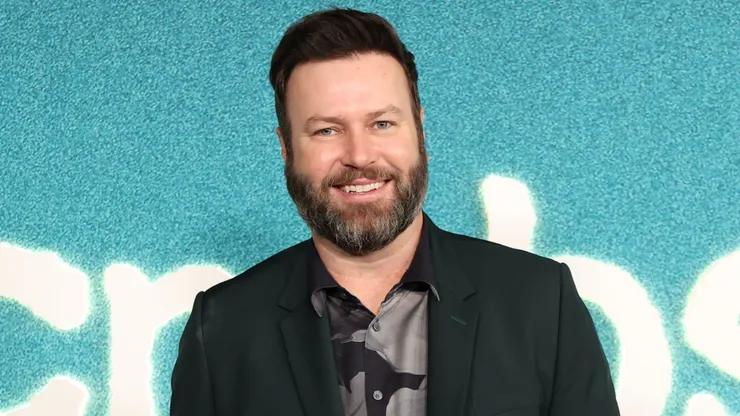
Careers in comedy often hinge on visibility, but Taran Killam has built his on adaptability. Long before and well after his tenure on Saturday Night Live, he has moved through television, film and voice work with a performer’s instinct for reinvention, shifting between formats without losing his identity.
That elasticity has defined everything that followed. Whether stepping into supporting roles, leading comedic projects, or working behind the camera on films like Why We’re Killing Gunther, he has continued to expand his range in ways that rarely call attention to themselves. There’s a deliberate control in his performances, a sense that each choice is calibrated rather than exaggerated.
Saturday Night Live (2010–2016)
Saturday Night Live was the environment where Taran Killam’s versatility became fully visible to a global audience. He wasn’t tied to a single type of character; instead, he was repeatedly used across political satire, absurdist sketches, and commercial parodies, often switching personas multiple times per episode.
One of his key strengths was structural support inside sketches—he frequently played the “anchor” character reacting to chaos around him. Whether doing celebrity impressions or original roles, Killam’s timing and physical control allowed sketches to escalate without collapsing into noise, which made him one of the most reliable ensemble players of his era.
MADtv (2001–2002)
On Mad TV, Killam entered a format known for its aggressive pacing and exaggerated character work. At a very young age, he was placed in sketches that required rapid tonal shifts, often moving between parody and straight absurdity within seconds.
This early exposure wasn’t just about screen time—it was about learning structure. Mad TV pushed performers to commit fully to heightened characters, and Killam’s early appearances show a performer already comfortable with physical exaggeration and quick adaptation inside ensemble chaos.
Single Parents (2018–2020)
In Single Parents, Killam plays Will Cooper, a single father who becomes the emotional center of a group of parents trying to rebuild their lives. The show places him in a more traditional sitcom structure, where character growth happens across seasons rather than sketches.
His role focuses heavily on overprotectiveness and emotional dependency on the parent group, especially as he struggles with letting his daughter gain independence. The performance leans on relational comedy—awkward honesty, insecurity, and small domestic conflicts rather than exaggerated setups.
12 Years a Slave (2013)
In 12 Years a Slave, directed by Steve McQueen, Killam appears in a dramatically different context: a historical drama about slavery in the United States. He plays Abram Hamilton, a supporting character within the film’s broader network of plantation society figures.
Unlike his comedic work, this role demands tonal restraint. The film’s realism means even minor characters contribute to the oppressive atmosphere rather than individual arcs, and Killam’s presence is calibrated to that environment—naturalistic, subdued, and intentionally non-performative.
How I Met Your Mother (2006–2014)
How I Met Your Mother uses Taran Killam’s Gary Blauman as a recurring narrative disruption. Blauman appears sporadically across seasons, often entering established emotional or comedic situations at unpredictable moments.
The character is built around social chaos—he is frequently the person who causes awkward tension or unexpected detours in group dynamics. Killam plays him with a mix of charm and unpredictability, which allows the show to reuse him as a flexible storytelling device rather than a fixed subplot.
Ted 2 (2015)
Ted 2 places Taran Killam inside a high-volume studio comedy built around escalation and chaos rather than character introspection. The film follows Ted’s legal battle to be recognized as a person, while constantly cutting between subplots designed to maximize comedic interruptions.
Killam appears within that structure as part of the wider human ecosystem reacting to the absurdity surrounding Ted and John. His role is not designed to carry emotional weight, but to contribute to the film’s rapid rhythm of comedic beats—where timing, reaction shots, and ensemble chemistry matter more than individual arcs.
New Girl (Guest Appearance)
In New Girl, Killam enters a sitcom already defined by its tightly controlled ensemble dynamic inside a shared loft environment. Guest characters in the series often function as disruptors, temporarily shifting the emotional balance of the core group.
Killam’s appearance follows that pattern: he integrates into the show’s awkward, dialogue-heavy humor style, where character traits are amplified for situational comedy. The performance is structured around immediate chemistry rather than long-term development, requiring quick establishment of personality and comedic intent.
Why We’re Killing Gunther (2017)
Why We’re Killing Gunther is the most structurally ambitious project in Killam’s career because it places him simultaneously as writer, director, and lead actor. The story follows a group of eccentric assassins attempting to eliminate the world’s greatest hitman, Gunther, played by Arnold Schwarzenegger.
The film is constructed as a mockumentary-style action comedy, where the presence of the camera shapes how characters behave. Killam plays Blake, the central figure organizing the assassination attempt, and the narrative unfolds largely through his increasingly unstable leadership and the group’s internal dysfunction.
Scrubs (Guest Appearance)
Scrubs represents one of Killam’s earliest mainstream TV appearances, inside a show known for blending hospital realism with surreal internal monologues and fantasy sequences. Guest roles in Scrubs often serve as narrative catalysts or tonal contrasts within self-contained episodes.
Killam’s appearance fits into that ecosystem by supporting the show’s rhythm of emotional shifts—moving between exaggerated humor and grounded medical drama. Even in a limited role, the performance aligns with the series’ dual identity, where comedy and vulnerability constantly overlap.
The Amanda Show (Early Sketch Work)
The Amanda Show represents one of Taran Killam’s earliest television environments, built around rapid-fire sketches aimed at a younger audience. The show relied heavily on exaggerated characters, recurring bits, and abrupt tonal shifts between parody and absurdity.
For Killam, this stage was less about visibility and more about mechanics. Sketches required immediate character establishment—often within seconds—forcing performers to communicate personality through physicality and timing rather than dialogue-heavy setups. His appearances reflect an early adaptation to televised sketch rhythm, a foundation that later became central to his work on SNL.
Just Married (2003)
In Just Married, Killam appears within a mainstream romantic comedy structured around escalating relationship chaos. The film follows a newly married couple whose honeymoon spirals into a series of increasingly dysfunctional travel disasters, built on situational humor and conflict-driven comedy.
Killam’s role sits within the supporting comedic ecosystem of the film, where secondary characters are used to amplify the protagonists’ misfortunes. These roles function as narrative accelerators—brief but designed to intensify the couple’s descent into frustration, miscommunication, and physical comedy situations.
That ’70s Show (Guest Appearance)
That ’70s Show operates as a tightly structured ensemble sitcom centered on a group of teenagers navigating suburban life in the 1970s. Guest characters typically enter for single-episode conflicts or comedic disruptions that challenge the group dynamic in small but meaningful ways.
Killam’s appearance fits this model, where humor is built through timing within pre-established relationships. The show’s format relies heavily on reaction chains—one character’s behavior triggering escalating responses from the group—and guest actors must quickly adapt to that rhythm without long exposition.
3rd Rock from the Sun (Guest Role)
In 3rd Rock from the Sun, Killam appears in a sitcom built around a high-concept premise: aliens attempting to understand human behavior while posing as a family. The show’s humor is derived from observational misunderstandings, exaggerated emotional responses, and deliberate misinterpretations of everyday life.
Within that structure, guest roles often function as “human reality checks,” contrasting the aliens’ distorted perception with grounded social behavior. Killam’s participation aligns with this comedic logic, requiring him to interact with a world where normal human responses are constantly reframed as absurd.
Wild ‘N Out (Improv Performance Appearance)
Wild ‘N Out operates on a completely different comedic engine: live-style improvisation, freestyle battles, and unscripted reaction-based humor. Unlike scripted sitcoms or structured sketches, the show depends on spontaneous performance and immediate audience reaction.
Killam’s participation highlights a different layer of his skill set—reactive comedy under pressure. In this environment, performers must construct jokes, respond to opponents, and maintain rhythm in real time. It’s less about character building and more about adaptability, timing, and the ability to stay present inside unpredictable comedic exchanges.