
David Bowie’s transformation from a struggling folk-rocker into a global phenomenon was anchored by a relentless rejection of the status quo. While his 1969 hit “Space Oddity” capitalized on the fervor of the moon landing, it was his 1970s output that redefined the commercial music industry.
Beyond his technical innovation in the studio, his legacy is rooted in his role as a master of visual branding and cultural subversion. He was among the first artists to utilize his platform to challenge traditional notions of gender and identity, effectively normalizing the “outsider” perspective long before it became a mainstream ideal.
The Berlin Shift and Sonic Innovation
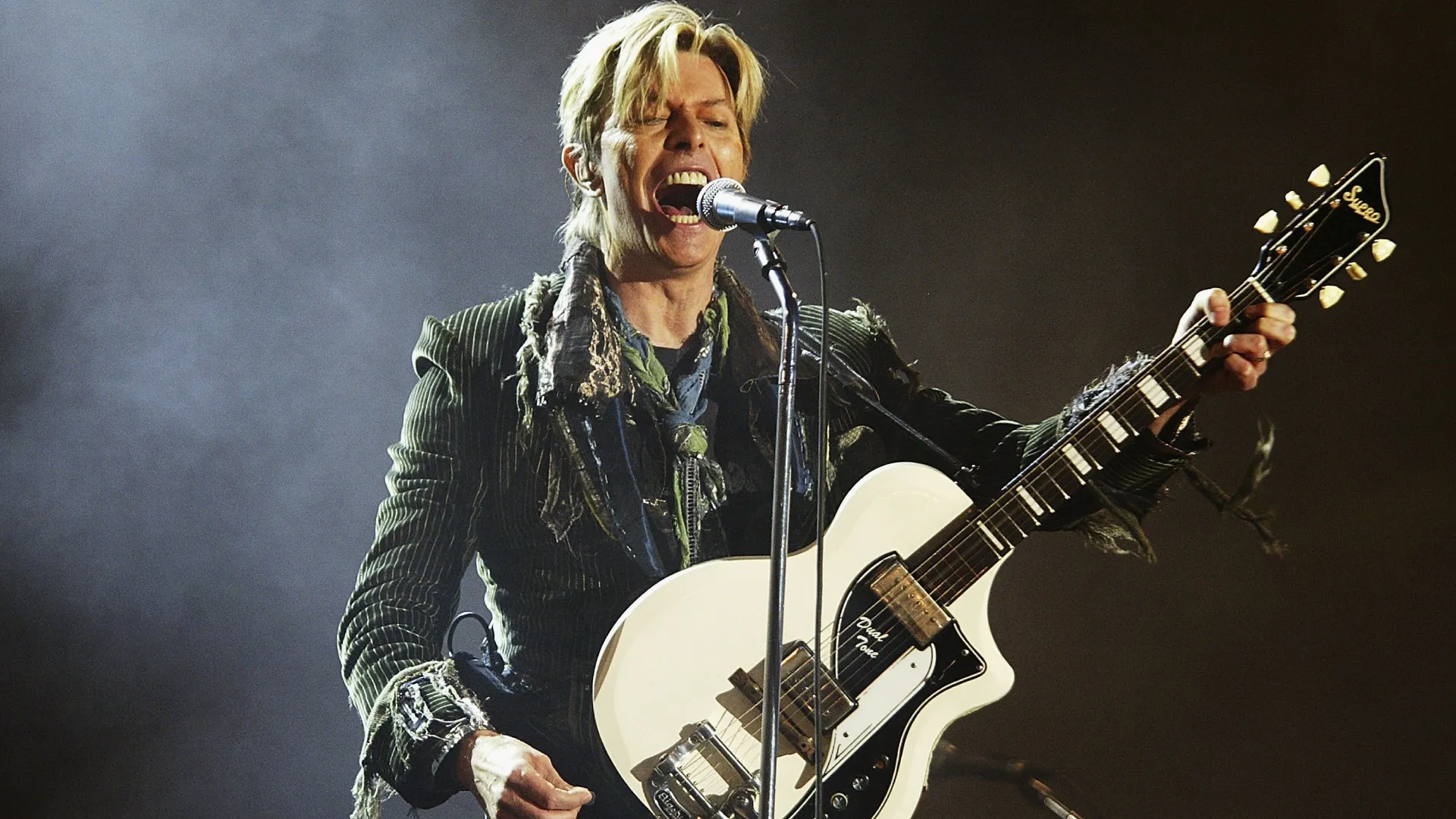
David Bowie performs on stage on the third and final day of “The Nokia Isle of Wight Festival 2004”. (Source: Jo Hale/Getty Images)
The mid-1970s marked a pivotal departure from the flamboyant excess of the “Ziggy Stardust” era. Seeking to strip away the artifice of his celebrity, Bowie’s relocation to West Berlin resulted in a collaboration with producer Brian Eno and long-time partner Tony Visconti.
This period birthed a minimalist, electronic sound that utilized the studio itself as an instrument. The “Berlin Trilogy”—comprising the albums Low, “Heroes”, and Lodger—introduced the world to ambient textures and non-linear songwriting. This experimentation didn’t just revitalize Bowie’s career; it laid the groundwork for post-punk, new wave, and the electronic music revolution of the 1980s.
“Heroes”: A Political and Social Anthem

David Bowie performing onstage at The Concert for New York City to benefit the victims of the World Trade Center disaster in 2001. (Source: Scott Gries/ImageDirect)
The title track of his 1977 album, “Heroes,” remains perhaps the most significant anchor of his cultural legacy. Recorded at Hansa Studios, overlooking the Berlin Wall, the song’s narrative of two lovers meeting in the shadow of a dividing line became a powerful metaphor for human resilience.
While initially a modest chart success, its stature grew as it became synonymous with the desire for German reunification. Bowie’s 1987 performance of the song at the Reichstag is often cited by historians as a cultural catalyst that helped shift the atmosphere leading to the fall of the Wall two years later, cementing his role as an artist with tangible geopolitical influence.
Identity as a Modular Art Form
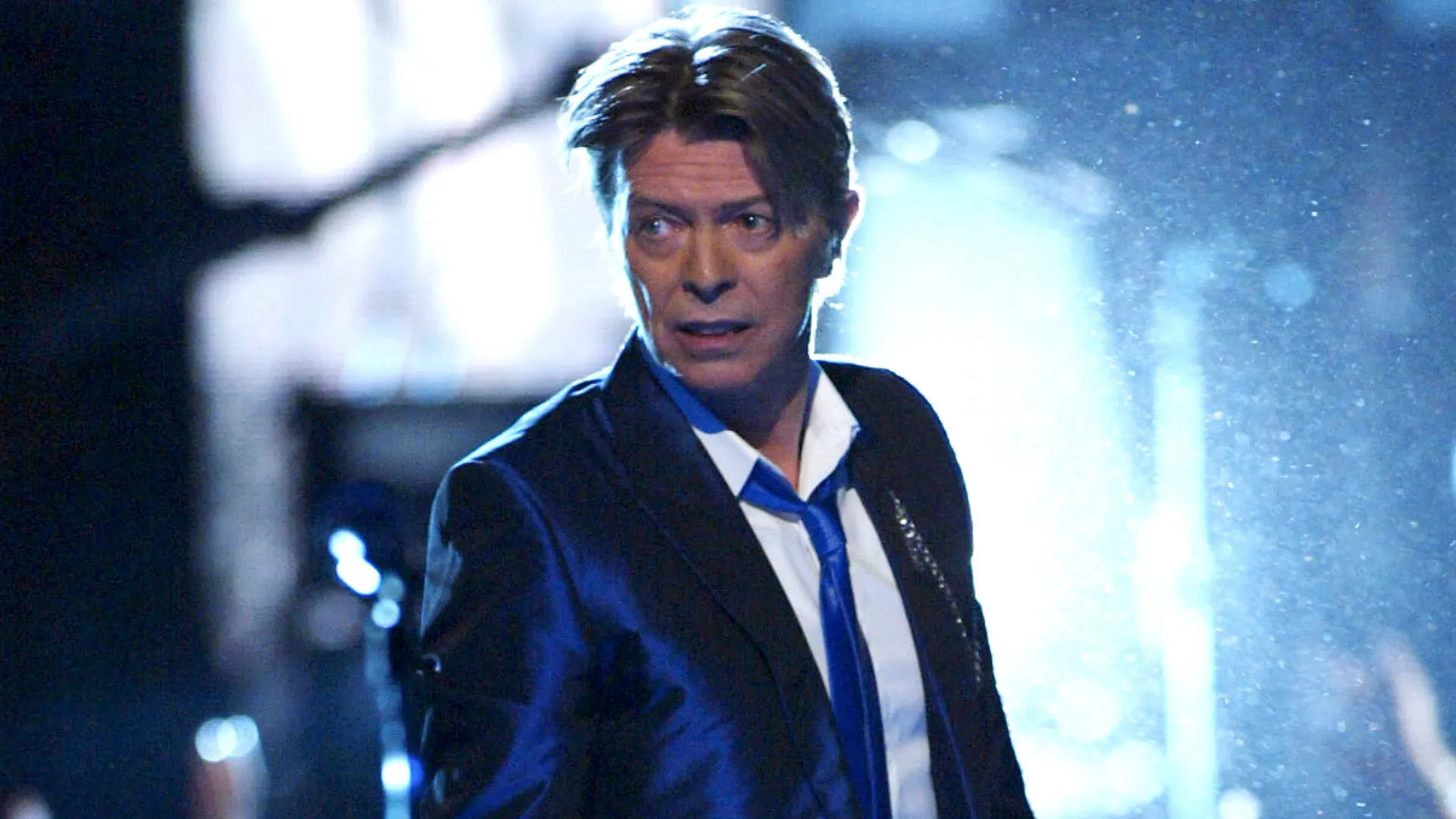
David Bowie onstage performing at the 2002 VH1 Vogue Fashion Awards. (Source: Scott Gries/Getty Images)
Bowie’s impact extended far beyond the recording booth, fundamentally altering the visual language of the 20th century. By treating his public persona as a series of “avatars,” he became a pioneer of personal branding and aesthetic fluidity.
He drew from a vast archive of influences, including German Expressionism, Japanese fashion designer Kansai Yamamoto, and the avant-garde mime of Lindsay Kemp.
This chameleon-like ability to inhabit different identities allowed him to explore themes of alienation and androgyny, providing a sense of validation for marginalized communities and challenging the rigid gender norms of the era.
The Architect of the Modern Pop Star

David Bowie performing at The Concert for New York City to benefit the victims of the World Trade Center disaster in 2001. (Source: Scott Gries/ImageDirect)
The final decades of Bowie’s career demonstrated his foresight regarding the intersection of music and technology. From launching “BowieNet” in 1998—one of the first artist-led internet service providers—to his experimentation with financial “Bowie Bonds”, he consistently predicted how the digital age would reshape the relationship between artist and audience.
His final act, the release of the album Blackstar just days before his death in 2016, turned his own mortality into a piece of performance art. This commitment to the “new” ensured that his influence would not be confined to a single decade, but would instead remain a permanent blueprint for the multidisciplinary artists of the 21st century.