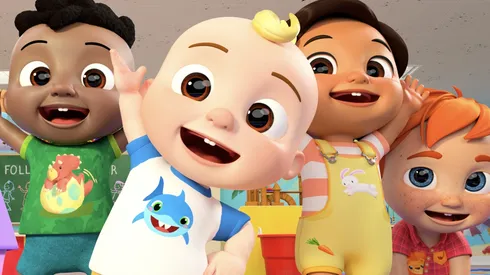
The debate surrounding “CoComelon” has followed the children’s series almost as closely as its massive popularity. While the preschool phenomenon has become one of the most watched brands on YouTube and a major draw on Netflix, its fast paced visual style has also sparked criticism from parents who argue that it may be overstimulating for young children.
According to Variety, Moonbug Entertainment is now pointing to new research conducted alongside child development experts to challenge those claims. The studio’s confidence stems from a collaboration with UCLA’s Center for Scholars and Storytellers, which reviewed Moonbug’s content and examined existing academic literature on children’s media.
The findings, according to both the company and researchers involved in the project, did not uncover clear evidence that programs like “CoComelon” are addictive or inherently harmful because of their editing style.
Researchers Say Existing Evidence Does Not Support Common Criticisms
Rich Hickey, Moonbug’s chief creative officer, said one of the most surprising outcomes of the partnership was hearing experts dismiss concerns that had long circulated online. “One of our most pleasant revelations from working with this group of experts is that they looked and said, ‘That’s not a thing,'” Hickey explained. He added that the researchers were impressed by the level of care and detail involved in the company’s production process.
The study’s conclusions were echoed by Dr. Yalda T. Uhls, founder and CEO of the Center for Scholars and Storytellers. Uhls acknowledged that she initially shared many of the concerns that critics have raised about “CoComelon.” However, after assembling a panel of specialists and reviewing available academic research, she said the team found little evidence supporting the idea that rapid editing or similar stylistic choices have a proven negative effect on children. “The data is fairly inconclusive,” Uhls noted.
Researchers also assessed a selection of Moonbug programs using a rubric based on developmental science. According to Uhls, the content generally demonstrated positive educational qualities, even if there was room for improvement. She said most of the evaluated material scored in the middle range rather than at the lowest end of the scale, suggesting that the shows already incorporated a number of beneficial elements before the collaboration began.
Uhls argued that some of the backlash may stem from adults judging children’s programming through their own preferences rather than through child development research. Reflecting on her experience as both a parent and a psychologist, she pointed to the negative reactions many adults once had toward Barney despite research showing educational value in the series. “You start to feel like, ‘This can’t be good for my child.’ But the research actually shows it’s not harmful. It can have positive outcomes,” she said.
For Hickey, the discussion ultimately comes back to transparency. He said Moonbug is aware of the amount of time children spend with its content and wants caregivers to better understand the educational goals behind each episode. “We take that responsibility really seriously,” Hickey said, encouraging parents to watch the programs themselves and evaluate the lessons being presented.