Not every defining performance arrives with awards buzz or a carefully managed campaign. Throughout the 2020s, some of the most compelling work has unfolded in quieter corners—streaming releases that slipped through crowded release calendars, supporting roles that lingered longer than the leads and films that found their audience slowly rather than all at once.
In an era shaped by algorithms and instant reaction, these performances resisted the cycle, building their impact over time instead of opening weekend. What makes them endure is not scale, but precision. Subtle shifts in tone, controlled restraint and characters that reveal themselves in fragments rather than declarations.
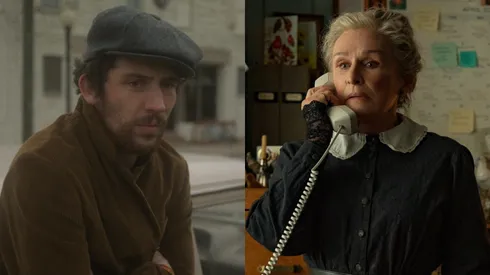
Josh O’Connor – The Mastermind
Josh O’Connor has built a reputation on restraint, and The Mastermind leans fully into that strength. His performance unfolds gradually, revealing layers of calculation and vulnerability without ever tipping into excess. It’s the kind of acting that trusts silence as much as dialogue.
Rather than commanding attention, O’Connor allows the role to breathe, letting tension accumulate in small gestures and measured reactions. The result is a performance that doesn’t announce itself as “great” in the moment—but lingers, quietly asserting its weight long after.
Charles Melton – May December
In May December, Charles Melton delivers a performance built on emotional repression. His character exists in the shadow of a story that has already been told—and retold—leaving him to navigate the aftermath rather than the headline.
Melton’s work is striking for its stillness. Every pause feels deliberate, every glance loaded with history. It’s a performance that reclaims space in a narrative that threatens to overlook him, turning absence into something deeply felt.
Frank Dillane – Urchin
Frank Dillane brings a raw, almost documentary-like realism to Urchin. His performance resists polish, embracing unpredictability and emotional volatility in a way that feels lived-in rather than performed.
There’s a sense that anything could happen at any moment, and that instability becomes the film’s driving force. Dillane doesn’t shape the character into something easily digestible—he lets it remain rough around the edges, which is precisely what makes it compelling.
Paul Mescal – The History of Sound
With Paul Mescal, emotional transparency has become a defining trait, and The History of Sound refines it even further. His performance is intimate, almost fragile, built on moments that feel observed rather than staged.
Mescal avoids grand gestures, instead allowing feeling to surface in fragments. It’s a style that aligns perfectly with the film’s tone—one that values memory, texture, and the quiet resonance of connection over overt drama.
Zac Efron – The Iron Claw
Zac Efron undergoes a striking transformation in The Iron Claw, both physically and emotionally. Known for lighter roles earlier in his career, he embraces a heavier, more demanding character shaped by pressure and expectation.
What stands out is not just the transformation, but the restraint beneath it. Efron allows vulnerability to seep through the physicality, creating a performance that feels grounded in pain rather than spectacle.
Simon Rex – Red Rocket
In Red Rocket, Simon Rex delivers a performance that thrives on contradiction. His character is both magnetic and deeply flawed, pulling the audience in even as his actions push them away. Rex leans into that duality, never softening the edges. The result is a portrayal that feels disarmingly real—uncomfortable at times, but impossible to ignore.
Glenn Close – Wake Up Dead Man
Glenn Close brings gravitas to Wake Up Dead Man, elevating the material with a presence that feels both commanding and enigmatic. Even within an ensemble, she carves out space through precision and control.
Her performance operates in layers—never revealing too much at once, yet always suggesting more beneath the surface. It’s a reminder of how experience can translate into subtle authority on screen.
Glenn Howerton – Blackberry
Best known for comedy, Glenn Howerton pivots sharply in BlackBerry. His performance is volatile, driven by ambition and ego, capturing the chaos of a rapidly shifting industry.
What makes it memorable is its unpredictability. Howerton allows the character to spiral, embracing intensity without losing control—an approach that keeps the performance grounded even at its most explosive.
Margot Robbie – Babylon
In Babylon, Margot Robbie delivers a performance that feels deliberately excessive, mirroring the chaos of early Hollywood. It’s loud, unpredictable, and constantly in motion.
Yet beneath that energy lies something more fragile. Robbie infuses the character with a sense of impermanence, capturing the fleeting nature of fame in a way that gives the spectacle emotional weight.
Karry Condon – The Banshees of Inisherin
Kerry Condon brings a quietly commanding presence to The Banshees of Inisherin, a film defined by stubborn conflict and emotional stalemate. While the narrative often revolves around fractured friendship and escalating absurdity, her character operates on a different frequency—one grounded in clarity, intelligence, and a growing awareness of the limits of her environment.
Condon’s performance thrives in what she withholds. Rather than matching the volatility around her, she leans into restraint, allowing each line to land with precision. There’s a subtle but powerful evolution in her character, shifting from observer to someone determined to break free from the inertia surrounding her. In a film filled with louder emotional beats, her work resonates because it feels lived-in—measured, thoughtful, and deeply human.
John Magaro – First Cow
John Magaro delivers one of the most delicate performances of the decade in First Cow, a film that resists traditional narrative urgency in favor of observation and atmosphere. His character moves through the story with a softness that contrasts sharply with the harshness of the frontier setting, creating a sense of quiet resistance against the world around him.
Magaro’s approach is almost invisible at times, built on small gestures and fleeting expressions rather than overt emotion. Yet that subtlety becomes the film’s emotional core. His dynamic with his co-lead unfolds gradually, rooted in trust and shared survival, and it’s within that understated connection that the performance finds its depth. It’s a reminder that presence doesn’t always demand attention—sometimes it simply endures.
Paul Dano – The Fablemans
Paul Dano approaches The Fabelmans with a careful, almost protective restraint, crafting a character defined by internal contradictions. As a father navigating both personal and familial fractures, his performance avoids overt dramatics, instead allowing tension to build in the spaces between words.
Dano captures a very specific emotional terrain—the quiet unraveling of someone trying to maintain stability while everything shifts beneath him. His expressions often suggest more than the dialogue reveals, creating a layered portrayal that rewards attention. In a film about memory and perception, his work feels particularly resonant, embodying the kind of complexity that doesn’t demand sympathy but invites understanding.
Teyana Taylor – A Thousand and One
Teyana Taylor delivers a performance of striking intensity in A Thousand and One, anchoring the film with a presence that feels both fierce and deeply vulnerable. Her character is driven by instinct—protective, impulsive, and often operating in moral gray areas—yet Taylor ensures that every decision feels rooted in emotional truth.
What makes the performance stand out is its unpredictability. Taylor allows contradictions to coexist, shifting between strength and fragility without warning. There’s a lived-in quality to her work that makes the character feel immediate, as though the audience is witnessing a life rather than a constructed arc. It’s a portrayal that doesn’t seek to be likable or explanatory, but instead demands to be understood on its own terms.
Franz Rogowski – Passages
Franz Rogowski delivers one of the decade’s most volatile performances in Passages, embracing a character defined by impulse and emotional inconsistency. His physicality—often restless, unpredictable—becomes an extension of the character’s inner turmoil, making every scene feel charged with possibility.
Rogowski resists the urge to smooth out the character’s rough edges. Instead, he leans fully into discomfort, allowing selfishness, charm, and vulnerability to collide in ways that feel unsettlingly real. The performance thrives on tension—not just between characters, but within the character himself—creating a portrait that refuses to settle into easy interpretation.
Koji Yakusho – Perfect Days
Koji Yakusho offers a masterclass in minimalism in Perfect Days, a film that finds meaning in repetition and routine. His character’s life is defined by small, deliberate actions—cleaning, listening, observing—and Yakusho imbues each of these moments with quiet significance.
What’s remarkable is how much is conveyed without dialogue. Through subtle shifts in expression and posture, Yakusho builds an emotional landscape that feels expansive despite the film’s simplicity. It’s a performance that invites patience, rewarding those willing to engage with its rhythm, and ultimately demonstrating how stillness can carry profound emotional weight.
Delroy Lindo – Da 5 Bloods
Delroy Lindo commands the screen in Da 5 Bloods with a performance that feels both immediate and deeply historical. His character carries the psychological weight of war, and Lindo ensures that trauma is never treated as background—it’s present in every decision, every reaction.
The performance reaches its peak in moments of direct address, where emotion breaks through with startling intensity. Yet even in quieter scenes, Lindo maintains a sense of tension, as if the past is always just beneath the surface. It’s a portrayal that bridges personal and collective memory, giving the film a gravity that extends far beyond its narrative.
Amamaria Vartolomei – Happening
Anamaria Vartolomei delivers a performance of remarkable intensity in Happening, carrying the film with a focus that rarely wavers. The camera often remains close, capturing every flicker of emotion, and she meets that intimacy with complete commitment.
Her work is defined by control. Even in moments of extreme vulnerability, Vartolomei avoids exaggeration, allowing the emotional stakes to emerge naturally. The result is a portrayal that feels both immediate and deeply affecting, drawing the audience into an experience that is as personal as it is political.
Amir Jadidi – A Hero
Amir Jadidi navigates moral ambiguity with precision in A Hero, delivering a performance that constantly shifts in tone and perception. His character exists in a space where truth is fluid, shaped as much by public opinion as by personal intention.
Jadidi’s restraint is key to the film’s impact. Rather than guiding the audience toward a clear judgment, he allows uncertainty to persist, creating a performance that invites interpretation rather than resolution. It’s this openness that makes the portrayal so compelling—it doesn’t provide answers, but instead lingers in the complexity of the questions.
Eden Dambrine – Close
Eden Dambrine delivers a performance of striking naturalism in Close, capturing the fragile emotional landscape of adolescence with remarkable precision. His work feels instinctive, as though the camera is simply observing rather than directing.
What gives the performance its power is its honesty. Dambrine doesn’t rely on overt dramatics; instead, he allows emotion to surface gradually, often in moments of silence. The result is deeply affecting, illustrating how subtle shifts in behavior can carry immense emotional weight.