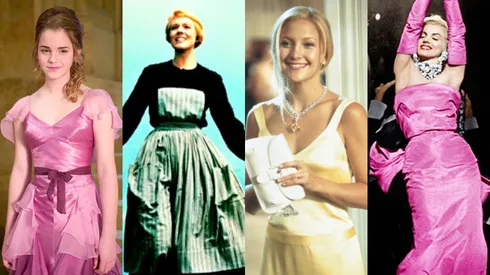
Long before social media turned red carpets into global runways, Hollywood understood the power of a single dress. Costume design has shaped character, narrative and cultural memory in ways that often outlive the films themselves.
These garments were never mere wardrobe choices. Designers like Edith Head and Hubert de Givenchy treated the screen as a living atelier, crafting silhouettes that conveyed rebellion, innocence, seduction or reinvention in a single frame. From Technicolor ball gowns to minimalist black columns, the dresses that defined Hollywood did more than clothe its stars…
Gilda (1946)

When Rita Hayworth delivered her sultry performance of “Put the Blame on Mame” in Gilda, she didn’t just sing — she embodied the archetype of the femme fatale, thanks in no small part to her costume.
Designed by Jean Louis, the sleek black satin gown was a technical marvel of its time, incorporating molded plastic and internal stays to ensure it would stay put during Hayworth’s choreography — no small feat in an era before stretch fabrics or modern tailoring. Its strapless cut exposed shoulders that 1940s eveningwear seldom revealed, making the silhouette as daring as the character herself.
Beyond engineering ingenuity, the dress became a symbol of postwar glamour and cinematic seduction. In a decade still dominated by conservative styles, the gown’s minimalist lines and glossy sheen presented an image that was both modern and mythic, helping to cement Gilda’s place in fashion history.
Over the decades, the look has been referenced in editorials, auctions and retrospectives as one of cinema’s defining fashion moments — one that helped shape how Hollywood visualized allure on screen.
Mahogany (1975)
In Mahogany, Diana Ross plays Tracy Chambers, a young woman whose journey from Chicago boutique clerk to international fashion sensation parallels the evolution of her wardrobe. Ross didn’t just wear the costumes — she helped conceptualize many of them, including the vibrant orange satin gown that became a signature look of the film.
The bold hue and fluid fabric reflect the character’s creative ambition and confidence at the height of her ascent in the fashion industry, capturing the era’s aesthetic energy and Ross’s own star power in equal measure. More than a costume, the gown functions as a narrative device: its dramatic color and sweeping lines visually emphasize Chambers’ transformation from observer to icon.
Though details about its exact designer are less documented than for some other entries on this list, the dress’s impact is clear in fashion history circles and cultural memory, where Mahogany is often cited as a milestone for Black style and the cinematic representation of fashion careers. Discussions around the film and its wardrobe highlight how Ross’s choices helped expand what on-screen glamour could look like in the 1970s.
The Phantom of the Opera (2004)
In the lavish adaptation of Andrew Lloyd Webber’s hit musical, costume designer Alexandra Byrne faced the challenge of translating over-the-top theatrical costume into cinematic nuance.
Christine Daaé’s ivory stage gown, worn during the “Think of Me” sequence, is a standout example: its intricate beading, layered fabrics and period silhouette evoke the opulence of late 19th-century Parisian opera houses while also reading beautifully on camera, with movement and light enhancing its delicate craftsmanship.
But the gown’s resonance goes beyond aesthetics. It frames a narrative milestone for the protagonist — from chorus singer to featured soloist — visually marking Christine’s ascent and the seductive pull of the Phantom’s world. Through fabric and silhouette, Byrne embeds a story of transformation that mirrors the sweeping emotional arc of the characters, making the costume a key piece of the film’s visual storytelling.
Phantom Thread (2017)
Paul Thomas Anderson’s Phantom Thread immerses viewers in the meticulously tailored world of 1950s London couture. Costume designer Mark Bridges, whose work won the Academy Award for Best Costume Design on this film, crafted garments that feel lived-in yet aspirational.
The soft pink satin gown worn by Vicky Krieps’ Alma feels like an extension of the designer protagonist’s psyche: pristine in construction but charged with emotional tension, its strapless cut and delicate sheen underscoring both vulnerability and restraint.
Bridges’ designs in Phantom Thread do more than dress characters; they define them. The film’s couture outfits, including the pink gown, are so deeply embedded in the narrative that they function almost like characters themselves — embodying control, desire and the layered complexity of creative relationships.
The gown’s subtle elegance and period authenticity help ground the film’s themes in tactile reality, making its sartorial world one of the most richly realized in recent cinema.
Cinderella (2015)
For Disney’s live-action reimagining of the classic fairy tale, three-time Oscar-winning designer Sandy Powell reinvented the titular ball gown as a masterpiece of craft and narrative function.
Worn by Lily James as she ascends the staircase to the royal ball, the luminous blue dress is constructed from layers of silk and embellished with thousands of crystals, creating a shimmer that reads like magic on camera.
More than visual spectacle, the gown reflects the core of the Cinderella story: a moment of transformation. Rather than merely borrowing from animated predecessors, Powell designed a dress that feels sensorially alive, catching every flicker of light and movement.
Its impact continues to resonate in discussions of contemporary costume design, where the ball gown is often cited as one of the most beautiful re–imagined fairy-tale looks of modern film.
Crazy Rich Asians (2018)
In the grand celebration at the heart of Crazy Rich Asians, costume designer Mary E. Vogt outfits Constance Wu’s character Rachel Chu in a sky-blue Marchesa gown that became one of the film’s most iconic visual moments.
The Grecian-inspired silhouette, made of fluttering tulle and delicate floral appliqué, was adapted from the brand’s fall 2016 collection and altered by Vogt to fit the narrative’s emotional arc perfectly.
The gown’s cultural reach has been affirmed by its acquisition by the Smithsonian’s National Museum of American History, where it joins treasured artifacts of cinematic heritage.
As a piece of costume design, it does more than flatter — it symbolizes Rachel’s emotional breakthrough in a world of opulence, standing as a testament to how fashion in film can express character evolution as powerfully as dialogue or performance.
Rear Window (1954)
For Alfred Hitchcock’s observational thriller, legendary designer Edith Head created a series of immaculate looks for Grace Kelly that embody the cool, composed sophistication of her character Lisa Fremont.
The black-and-white gown is a study in contrasts — graphic yet graceful — and its tailored silhouette plays off the film’s voyeuristic framing, where elegance and tension coexist.
Head’s costumes for Rear Window subtly bolster the narrative: each look reflects Lisa’s poise, societal status and adaptability, yet also the restrained anxieties beneath the surface of a polished exterior.
The gown remains a touchstone of classic Hollywood glamour, frequently referenced in film studies as an exemplar of how costuming can deepen character without overwhelming narrative.
The Sound of Music (1965)
At the beginning of The Sound of Music, Dorothy Jeakins’s simple novice dress worn by Julie Andrews establishes Maria’s identity: modest, unadorned and grounded in the Abbey’s traditions.
The muted fabrics and modest cut communicate humility and restraint, setting her apart from the formal attire of the von Trapp family and the grandeur of their estate.
As the story unfolds, Maria’s wardrobe evolves alongside her emotional journey — from cloistered novice to capable governess and eventual bride — illustrating how even simplicity in costume can carry profound narrative weight. Jeakins’ design subtly supports the film’s themes of freedom and transformation, using visual language to enhance character development.
How to Lose a Guy in 10 Days (2003)
In this rom-com favorite, designer Carolina Herrera collaborated on the sleek yellow satin gown worn by Kate Hudson during a key gala scene. The vibrant hue and clean lines made the dress instantly memorable in a genre filled with standout looks, helping to visually distinguish the character’s confidence and playful charm.
The garment became shorthand for early-2000s chic, regularly cited in retrospectives of notable rom-com fashion moments. Its pop of color and effortless silhouette captured both the film’s tone and the era’s trends, proving that even seemingly simple designs can leave a lasting impression when aligned with character and context.
Atonement (2007)
Costume designer Jacqueline Durran created one of cinema’s most celebrated modern gowns for Keira Knightley in Atonement. The emerald green silk dress worn during the pivotal library sequence combines period sensibility with contemporary flair, its backless silhouette and fluid drape framing a moment of longing and liberation.
Critics and audiences alike have praised the gown for its bold color and emotional resonance, with polls and retrospective features repeatedly ranking it among the greatest movie costumes of all time.
Its combination of narrative significance and aesthetic impact illustrates how a single garment can transcend its role, becoming inexorably linked to a character’s most defining moments.
Spencer (2021)
Pablo Larraín’s Spencer leans on wardrobe as psychological subtext, particularly in its use of authentic vintage couture to evoke royalty and constraint. The ivory 1988 Chanel trumpet gown worn by Kristen Stewart as Princess Diana carries the weight of real-world fashion history while reflecting the character’s inner conflict: structured beauty masking emotional tumult.
The choice to use original haute couture — rather than a reproduction — grounds the film in tangible historical texture, enhancing its immersive quality. The gown’s silhouette and tailoring echo Diana’s complex public persona: poised, impeccably dressed, yet undeniably vulnerable beneath the surface.
Gentlemen Prefer Blondes (1953)
The shocking pink satin gown worn by Marilyn Monroe during “Diamonds Are a Girl’s Best Friend” is one of Hollywood’s most memorable performance looks. Designed by William Travilla, the strapless silhouette with matching opera gloves and oversized bow exudes cinematic allure and pure spectacle.
Its impact rippled beyond the film, influencing red-carpet fashion and pop culture references for decades. The dress’s blend of glamour and theatricality encapsulated the era’s style ethos and reinforced Monroe’s legacy as a cultural icon, proving that costume can elevate a scene into a moment of visual mythology.
13 Going on 30 (2004)
In 13 Going on 30, costume designer Susie DeSanto captured early-2000s fashion vitality with a multicolored Versace mini dress worn by Jennifer Garner at a high-energy party sequence. Its bold print and vibrant palette reflect the era’s stylistic exuberance and the character’s quintessential transformation from awkward teen to confident adult.
More than trendiness, the dress embodies the film’s embrace of reinvention and playful identity shifts. As fashion historian retrospectives often note, pieces like this became shorthand for the period’s mainstream style — a visual snapshot of a very specific fashion moment that still sparks nostalgia.
Harry Potter and the Goblet of Fire (2005)
In Harry Potter and the Goblet of Fire, costume teams brought wizarding world customs to life for the Triwizard Tournament’s Yule Ball. The soft chiffon silk pink gown worn by one of the characters reflects the formal occasion’s magic and youthful elegance, contrasting the school’s everyday robes with ballroom-ready fantasy.
While fantasy settings require a blend of creativity and tradition, this dress stands out for how it balances period-inspired couture with the franchise’s whimsical aesthetic. It highlights how even in genre filmmaking, costume design can communicate character, event significance and a sense of cultural ritual within a fictional world.
La La Land (2016)
Musical romance La La Land is as much a story about color as it is about love and ambition. Oscar-nominated costume designer Mary Zophres used vivid primary hues throughout the film, with the canary yellow dress worn by Emma Stone during a hilltop dance sequence becoming emblematic of the film’s visual energy.
The dress’s bright tone and simple silhouette allow it to read beautifully against the cinematic backdrops and sweeping camera movement, emphasizing the characters’ optimism and yearning.
It resonated immediately in fashion coverage and cultural commentary, reinforcing the idea that costume — when thoughtfully integrated — can elevate even large-set musical numbers into unforgettable visual poetry.