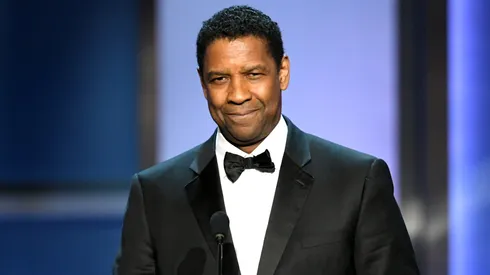
In the history of Hollywood, there are eras defined by stars, and then there is the era defined by Denzel Washington. Today is the 71st birthday of a man whose name is less of a credit and more of a guarantee.

Having recently been honored with a surprise honorary Palme d’Or at the 2025 Cannes Film Festival and coming off a career-best box office run in Gladiator II and Spike Lee’s Highest 2 Lowest, Washington stands at the pinnacle of his powers. But his importance to the industry isn’t just measured in the $5 billion his films have grossed or his ten Oscar nominations. His true legacy lies in how he liberated the Black leading man from the “shackles of stereotypes,” proving that a performer of color could be the universal everyman, the complex anti-hero, and the moral compass of an entire nation all at once.
Redefining the Leading Man: The Denzel Blueprint
Before Denzel Washington, Hollywood’s “classic movie star” was almost exclusively a white archetype. Washington changed the chemistry of the silver screen by bringing a “volcanic” intensity and a refined, quiet dignity that bridged the gap between Sidney Poitier’s grace and the gritty realism of the 1970s.
- Breaking the “Villain” Mold: With his Oscar-winning turn in Training Day, he proved that a Black lead didn’t have to be a “noble hero” to win over audiences. He made villainy charismatic, complex, and human.
- Industry experts often note how Washington redefined romantic leads by focusing on emotional rather than physical intimacy, carving out a space for Black masculinity that was rooted in respect and soul rather than caricature.
Why the Name “Denzel” is Hollywood Royalty
To work in Hollywood today is to live in the house that Denzel built. His name has become a shorthand for integrity—a rare trait in a town built on smoke and mirrors.
Washington’s importance is literally found in the careers of others. He famously paid for the late Chadwick Boseman’s acting tuition and has mentored stars from Rami Malek to Michael B. Jordan