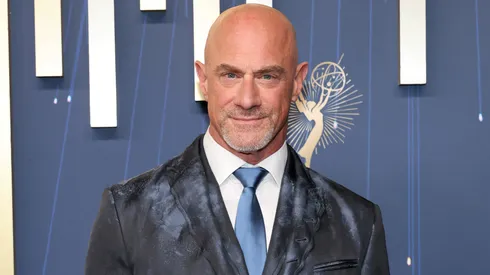
Few TV characters have left as strong a footprint in modern crime drama as Christopher Meloni did during his years in the Law & Order universe. His presence brought intensity, unpredictability, and a kind of emotional edge that helped define the tone of the franchise for a new generation of viewers.
As he turns 65, attention naturally shifts back to the episodes that shaped that legacy. Across multiple seasons, he delivered performances that stood out not just for the cases themselves, but for the way his character navigated them—often blurring the line between instinct and procedure.
911 (Season 7, Episode 3)
911 is widely regarded as the most iconic Elliot Stabler episode in Law & Order: SVU, and one of the most intense hours in the entire franchise. The episode places Stabler in a hostage situation involving a young girl trapped in a basement, with the story unfolding in near real time.
This structure removes the usual procedural distance and forces the narrative into pure emotional urgency — every decision happens under pressure, without delay or relief. What makes this episode stand out is how isolated Stabler becomes within the story.
Unlike typical SVU investigations, he is physically and emotionally trapped in a scenario where instinct replaces protocol, and survival instincts override everything else.
Christopher Meloni delivers one of the most physically and emotionally demanding performances of his career here. His portrayal of Stabler shifts constantly between control, panic, determination, and vulnerability, often within the same scene.
The episode is also structurally unique: it minimizes procedural elements and focuses almost entirely on tension, pacing, and character psychology. That combination is what makes 911 a defining moment not just for Stabler, but for the entire SVU series.
Raw (Season 7, Episode 6)
Raw stands out as one of the most emotionally draining and psychologically intense episodes in the entire Stabler era of Law & Order: SVU. The case centers on a brutal crime involving youth violence, escalating quickly into a situation that forces the SVU team to confront the limits of justice and the emotional cost of their work.
Unlike more procedural-heavy episodes, Raw focuses heavily on emotional consequence. The investigation becomes increasingly difficult for Stabler as he is exposed to the full impact of the violence behind the case, forcing him to navigate anger, empathy, and professional control at the same time.
Zebras (Season 10, Episode 22)
This episode arrives much later in the Stabler timeline and feels noticeably different in tone from earlier SVU entries. By this point, Elliot Stabler is no longer the relatively reactive detective we saw in Season 1—he is more seasoned, more guarded, and more aware of how strange and unpredictable cases can become.
Zebras centers on a highly unusual investigation involving a case that initially appears medically straightforward, but gradually shifts into something far more complex and psychologically layered. The structure of the episode leans into ambiguity, forcing the team to constantly reassess what they think they know.
For Stabler, the challenge here is not emotional overload, but uncertainty. Instead of reacting to raw trauma, he is navigating shifting narratives and incomplete truths, which creates a different kind of pressure: intellectual tension rather than emotional collapse.
Loss (Season 5, Episode 4)
This is the kind of SVU episode where the investigation stops feeling like a case and starts feeling like a weight that follows the characters around the entire hour. Everything in Loss is built around emotional fatigue.
The story doesn’t rely on twists or procedural complexity — instead, it leans into the slow accumulation of pressure that comes from dealing with repeated exposure to violence and tragedy. The case itself becomes secondary to the psychological impact it leaves behind.
What shifts here is Stabler’s behavior inside the unit. He is still functioning as a detective, but the way he processes information feels heavier, slower, and more burdened than in earlier seasons. There is a sense that every new detail is landing on top of everything that came before it.
Ridicule (Season 3, Episode 10)
This episode doesn’t announce itself as something explosive — it builds its impact slowly, through discomfort rather than shock. Ridicule centers on a case involving bullying and social pressure, where the investigation gradually reveals how cruelty can escalate when it is ignored or normalized.
What makes the episode stand out is how it shifts attention away from the crime itself and toward the environment around it. The focus is less on a single event and more on the chain reaction that leads to it, forcing the SVU team to deal with consequences that feel preventable in hindsight.
In this context, Stabler operates differently. Instead of reacting to extreme violence, he is dealing with frustration — the kind that comes from watching warning signs ignored until it is too late. His presence in the episode feels more reactive to systemic failure than to the crime itself.
The Third Guy (Season 1, Episode 13)
This episode doesn’t really “open” like a typical SVU case — it unfolds like a story that keeps correcting itself. What starts as a seemingly straightforward investigation quickly becomes unstable, as witness accounts shift and assumptions begin to collapse under their own weight.
The case forces the SVU team to constantly re-evaluate what they thought was established, creating a sense that the truth is not being uncovered, but reconstructed in real time.
Stabler is positioned differently here compared to earlier episodes. Instead of leading with instinct or emotional reaction, he is forced into a more cautious posture, where interpretation matters as much as action. The usual confidence in reading people becomes less reliable as new information contradicts earlier certainty.
Burned (Season 1, Episode 8)
The episode doesn’t ease in — it drops straight into a case already emotionally charged, with little space for distance or preparation. From the earliest moments, the investigation is shaped by urgency, not exposition.
What follows is a progression of escalating pressure. Each lead uncovered doesn’t clarify the situation so much as intensify it, pushing the SVU team deeper into a story where the emotional stakes are constantly rising.
The structure feels compressed, almost suffocating, as if the case is narrowing around the detectives instead of expanding outward. Christopher Meloni leans into a more physical kind of acting here — posture, timing, and reaction become as expressive as dialogue.
Rage (Season 6, Episode 17)
This episode escalates quickly from investigation to emotional pressure cooker, built around a case that forces the SVU team to confront the aftermath of extreme violence and its ripple effects on everyone involved.
The structure is more confrontational than reflective, with the investigation pushing directly into tense interrogations and emotionally volatile encounters. Instead of slowly unfolding information, the episode moves in sharp bursts, each development intensifying the stakes rather than clarifying them.
Elliot Stabler operates here in a heightened emotional register compared to earlier cases in the season. His involvement in interrogations is marked by friction, especially when the case begins to challenge the boundaries between procedure and personal reaction.
Stolen (Season 2, Episode 3)
This episode opens with a shift in tone compared to earlier SVU entries, moving away from courtroom-adjacent storytelling and into a more immediate, emotionally charged investigation. The case revolves around a kidnapping scenario that forces the unit into a race against time, where procedural precision and emotional urgency collide from the very beginning.
What makes Stolen stand out is its structure. Rather than building slowly through interviews and layered revelations, the episode pushes the investigation forward through constant movement — field work, rapid leads, and escalating pressure that leaves little room for reflection. The pacing itself becomes part of the tension.
Disrobed (Season 1, Episode 13)
This episode revolves around a case involving sexual exploitation within a professional modeling environment, gradually exposing how power dynamics and manipulation can operate behind seemingly glamorous settings. The investigation develops through conflicting testimonies, forcing the SVU team to carefully navigate uncertainty rather than rely on straightforward evidence.
As the case unfolds, Elliot Stabler becomes increasingly engaged in the inconsistencies surrounding witness accounts. His approach is shaped less by immediate confrontation and more by analysis under pressure, particularly as credibility shifts between interviews.