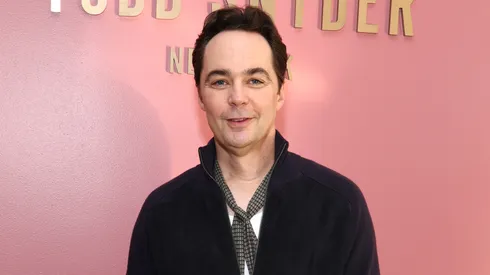
In a career that spans stage, screen, and the unpredictable contours of comedy and drama, Jim Parsons has quietly become one of the most recognizable faces in contemporary entertainment.
He first nurtured his craft in theater before navigating his way through small television parts and minor film roles, laying the groundwork for a breakthrough that would resonate far beyond Hollywood stages.
It was the unlikely genius of Sheldon Cooper on The Big Bang Theory that cast him into the cultural spotlight, a role that would earn him multiple Primetime Emmy Awards and redefine how audiences see the neurotic humor of an awkward physicist.
Sheldon Cooper – The Big Bang Theory (2007–2019)
Jim Parsons’ portrayal of Sheldon Cooper is the role that defined his career and became a cornerstone of modern television comedy. As a brilliant but socially awkward theoretical physicist, he brought to life a character whose rigid logic and eccentric habits became cultural shorthand for lovable geekdom.
Through 12 seasons and nearly 280 episodes, Parsons imbued Sheldon with comedic precision and unexpected emotional depth, turning what could have been a one‑note stereotype into a richly layered character whose evolution mirrored that of the series itself.
This performance didn’t just win laughs — it earned Parsons critical acclaim, including four Primetime Emmy Awards and a Golden Globe for Best Actor. His disciplined delivery of complex dialogue and physical comedy made Sheldon one of the most iconic sitcom characters in television history and forever associated Parsons with the role.
Adult Sheldon Cooper (Narrator) – Young Sheldon (2017–2024)
Though not the on‑screen Sheldon in Young Sheldon, Parsons’ narration work helped bridge the beloved original series with its prequel, providing continuity and emotional resonance. As the grown‑up voice reflecting on his own childhood, his dry wit and familiar cadence added depth to the series’ nostalgic tone.
Beyond narrating, he also served as an executive producer on the show, helping to shape the storytelling and maintain the legacy of one of his career’s most significant characters. This behind‑the‑scenes role underscores his ongoing creative investment in the character and franchise he helped define.
Paul Stafford – Hidden Figures (2016)
In the acclaimed historical drama Hidden Figures, Parsons took on a more dramatic turn as Paul Stafford, a NASA engineer whose bias and resistance complicate the work of the film’s central characters. His role highlighted the systemic challenges faced by women of color in the space program during the 1960s.
This performance deepened Parsons’ repertoire beyond comedy, showcasing his ability to embody characters with flaws and contradictions within a serious, socially significant narrative — expanding audience perceptions of his range as an actor.
Tommy Boatwright – The Normal Heart (2014)
Parsons delivered one of his most critically praised dramatic performances in the HBO adaptation of The Normal Heart, playing Tommy Boatwright, a wealthy man whose evolving relationship with a passionate activist challenges him to confront privilege and responsibility amid the AIDS crisis.
The role demonstrated Parsons’ ability to ground intense emotional material with subtlety and compassion, contributing to a powerful retelling of a pivotal moment in LGBTQ+ history and earning respect across both television and theater communities.

Oh (Voice) – Home (2015)
In the animated adventure Home, Parsons lent his voice to Oh, a lovable and out‑of‑place alien whose humorous optimism drives much of the film’s heart. His vocal performance struck a balance between comedic expressiveness and genuine warmth, helping the movie resonate with family audiences.
This role showcased Parsons’ versatility in voice acting, proving that his distinctive voice and timing could anchor characters outside of live‑action and expand his appeal across different audience demographics.
Larry Simpson – Extremely Wicked, Shockingly Evil and Vile (2019)
In this controversial biographical crime drama, Parsons took on the role of Larry Simpson, a prosecutor involved in the trial surrounding notorious serial killer Ted Bundy.
Though the film received mixed reviews, Parsons’ work added depth to the procedural aspects of the narrative, contrasting sharply with the more surreal persona portrayed by Zac Efron. This performance demonstrated his willingness to engage with darker subject matter and portray real‑world figures within complex, morally ambiguous stories.
Michael – The Boys in the Band (2020)
Parsons brought nuance to Michael in the revival film The Boys in the Band, a queer ensemble piece that revisits a groundbreaking stage play about a group of friends navigating love, identity, and friendship.
His performance balanced humor with introspection, contributing to a cast effort that honored the source material’s legacy while engaging modern audiences. This role underscored Parsons’ deeper involvement in stories that speak to and celebrate LGBTQ+ experiences, both on and off the stage.
Greg Wheeler – A Kid Like Jake (2018)
In the thoughtful family drama A Kid Like Jake, Parsons played Greg Wheeler, a father learning to navigate the emotional and social complexities of raising a gender‑nonconforming child. His performance captured the anxieties and hopes of a parent confronting contemporary questions of identity, acceptance, and community.
The role demonstrated Parsons’ interest in intimate, character‑driven stories that reflect modern family dynamics, further diversifying his body of work beyond conventional sitcom territory.
Prince – Sunset Stories (2012)
In the indie comedy‑drama Sunset Stories, Parsons took on the role of Prince, one of the young protagonists who embark on a peculiar road trip in the wake of a father’s death.
The film’s quiet tone relies on subtle character work, allowing Parsons to explore grounded, understated comedy and drama. This early screen role highlighted his ability to support ensemble casts with performances that enrich a film’s emotional texture.
Crane – The Big Year (2011)
In this ensemble comedy about competitive birdwatching, Parsons played Crane, one among a group of men pursuing the same passionate challenge. Though a smaller role, it placed him alongside major stars and exposed his versatility in larger ensemble projects outside his signature TV work.
While not as prominent as other entries, this role reflected Parsons’ early career range and willingness to participate in varied genres, from niche comedies to historically grounded dramas.