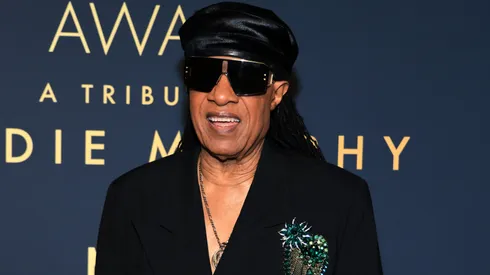
At 76, Stevie Wonder exists in that rare place where an artist no longer feels tied to a single decade. His songs drift through generations almost like inherited memories — played at weddings by parents who first heard them on vinyl, rediscovered by teenagers through samples and streaming playlists, sung in cars long after midnight with the windows down.
Before he became one of music’s most decorated performers, he was simply a child from Michigan with a harmonica, a piano and a voice powerful enough to stop an entire Motown studio in its tracks.
The label signed him at age 11, but what followed was far bigger than the story of a gifted prodigy. Over the years, he transformed soul and R&B into something cinematic, spiritual, political, and deeply human all at once.
How did Stevie Wonder become a Motown prodigy at just 11 years old?
Before the Grammys, sold-out arenas, and classic albums, Stevie Wonder was simply “Little Stevie Wonder,” a blind child from Michigan whose musical talent stunned Motown founder Berry Gordy in the early 1960s.
Signed to Motown’s Tamla label at age 11, Wonder quickly proved he was far more than a novelty act. He could play multiple instruments almost instinctively — piano, harmonica, drums — and possessed a voice powerful enough to cut through the polished machinery of the Motown era.
His live recording “Fingertips” became a No. 1 hit when he was only 13, making him the youngest artist ever to top the Billboard Hot 100 at the time. The remarkable part is how completely he evolved afterward.
Many child stars become trapped inside the image that first made them famous, but Wonder spent the late 1960s and early 1970s reinventing himself creatively. By the time albums like Talking Book and Innervisions arrived, he was no longer simply a Motown performer — he had become a songwriter, producer, and visionary artist shaping the future of soul and R&B music.
Why is Songs in the Key of Life considered Stevie Wonder’s masterpiece?
Released in 1976, Songs in the Key of Life is often described as the peak of Stevie Wonder’s legendary “classic period.” The double album — which also included a bonus EP — stretched across 21 songs and nearly every emotional register imaginable: joy, heartbreak, spirituality, protest, romance, nostalgia, and celebration.
Tracks like “Sir Duke,” “As,” “I Wish,” and “Isn’t She Lovely” became cultural landmarks, while deeper cuts explored poverty, racism, faith, and Black identity with unusual emotional depth. Part of what makes the album feel almost mythical decades later is its ambition.
Wonder produced, arranged, and wrote nearly the entire project himself while experimenting heavily with synthesizers and new recording technology. Motown reportedly grew nervous during its lengthy production process, especially after giving him one of the largest recording contracts in music history at the time. The risk paid off spectacularly: the album debuted at No. 1, stayed there for 14 weeks, and eventually became one of the defining records of modern popular music.
How did Stevie Wonder help create Martin Luther King Jr. Day?
Stevie Wonder’s legacy extends far beyond music because he also played a major role in the campaign to establish Martin Luther King Jr. Day as a federal holiday in the United States. In 1980, he released the song “Happy Birthday,” not simply as a celebration track, but as part of a larger political movement pushing Congress to officially honor Dr. Martin Luther King Jr.
The song became an anthem for activists and helped bring younger audiences into the campaign. Wonder did not limit himself to writing music. He actively campaigned, organized rallies, and used his celebrity status to pressure lawmakers during years when the proposal repeatedly faced political resistance.
His activism became so influential that many historians and music writers now credit him as one of the central public figures behind the holiday’s eventual approval in 1983. It remains one of the clearest examples of an artist using pop culture not just to entertain, but to shape American history itself.
Which Stevie Wonder songs still define R&B and soul music today?
Few artists possess a catalog as universally recognizable as Stevie Wonder’s. Songs like “Superstition,” “Signed, Sealed, Delivered I’m Yours,” “Isn’t She Lovely,” “Higher Ground,” and “Sir Duke” continue appearing everywhere from movie soundtracks to wedding playlists and hip-hop samples.
His music became timeless partly because it blended technical brilliance with emotional warmth; even the most complex arrangements still sounded joyful and deeply human. Modern audiences continue rediscovering his catalog through streaming and social media, while musicians across genres constantly reference his influence.
Discussions about Songs in the Key of Life still describe tracks like “As,” “I Wish,” and “Another Star” as some of the greatest songs ever recorded, with fans praising the album’s emotional richness decades after its release.
What is Stevie Wonder’s legacy at 76?
At 76, Stevie Wonder’s influence feels almost impossible to measure because it extends beyond awards or sales numbers. He helped redefine what an R&B artist could be: not just a singer, but a complete creative force capable of writing, producing, arranging, and socially challenging audiences all at once.
Artists from Prince and Michael Jackson to Beyoncé and Kanye West have drawn inspiration from his songwriting, experimentation, and emotional honesty. Yet perhaps the most remarkable thing about Wonder’s legacy is how alive his music still feels.
His songs continue moving naturally through generations and cultures, sounding just as powerful during family celebrations as they do in political documentaries or late-night drives. Decades after first stepping into Motown as a child prodigy, Stevie Wonder remains less like a nostalgic figure from the past and more like a permanent part of the soundtrack of modern life.