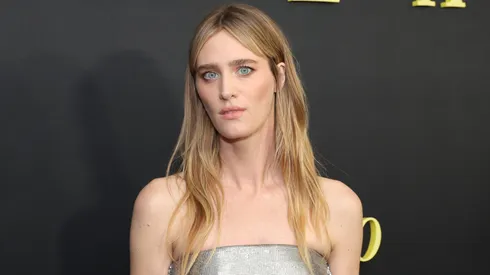
Few contemporary actresses have built a career as quietly distinctive as Mackenzie Davis. Born in Vancouver in 1987, she emerged from independent cinema before steadily moving into high-profile productions, shaping a filmography that blends intimacy with scale.
Her early work gave way to wider recognition through projects like The Martian and the AMC series Halt and Catch Fire, where her portrayal of programmer Cameron Howe became a defining role across four seasons.
Her performances often share a common thread: a naturalism and precision that ground even the most high-concept narratives. At 39, her body of work reflects not a search for visibility, but a consistent instinct for roles that linger—quietly, but unmistakably—well beyond the screen.
Speak No Evil (Louise Dalton)
In the remake of Speak No Evil, Mackenzie Davis steps into one of the most psychologically demanding roles of her recent career. As Louise Dalton, she becomes part of a seemingly ordinary family getaway that gradually shifts into something deeply unsettling.
The film builds its tension through social discomfort—awkward conversations, blurred boundaries, and moments that feel slightly “off”—and Davis plays directly into that slow erosion of normalcy, capturing the unease of someone trying to remain polite while sensing that something is fundamentally wrong.
What makes her performance especially effective is its precision. Davis avoids exaggerated reactions, instead relying on micro-expressions, pauses, and subtle shifts in body language to communicate fear and doubt.
As the situation intensifies, Louise’s internal conflict—between confrontation and compliance—becomes the emotional core of the story. It’s a restrained, carefully calibrated performance that mirrors the film’s methodical pacing, allowing the dread to build naturally rather than forcing it, and reinforcing her strength in roles that thrive on tension rather than spectacle.
Halt and Catch Fire (Cameron Howe)
If there’s a role that truly defined Mackenzie Davis’ early career, it’s Cameron Howe in Halt and Catch Fire. Across four seasons, she portrayed a fiercely independent programmer navigating the rise of the tech industry in the 1980s and ’90s, bringing both volatility and vulnerability to the character.
What made the performance stand out was its evolution. Davis allowed Cameron to grow organically, shifting from rebellious outsider to a more introspective figure without losing the character’s edge. It’s a performance built on nuance, widely regarded as one of the most compelling in modern television drama.
Black Mirror (Yorkie)
In the acclaimed Black Mirror episode “San Junipero,” Davis delivered one of the most emotionally resonant performances of her career. As Yorkie, she portrayed a shy, reserved woman discovering connection and identity within a simulated reality.
The role required a delicate balance between innocence and emotional depth, and Davis handled it with remarkable subtlety. Her chemistry with Gugu Mbatha-Raw elevated the episode into something far beyond science fiction, turning it into a story about love, memory, and second chances.
The Martian (Mindy Park)
In Ridley Scott’s The Martian, Davis played NASA satellite communications engineer Mindy Park, a role that placed her within a large ensemble cast led by Matt Damon.
Though not the central character, her performance stood out for its clarity and precision. She brought a sense of realism to the film’s scientific framework, grounding key moments with a calm, focused presence that made the unfolding crisis feel tangible.
Blade Runner 2049 (Mariette)
Denis Villeneuve’s Blade Runner 2049 is known for its layered world-building, and Davis’ role as Mariette adds texture to that universe. Though her screen time is limited, her character plays a key role within the underground resistance.
Davis uses minimal dialogue to create a sense of mystery and quiet intensity. It’s a restrained performance that fits seamlessly into the film’s atmospheric tone, proving her ability to leave a lasting impression even in brief appearances.
Terminator: Dark Fate (Grace)
In Terminator: Dark Fate, Davis stepped into a physically demanding leading role as Grace, an augmented soldier sent from the future. The performance required a blend of action, emotional weight, and physical transformation.
What sets her apart in the film is how she balances strength with vulnerability. Grace isn’t just a protector—she’s a character defined by sacrifice and humanity, and Davis ensures that emotional core remains at the forefront of the spectacle.
Tully (Marlo’s Support System – minor role)
Although her role in Tully is brief, Davis contributes to the film’s grounded tone, which centers on motherhood and identity. Working alongside Charlize Theron, she adds subtle layers to the story’s emotional landscape.
Her presence, even in a supporting capacity, reinforces her ability to integrate seamlessly into character-driven narratives. It’s another example of how Davis elevates material without needing to dominate it.
The Turning (Kate Mandell)
In The Turning, Davis takes on a lead role in a modern adaptation of Henry James’ The Turn of the Screw. As Kate Mandell, she navigates a gothic environment filled with ambiguity and psychological tension.
Her performance anchors the film, particularly as the narrative leans into uncertainty. Davis plays the role with a controlled intensity, allowing the audience to question what is real and what is imagined.
Happiest Season (Harper Caldwell)
In the holiday romantic comedy Happiest Season, Davis explores a very different tone, playing Harper Caldwell in a story about relationships, identity, and family dynamics.
The role allows her to shift into lighter, more comedic territory while still maintaining emotional authenticity. Her performance reflects the complexity of a character caught between personal truth and external expectations.
Izzy Gets the F*ck Across Town (Izzy)
This indie comedy showcases Davis in a completely different light. As Izzy, she plays a chaotic, impulsive character trying to cross Los Angeles in a single day, driven by a mix of desperation and determination.
The film leans heavily on her performance, and she delivers with energy and unpredictability. It’s a reminder of her indie roots and her willingness to take risks with unconventional roles.
Always Shine (Anna)
In Always Shine, Davis explores themes of identity and rivalry within the entertainment industry. Her portrayal of Anna is layered, shifting between confidence and insecurity as the story unfolds.
The film relies on psychological tension rather than plot-driven twists, and Davis embraces that ambiguity. Her performance adds depth to a narrative that examines the darker side of ambition and self-perception.