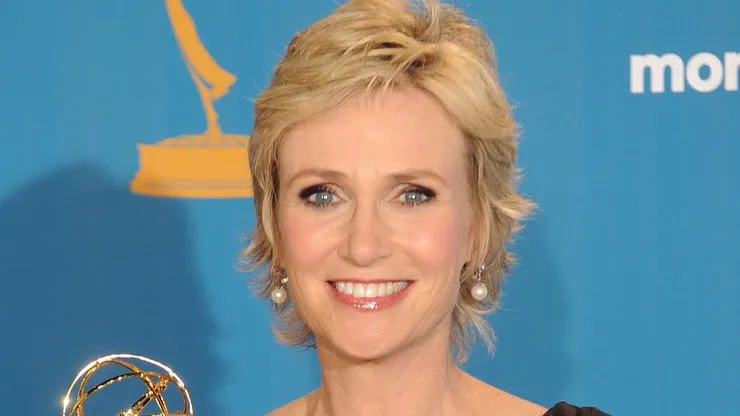
When the New York Times Validated the Tracksuit
In September 2011, at the absolute height of Glee mania, The New York Times Magazine ran a historic cover story entitled, “Eight Actors Who Turn Television into Art.” Alongside dramatic heavyweights like Bryan Cranston (Breaking Bad) and Peter Dinklage (Game of Thrones), the publication placed Jane Lynch on its cover.
It was a staggering, highly deserved validation of her performance. While a musical dramedy about a high school show choir was often dismissed by serious critics as campy teen fare, the industry recognized that Lynch was doing something incredibly complex. She wasn’t just delivering mean-spirited insults; she was building a layered, Shakespearean tragicomedy in a bright red athletic outfit. To honor her birthday, we are spotlighting the ten Glee episodes that perfectly showcase that Emmy-winning range.
The 10 Absolute Best Glee Episodes for Sue Sylvester
1. “Pilot” (Season 1, Episode 1)
You can’t have a legacy without a perfect introduction. The very first hour of Glee established Sue Sylvester as a television legend from the moment she walked on screen. Lynch immediately locked in the character’s terrifying, low-register speaking voice, her utter disdain for Will Schuester’s hair, and her absolute obsession with the Cheerios. It was the blueprint for the modern television antagonist.
2. “Vitamin D” (Season 1, Episode 6)
When Principal Figgins forces Sue to co-direct the glee club alongside Will, Lynch delivers some of her finest, most chaotic political maneuvering. From secretly dosing the kids with pseudoephedrine to spark a performance rivalry to turning the students against their actual teacher, this episode is a hilarious showcase of Sue’s Machiavellian brain operating at 100% capacity.
3. “Wheels” (Season 1, Episode 9)
The episode that proved Sue Sylvester was human. After spending weeks mocking Artie’s wheelchair, Sue suddenly funds a brand-new set of ramps for the school. We learn the heartbreaking motivation behind her change of heart: she has been privately caring for her beloved older sister, Jean, who has Down syndrome. Lynch’s quiet, incredibly tender scenes with Robin Trocki (Jean) completely recontextualized her cartoonish villainy, grounding the entire series in real-world empathy.
4. “The Power of Madonna” (Season 1, Episode 15)
This is peak, untouchable camp. Obsessed with Madonna’s message of female empowerment, Sue has the singer’s catalog blasted over the school intercom. The episode’s true crown jewel is Lynch’s shot-for-shot, incredibly precise recreation of the “Vogue” music video. It is an absolute masterpiece of physical comedy and vocal dedication that directly secured Lynch her Primetime Emmy Award.
5. “The Substitute” (Season 2, Episode 7)
After successfully infecting Principal Figgins with the flu, Sue gets herself appointed as the acting principal of McKinley High. What follows is a glorious reign of terror: she bans tater tots, physically locks students in detention, and patrols the halls like a military dictator. It is a brilliant, laugh-out-loud look at what happens when Sue gets actual, institutional authority.
6. “Furt” (Season 2, Episode 8)
How do you top a principal takeover? By marrying yourself. In one of the show’s most brilliantly absurd subplots, Sue decides that there is simply no human being on Earth worthy of her hand in marriage, so she plans a lavish ceremony to wed herself. The episode features a legendary guest spot by Carol Burnett as Sue’s Nazi-hunting, absentee mother. Their deadpan, harmonized duet of “Ohio” remains one of the finest musical moments of the second season.
7. “The Sue Sylvester Shuffle” (Season 2, Episode 11)
Aired directly after the Super Bowl, this high-budget episode features Sue at her most unhinged. Disillusioned by traditional cheerleading, she decides she wants to shoot Brittany out of a real-life cannon. When the school blocks her plans, she goes on an iconic, slow-motion physical rampage through Figgins’ office, throwing lamps and screaming in pure rage. Lynch plays the cartoon violence with such a straight, terrifying intensity that it becomes an absolute comedic masterclass.
8. “Funeral” (Season 2, Episode 21)
If “Wheels” introduced Sue’s heart, “Funeral” shattered it. Following the sudden, tragic passing of her sister Jean, Sue is left entirely incapacitated by grief. In a beautiful display of solidarity, the glee club steps in to help her plan the service, decorating the room with props from Jean’s favorite movie, Willy Wonka. When Sue breaks down trying to deliver the eulogy, Will steps up to help her finish. It is a devastating, stunningly acted episode that Lynch officially submitted for her 2011 Emmy bid.
9. “On My Way” (Season 3, Episode 14)
Following Quinn Fabray’s devastating car accident, Sue’s maternal instincts kick into overdrive. In a series of highly quiet, protective scenes, she reveals to Quinn that she is pregnant with a daughter and offers her a shoulder to lean on during her recovery. It is a beautiful reminder of Sue’s complex moral compass—she will happily tear down adults, but she will fiercely protect her “kids” when the world gets too heavy.
10. “The Hurt Locker, Part One” (Season 6, Episode 4)
In the final season, Glee fully leaned into its own bizarre self-awareness, and Sue was the catalyst. In this episode, it is revealed that Sue keeps a literal secret “hurt locker” storage room dedicated entirely to her obsession with reuniting Kurt and Blaine. From physically hypnotizing Sam to act out her fanfictional romantic schemes to dramatically descending from the theater rafters, Lynch embraced the absolute surrealism of the final season with infectious, joyful abandon.