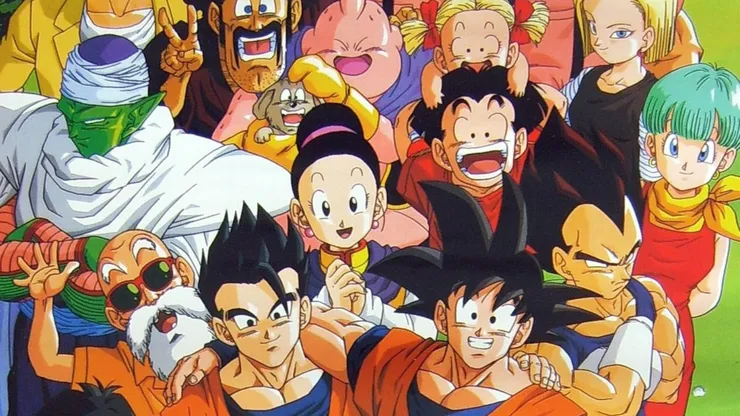
Following the massive success of the original Dragon Ball series — a whimsical, loosely Chinese-mythology-inspired adventure about a monkey-tailed boy hunting magical orbs — Toei Animation decided to rebrand the anime adaptation of Akira Toriyama’s manga for its next, darker chapter.
On April 26, 1989, Dragon Ball Z premiered. The very first episode (“The New Threat”) didn’t just age up the protagonist, Goku, and introduce his young son, Gohan. It fundamentally rewrote the series’ entire mythology. By revealing that Goku was actually an alien from a dying warrior race, the franchise pivoted from mystical fantasy into high-stakes, sci-fi martial arts. The world of anime was never the same.
The Sci-Fi Pivot That Defined a Generation
The genius of Dragon Ball Z was its relentless escalation. Toriyama traded tournament rings for alien planets, and martial arts techniques for planet-destroying energy beams.
This era introduced the tropes that would define the shōnen (young male demographic) genre for decades to come: the desperate training arcs, the gravity-defying power-ups, the enemies-turned-allies (Piccolo, Vegeta), and the iconic, golden-haired Super Saiyan transformation. When Goku first transformed against Frieza on the dying planet Namek, it wasn’t just a plot twist; it was a cultural reset that inspired an entire generation of creators worldwide.
Conquering the West on Toonami
While the series was an immediate smash hit in Japan in 1989, its global dominance took a few more years to fully materialize.
For Western audiences, the true explosion happened in the late 1990s when Cartoon Network acquired the series for its legendary afternoon Toonami block. Accompanied by a heavy metal-infused replacement soundtrack by Bruce Faulconer and the iconic “Rock the Dragon” opening theme, DBZ became appointment television for millions of kids rushing home from school. It served as the crucial gateway drug for Western audiences, proving to network executives that serialized Japanese animation could be massively profitable in the United States.
An Immortal Legacy
As we celebrate this 37th anniversary in 2026, the milestone carries a poignant weight following the passing of creator Akira Toriyama in early 2024.
Yet, Toriyama’s world has never been more alive. The franchise remains a multi-billion-dollar juggernaut, sustained by the massive success of sequel series like Dragon Ball Super, recent hit theatrical films like Super Hero, the latest Daima project, and critically acclaimed video games like Sparking! ZERO.
Thirty-seven years after Raditz first crashed into a farmer’s field, Goku is still charging his Kamehameha — and the world is still watching.