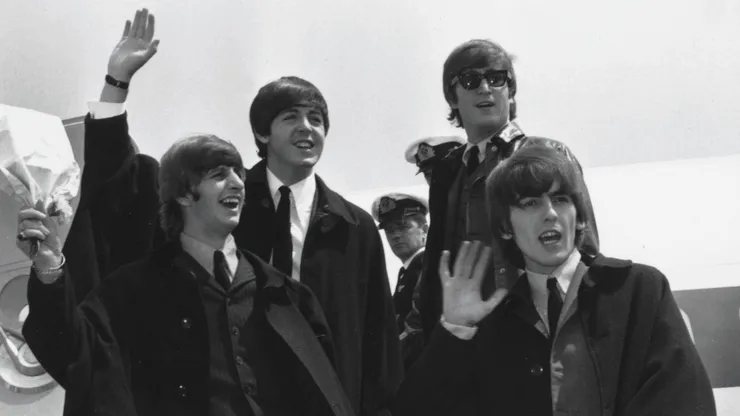
Ringo is often remembered as the easygoing, stabilizing anchor of The Beatles—the man who kept his head down while the songwriting geniuses bickered. But during the hot, claustrophobic summer of 1968, even the most patient man in rock reached his absolute limit. This is the story of the two weeks where Ringo walked away, leaving Paul McCartney to pick up the drumsticks and forcing the band to realize they were nothing without their heartbeat.
The Toxic Air of Abbey Road’s Summer of ’68
The sessions for what would become The Beatles (affectionately known as the White Album) were a far cry from the unified brotherhood that conquered America in 1964. Fresh off a transformative but highly tense spiritual retreat in India, the group entered Abbey Road Studios deeply fractured.
Instead of a collaborative unit, the band had broken into separate entities. John Lennon, Paul McCartney, and George Harrison frequently took over different rooms within the studio complex, working on their individual songs in complete isolation. Tensions were further exacerbated by the constant, unprecedented presence of Yoko Ono in the studio, which shattered the band’s traditional “no outsiders” policy.
For a collaborative player like Ringo, who thrived on the tight-knit camaraderie of a live band, the environment was agonizing. The days became long, tedious exercises of being ordered to play the same backing track over and over while the chief songwriters chased absolute perfectionism.
The Paradox of the “Unloved” Beatle
The final straw arrived on August 22, 1968, during an intensely frustrating session for “Back in the U.S.S.R.” Paul McCartney, ever the exacting perfectionist, began heavily micro-managing Ringo’s drum parts, offering blunt criticisms and telling him exactly how to play. Feeling uninspired, exhausted, and convinced that his playing was deteriorating under the scrutiny, Ringo decided he had had enough.
Before walking out the door, he visited his bandmates individually to deliver the news. The conversations exposed a fascinating, deeply ironic psychological rift within the group:
- The Visit to John: Ringo confided in Lennon, stating, “I’m leaving the group because I’m not playing well and I feel unloved and out of it, and you three are really close.” To Ringo’s utter shock, John replied, “I thought you three were close!”
- The Visit to Paul: Ringo then went to McCartney’s house and gave the same explanation. Paul expressed identical surprise, admitting that he, too, felt like the isolated outsider looking in.
The entire band was suffering from a collective, paranoid delusion that everyone else was getting along beautifully without them. But Ringo was the only one with the conviction to actually walk.
Sardinia, Peter Sellers, and the Silver Lining
Needing a total escape from the British press and the studio pressure cooker, Ringo borrowed a luxury yacht belonging to his close friend, actor Peter Sellers, and fled to the sun-drenched coast of Sardinia with his family.
While floating on the Mediterranean, Ringo managed to find the creative peace that had eluded him in London. After a conversation with the yacht’s captain about how octopuses crawl along the sea bed collecting shiny stones to build small marine sanctuaries, Ringo picked up an acoustic guitar. Away from the critical eyes of his bandmates, he began composing “Octopus’s Garden”—a whimsical, comforting song about wanting to hide beneath the storm that would eventually land on 1969’s Abbey Road.
Paul on the Drum Throne and The Historic Telegram
Back at Abbey Road, the show had to go on. Rather than halting production, the remaining three Beatles stubbornly kept their studio bookings. To complete the tracks for “Back in the U.S.S.R.” and “Dear Prudence,” Paul McCartney confidently stepped onto the drum throne, with John and George helping to overdub additional percussion.
While Paul put his money where his mouth was—delivering a hard-hitting, aggressive drum track—the atmosphere in the studio quickly grew cold. Without Ringo’s grounding presence, the remaining trio realized a fundamental truth: the distinct, human swing of their music vanished without their permanent drummer.
Recognizing their massive mistake, the band reached out to Sardinia, sending a legendary, heartfelt telegram to Ringo’s yacht.
The message did its job. Refreshed from his vacation and reassured of his vital value to the band’s identity, Ringo agreed to return to London.
Though The Beatles would permanently dissolve just under two years later, that brief two-week hiatus in 1968 saved the White Album and preserved the band’s dignity for their final stretch. It proved that Ringo Starr was never just a lucky passenger on the rocket ship—he was the engine.