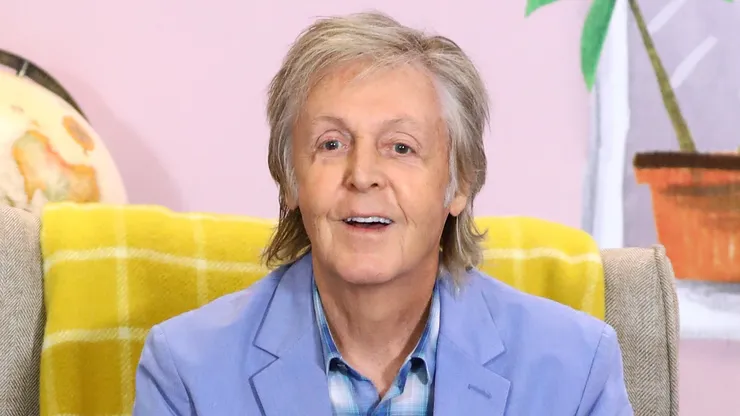
On any given day in 2026, a melody written by Sir Paul McCartney will be hummed, streamed, broadcast, or covered in every single time zone on planet Earth. His music has escaped the boundaries of mere entertainment to become a fundamental component of human folklore.
While lesser artists would have long since retreated to a quiet life of luxury, McCartney enters his mid-eighties as an active, chart-topping entity. Fresh off his high-profile spring appearances on Saturday Night Live and an intimate performance at London’s Roundhouse, his cultural weight remains entirely unmovable. To honor his birthday, we are moving past the standard song countdowns to trace the narrative engine, studio breakthroughs, and structural legacy of the most influential musician to ever walk the stage.
The Liverpool Genesis: Fusing Tragedy Into Harmony
The story of modern popular music effectively began on July 6, 1957, at a suburban church fete in Woolton, Liverpool, where a 15-year-old McCartney was introduced to a teenage John Lennon. What began as a mutual love for American rock-and-roll quickly mutated into the most formidable, competitive songwriting partnership in human history.
However, the secret fuel of the Lennon-McCartney dynamic was a shared undercurrent of profound grief. McCartney lost his mother, Mary, to cancer when he was just 14; Lennon lost his mother, Julia, in a tragic accident shortly after. This invisible emotional shorthand allowed them to infuse raw, teenage pop music with an unprecedented emotional maturity. They established a creative paradigm where pop music wasn’t just disposable youth fodder, but a legitimate canvas for complex human expression.
The Studio Vanguard: Pioneering the Avant-Garde
A common cultural misconception paints Lennon as the gritty avant-garde rebel and McCartney as the safe, traditional pop craftsman. In reality, rock history reveals that Paul was the primary driver of The Beatles’ most daring sonic experiments.
During the mid-1960s, it was McCartney who immersed himself in London’s underground art scene, bringing tape-loop experimentation, musique concrète, and classical string arrangements into the pop lexicon.
The Symphonic Leap: He single-handedly spearheaded the concept behind Sgt. Pepper’s Lonely Hearts Club Band, permanently inventing the modern concept album.
The Indie Blueprint: When the band fractured in 1970, he retreated to his farm and recorded his self-titled solo debut entirely alone on a four-track recorder. In doing so, he accidentally invented the aesthetic foundation for modern lofi indie-pop and bedroom pop decades before the terms even existed.
The Melodic Revolution of the Electric Bass
It is impossible to overstate how thoroughly McCartney redefined the physical instrument he played. Before he took over bass duties for The Beatles, the electric bass was treated by the industry as a rigid, functional timekeeping anchor—a subterranean instrument meant to quietly hold down the root notes.
Using his iconic 1961 Höfner violin bass—which made international headlines recently after being miraculously found and returned to him after a 51-year search—McCartney turned the bass into a driving, melodic lead instrument. Inspired by Motown giant James Jamerson, Paul began composing fluid, contrapuntal basslines that danced around the main vocal melodies. Tracks from the late-60s era completely changed how studio engineers mixed low-end frequencies, altering the DNA of rock and pop arrangements forever.
The Unmatched Endurance of a Live Legend
Perhaps the most inspiring facet of McCartney’s legacy at 84 is his refusal to stop. While his peers have largely retired from the rigors of the road, Paul continues to treat performing as a vital, biological necessity.
His ongoing live output across the 2020s has redefined the biological boundaries of aging in rock-and-roll. Whether commandingly steering a packed stadium or dropping into surprise, phone-free pop-up gigs at intimate venues like Los Angeles’ Fonda Theatre, his performances are legendary marathons. Clocking in at nearly three hours, his shows feature zero breaks, zero costume changes, and a multi-generational masterclass in showmanship that spans six decades of pristine music history.
Sir Paul McCartney enters his 84th year not as a relic of the past, but as a permanent, living testament to the heights that human creativity can reach. He has written the soundtrack to our collective triumphs, our historical heartbreaks, and our personal quiet moments.