There are very few individuals in the history of modern entertainment who can successfully execute a complete creative metamorphosis without ever losing an ounce of their raw street credibility.
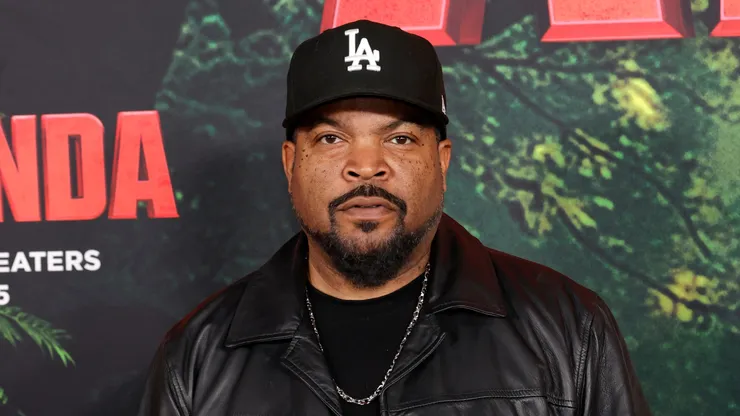
O’Shea Jackson, known globally as Ice Cube, did exactly that. He wrote the foundational blueprint for West Coast gangsta rap with N.W.A., blew up his own trajectory to launch a historic solo career, transitioned into a billion-dollar Hollywood actor, writer, and producer (Boyz n the Hood, Friday, Ride Along), and went on to found the highly successful BIG3 professional basketball league.
While Cube has spent recent months expanding his business empire and hinting at a highly anticipated new solo album project, his musical foundation remains completely untarnished. To honor his birthday, we are skipping the movie sets and plugging directly into the speakers to rank the 5 greatest, most impactful solo hits of Ice Cube’s historic discography.
“AmeriKKKa’s Most Wanted” (1990)
When Ice Cube infamously walked away from N.W.A at the absolute peak of their global notoriety over financial disputes, the entire music industry assumed he was committing career suicide. Instead, he traveled to New York, teamed up with Public Enemy’s production team (The Bomb Squad), and dropped this blistering title track. Driven by an aggressive, chaotic wall of sound and Cube’s unyielding, rapid-fire socioeconomic commentary, the track instantly announced him as a formidable, singular solo force who didn’t need a group to command the spotlight.
“You Know How We Do It” (1993)
By 1993, the sonic landscape of West Coast hip-hop had completely shifted from raw, aggressive political punk toward smooth, bass-heavy G-Funk. Proving his chameleonic ability to master any production style, Cube dropped this smooth-rolling classic. Built around an infectious, hypnotic bassline and an iconic Evelyn “Champagne” King sample, the track functions as a definitive love letter to Southern California car culture, showing that Cube could deliver effortless, laid-back vibe tracks right alongside his hardest street anthems.
“No Vaseline” (1991)
You cannot accurately document the history of hip-hop without discussing the art of the diss track, and Ice Cube holds the gold standard. Positioned as the final track on his masterpiece album Death Certificate, “No Vaseline” was Cube’s nuclear response to his former bandmates and their manager following their verbal jabs.
Operating entirely solo against four people, Cube delivered a lyrical clinic of raw anger, comedic punchlines, and targeted betrayal. Over 35 years later, music historians universally rank it alongside Tupac’s “Hit ‘Em Up” and Nas’s “Ether” as one of the most devastating, single-handed teardowns in musical history.
“Check Yo Self” (The ‘Message’ Remix) (1993)
If “It Was a Good Day” gave him critical immortality, the remix of “Check Yo Self” handed him his absolute biggest commercial pop-chart hammer. Sampling Grandmaster Flash & The Furious Five’s legendary track “The Message” and featuring Das EFX, the song was an absolute juggernaut. It spent weeks dominating the airwaves, peaking at No. 1 on the Billboard Hot R&B/Hip-Hop Singles chart and crossing over into the pop Top 20. It beautifully demonstrated Cube’s elite ability to package hard-hitting street warnings into a track that could simultaneously pack a global club dance floor.
“It Was a Good Day” (1992)
There was never any doubt about the top spot. “Today Was a Good Day” isn’t just Ice Cube’s greatest song; it is one of the most culturally significant audio recordings of the 20th century.
Stepping away from the heavy, aggressive, and often exhausting realities of systemic oppression and violence that dominated his earlier work, Cube chose instead to document a rare, poetic, and peaceful 24 hours in South Central Los Angeles. From eating breakfast with no hog to spotting the Goodyear Blimp rolling through the smog, the track is a masterclass in narrative irony and cinematic realism. It gave the West Coast its ultimate, eternal anthem and proved that Cube’s finest weapon wasn’t his anger—it was his unparalleled ability to observe the human condition.