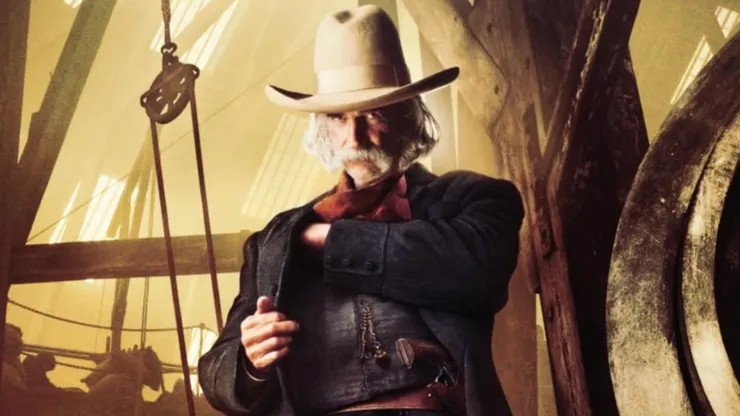
While fans routinely associate him with classic Westerns and gritty dramas, one of his most beloved genre crossovers arrived in 2007, when he took to the skies as Texan aeronaut Lee Scoresby in The Golden Compass.
While filmgoers and critics widely considered his casting a match made in cinematic heaven, the behind-the-scenes preparation revealed a veteran artist deeply committed to respecting the source material.
The Ultimate Preparation: Putting the Novels Before the Screenplay
When New Line Cinema and writer-director Chris Weitz approached Elliott to join the star-studded fantasy adaptation, the actor faced an immediate hurdle: he had never read a single page of Philip Pullman’s internationally acclaimed His Dark Materials book series.
Hollywood tradition often sees actors dive straight into a film’s script to evaluate screen time or salary details. Elliott, however, took a decidedly different approach. According to behind-the-scenes trivia, he explicitly chose not to open the movie’s screenplay until he had read Pullman’s books first.
Wanting to understand Lee Scoresby as the author originally envisioned him—alongside his hare daemon, Hester—Elliott immersed himself in the rich prose of Northern Lights (The Golden Compass) before ever analyzing how Hollywood intended to adapt it. By doing so, Elliott gained a fundamental understanding of the character’s moral compass, dry humor, and fierce loyalty to young Lyra Belacqua (Dakota Blue Richards).
Why Elliott Was the Only Choice for the Sky-Faring Aeronaut
Pullman’s literary creation was a hot-air balloonist hailing from the country of Texas—a sharp-shooting, wisecracking adventurer whose outer cynicism masked a deeply protective heart. The moment production began assembling the cast, fans of the novels practically demanded Elliott for the role, recognizing that his real-life persona fit the literary description seamlessly.
When The Golden Compass hit theaters in December 2007, many elements of the film divided purists due to studio-enforced script cuts. Yet, Elliott’s performance as Lee Scoresby earned unanimous praise. Whether tipping his brim, sharing quiet wisdom aboard his balloon, or standing shoulder-to-shoulder with armored bears, Elliott inhabited the character so naturally that even critics who panned the film singled out his performance as a triumph.
Elliott’s decision to prioritize Pullman’s books over a Hollywood studio draft speaks volumes about his professional philosophy. Throughout his six decades in show business, Elliott has treated every genre—from indie character studies and mainstream blockbusters to sprawling fantasy epics—with equal artistic gravity.