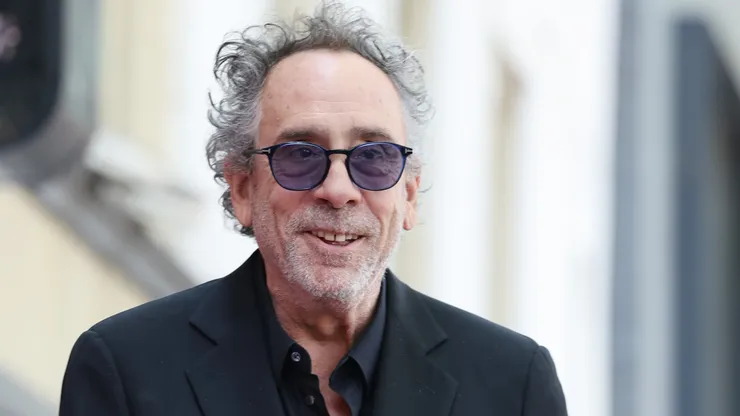
Renowned for his distinct gothic aesthetic, beloved misfits, and decades-long musical partnership with composer Danny Elfman, Burton has spent over four decades shaping the visual landscape of modern fantasy cinema.
To celebrate his birthday, here is the definitive ranking of his 10 greatest cinematic works.
Edward Scissorhands (1990)
A heartbreaking modern fairy tale, Edward Scissorhands remains Burton’s most personal cinematic achievement. Starring Johnny Depp as an incomplete artificial man with scissor blades for hands, the film juxtaposed pastel suburban conformity with dark gothic vulnerability, kicking off one of Hollywood’s most iconic director-actor creative partnerships.
Beetlejuice (1988)
Bursting with manic practical effects and macabre humor, Beetlejuice established Burton as a true box-office visionary. Michael Keaton’s chaotic turn as the titular “bio-exorcist” alongside Winona Ryder’s gothic teen Lydia Deetz permanently redefined spooky comedy for a generation.
Batman (1989)
Decades before comic book adaptations dominated multiplexes, Burton re-engineered the Dark Knight for the modern era. Trading 1960s television camp for a shadow-drenched Art Deco Gotham City, Burton paired Michael Keaton’s brooding hero with Jack Nicholson’s legendary Joker, revolutionizing the summer blockbuster landscape.
The Nightmare Before Christmas (1993)
Though directed by Henry Selick, The Nightmare Before Christmas originated entirely from Burton’s story, poem, and iconic character designs. The stop-motion holiday masterpiece following Jack Skellington, the Pumpkin King of Halloween Town who accidentally discovers Christmas, stands as one of the most beloved and enduring pop-culture achievements bearing Burton’s name.
Ed Wood (1994)
Critically lauded as one of Burton’s finest artistic works, this black-and-white biopic lovingly honors Edward D. Wood Jr., famously dubbed the worst film director of all time. Powered by Johnny Depp and an Oscar-winning performance from Martin Landau as Bela Lugosi, the feature serves as an empathetic love letter to passionate Hollywood dreamers.
Batman Returns (1992)
Given full creative freedom after the success of the 1989 original, Burton pushed his comic-book universe into darker, more operatic gothic territory. Featuring Michelle Pfeiffer’s unforgettable performance as Catwoman alongside Danny DeVito’s tragic, monstrous Penguin, Batman Returns remains a quintessential display of unadulterated Burton aesthetics.
Sleepy Hollow (1999)
Drenched in fog, damp autumn leaves, and striking Hammer Horror homage, Burton’s atmospheric adaptation of Washington Irving’s classic tale showcased his absolute visual mastery. Starring Johnny Depp as an eccentric, cowardly Ichabod Crane investigating a series of decapitations, the film stands as peak gothic cinema.
Big Fish (2003)
Stepping away from dark shadows into colorful southern tall tales, Big Fish stands as Burton’s most emotionally poignant drama. Starring Ewan McGregor and Albert Finney, the fantasy exploration of a son coming to terms with his dying father’s mythical stories proved Burton could evoke deep, tear-jerking warmth alongside whimsical surrealism.
Sweeney Todd: The Demon Barber of Fleet Street (2007)
Blending Stephen Sondheim’s musical genius with Grand Guignol gothic horror, Sweeney Todd allowed Burton to showcase his command of operatic spectacle. Johnny Depp and Helena Bonham Carter anchored the Victorian tale of revenge and meat pies with bleak, striking beauty.
Pee-wee’s Big Adventure (1985)
Burton’s feature directorial debut introduced audiences to his signature eccentric worldview. Starring Paul Reubens as the child-like Pee-wee Herman on a nationwide search for a stolen bicycle, the cult hit marked the first historic collaboration between Burton and composer Danny Elfman.