There was a time when action heroes didn’t bleed, didn’t hesitate, and certainly didn’t crack jokes while crawling barefoot through broken glass. Then came Bruce Willis, who shifted the axis of the genre with a presence that felt disarmingly real. His rise in Die Hard wasn’t just a breakout moment, it was a recalibration.
The swagger remained, but it was layered with exhaustion, irony, and a kind of reluctant courage that made every explosion feel personal rather than ornamental. Across the decades that followed, he carried that same unpredictability into an evolving action landscape, moving seamlessly between grounded thrillers and ambitious sci-fi spectacles.
Die Hard (1988)
When Bruce Willis first appeared as John McClane, the action genre was dominated by near-mythical figures—heroes who rarely broke a sweat, let alone a bone. Die Hard disrupted that formula instantly.
Set inside a Los Angeles skyscraper under siege, the film turned confinement into tension and vulnerability into spectacle. McClane bleeds, limps, and mutters to himself, creating a sense of immediacy that audiences hadn’t quite experienced before.
What elevates the performance is how Willis balances exhaustion with defiance. The character isn’t chasing heroism; he’s surviving it. That subtle shift became a blueprint for modern action cinema, where stakes are measured not just in explosions, but in endurance.
Even decades later, echoes of McClane’s DNA can be found in countless protagonists who owe their humanity to that original, barefoot crawl through chaos.
Die Hard with a Vengeance (1995)
By the time the third installment arrived, the formula had evolved from claustrophobic tension to sprawling urban chess. This time, McClane is thrown into a city-wide game orchestrated by a calculating villain, forcing him to think as much as react.
The addition of Samuel L. Jackson’s Zeus Carver reshaped the dynamic, turning the film into a volatile partnership driven by mistrust and necessity. Rather than relying solely on spectacle, the film thrives on pacing and intellect.
Willis plays McClane as more worn down, less invincible, and increasingly aware of the cost of his own legend. That sense of fatigue becomes part of the narrative texture—he’s not just fighting terrorists anymore, but the accumulation of everything he’s already survived.
The Fifth Element (1997)
In Luc Besson’s visually explosive universe, Willis plays Korben Dallas—a former soldier turned taxi driver navigating a 23rd-century New York. The film blends operatic sci-fi with irreverent humor, building a world where the fate of Earth rests on a chaotic chain of coincidences.
What grounds the spectacle is Willis’ restraint. Amid neon colors and eccentric characters, he plays it straight—dry, skeptical, and slightly detached. That contrast becomes the film’s anchor.
While everything around him feels heightened, Korben Dallas remains relatable, giving the story a human pulse that keeps its more extravagant elements from drifting into pure abstraction.
Armageddon (1998)
Few films embrace scale like Armageddon, where the threat isn’t localized but planetary. Willis plays Harry Stamper, a blue-collar driller tasked with an almost absurd mission: save Earth by training to become an astronaut.
The premise leans into spectacle, but the film’s emotional core rests firmly on his shoulders. Instead of leaning into heroics, Willis plays Stamper with quiet resolve.
He’s not framed as a savior, but as a man doing what’s necessary when no one else can. That emotional grounding transforms what could have been pure blockbuster excess into something more resonant—a story about sacrifice, legacy, and the weight of responsibility when the stakes are impossibly high.
12 Monkeys (1995)
Directed by Terry Gilliam, 12 Monkeys strips away the traditional markers of action and replaces them with psychological disorientation. Willis plays a prisoner sent back in time to gather information about a deadly virus, but the narrative constantly blurs the line between mission and madness.
His performance is deliberately restrained, almost fragile. Rather than dominating the screen, Willis recedes into the uncertainty of the story, allowing confusion and vulnerability to take center stage. It’s a reminder that action doesn’t always require movement—sometimes, the tension comes from not knowing what’s real.

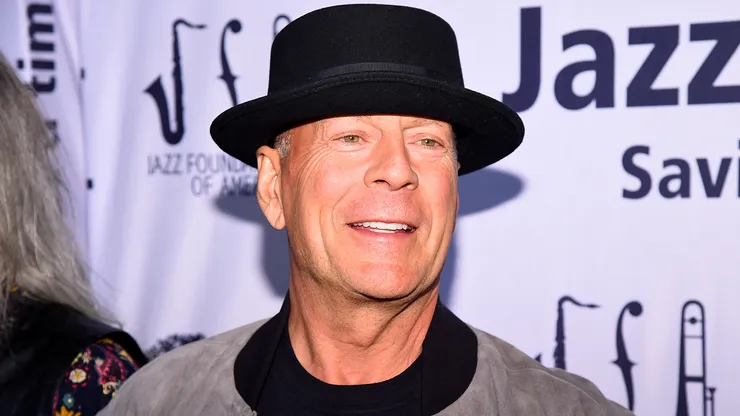
Bruce Willis attends the UK Premiere of M. Night Shyamalan’s all-new comic-book thriller “Glass” in 2019 (Source: Tim P. Whitby/Getty Images for Buena Vista International)
Looper (2012)
In Looper, Willis confronts a literal version of his past, playing an older version of a hitman forced to face his younger self. The film’s premise—assassins eliminating targets sent back from the future—creates a narrative built on paradox and inevitability.
What makes his performance compelling is its urgency. This isn’t a reflective version of the character; it’s a desperate one. Willis injects the role with a sense of time running out, turning the film into something more than sci-fi—it becomes a meditation on consequence, where every decision feels like it’s already been made, yet still carries weight.
RED (2010)
With RED, Willis leans into self-awareness. Playing a retired CIA operative pulled back into the field, he embraces both the absurdity and the elegance of aging within the action genre. The film pairs explosive set pieces with humor, allowing its cast to play against type.
Willis’ performance is understated, almost relaxed. He doesn’t chase intensity—instead, he lets it come to him. That confidence becomes the film’s defining trait, proving that action doesn’t need reinvention to feel fresh; sometimes, it just needs perspective.
Unbreakable (2000)
In Unbreakable, directed by M. Night Shyamalan, Willis steps into a quieter kind of heroism. His character, David Dunn, discovers he may possess extraordinary abilities—but the film treats that revelation with restraint rather than spectacle.
The action here is internal as much as physical. Willis conveys doubt, hesitation, and gradual acceptance, crafting a performance that feels almost meditative. It’s a deconstruction of the superhero archetype before it became mainstream, showing that strength can be as much about understanding as it is about power.
Sin City (2005)
Adapted from Frank Miller’s graphic novels, Sin City embraces stylization to an extreme. Willis plays Hartigan, a weary cop caught in a corrupt system, navigating a world where morality is constantly compromised.
Despite the film’s heightened aesthetic, his performance remains grounded in emotion. Hartigan isn’t defined by action sequences, but by choices—each one carrying consequences that ripple through the story. Willis turns what could have been a purely visual role into something deeply human, anchoring the film’s noir sensibility.
Live Free or Die Hard (2007)
Years after redefining the genre, Willis returned to McClane in a world shaped by digital threats. The scale is bigger, the action louder, and the stakes more abstract—cyber warfare replacing physical infiltration. Yet at its core, the film still relies on the same character foundation established decades earlier.
What stands out is how little McClane changes. While the world evolves around him, he remains stubbornly analog—a man solving modern problems with old instincts. That contrast becomes the film’s identity, reinforcing the idea that, even in an era of technological spectacle, the most compelling action heroes are still defined by their humanity.