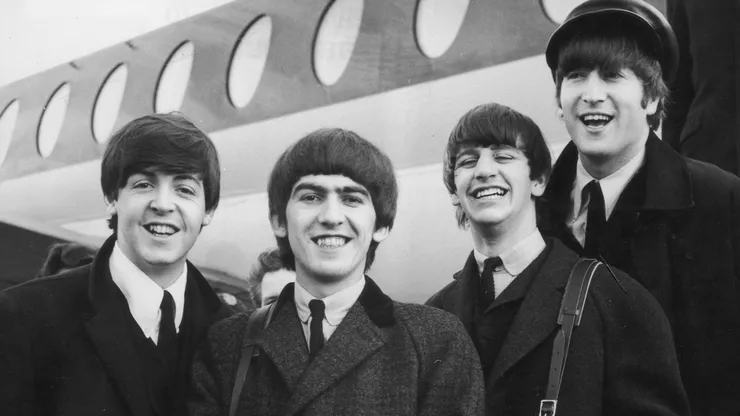
Look around you. The way we listen to albums, the way bands perform in massive stadiums, the way music videos look, and even the way youth culture challenges authority—all of it traces its roots back to a singular, earth-shaking catalyst: The Beatles.
Why June 25th? On this exact day in 1967, John Lennon, Paul McCartney, George Harrison, and Ringo Starr took part in Our World, the first-ever live international satellite television broadcast. Performing “All You Need Is Love” to an estimated 400 million people across the globe, the band united a fractured world during the Summer of Love.
Nearly sixty years later, their cultural footprint isn’t just a historical footnote—it is the literal foundation of modern entertainment. Here is how the Fab Four conquered history and why their legacy remains completely untouchable.
Rewriting the Music Industry Blueprint
Before The Beatles arrived, pop acts were largely treated like disposable products. Singers rarely wrote their own material, albums were just a collection of random singles padding out a release, and live shows were polite, sit-down affairs.
The Beatles systematically dismantled that entire architecture. Partnering with their legendary producer George Martin, they transformed the recording studio from a place where you simply documented a live performance into an instrument of its own.
The Beatles’ Industrial Firsts
- The Birth of the Stadium Concert: In 1965, the band played to a record-breaking 55,000 screaming fans at New York’s Shea Stadium, effectively inventing the modern arena rock tour.
- The Concept Album Masterclass: With 1967’s Sgt. Pepper’s Lonely Hearts Club Band, they proved that an album could be a cohesive, standalone work of art rather than a handful of radio singles.
- Studio Technological Innovation: They pioneered the use of artificial double-tracking (ADT), backmasked (reversed) tape loops, feedback as a musical element, and direct-injection (DI) bass recording.
- The Music Video Evolution: Tired of traveling to television studios to promote singles, they filmed standalone promotional clips for tracks like “Paperback Writer” and “Strawberry Fields Forever,” laying the groundwork for the MTV era.
More Than Music: A Cultural Shift
The impact of The Beatles extended far beyond the vinyl grooves of their records. They were the undisputed architects of global youth culture. When they arrived in America in 1964, their famous “mop-top” haircuts were viewed by the older generation as a scandalous threat to societal norms. By 1967, their embrace of Eastern philosophy, meditation, and psychedelic fashion had fundamentally shifted the global counterculture.
They gave a generation permission to question political institutions, experiment with art, and demand social change. They normalized the idea that musicians could be public intellectuals, activists, and leaders of global movements.
Right now, anticipation is reaching a fever pitch for director Sam Mendes’s historic upcoming project, The Beatles: A Four-Film Cinematic Event. Scheduled to hit theaters simultaneously in 2028, the ambitious project will feature four separate feature films—each told from the perspective of a different band member—starring Hollywood’s elite young talent like Paul Mescal, Harris Dickinson, Barry Keoghan, and Joseph Quinn.