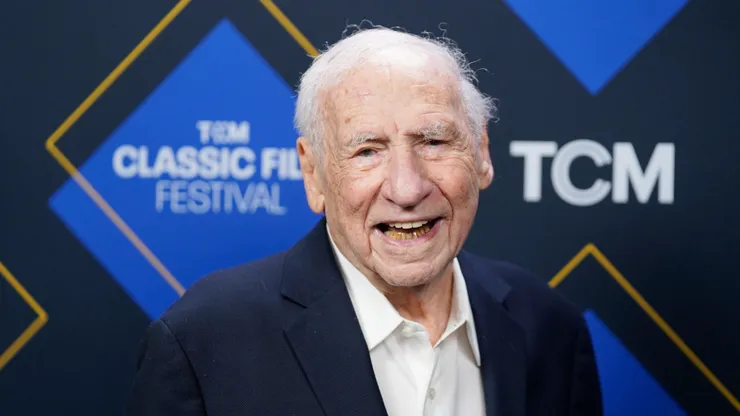
For three-quarters of a century, the Brooklyn-born visionary has operated as a one-man wrecking ball against pretension, bad taste, and cinematic conventions. Whether he was dismantling systemic racism with a whip-smart Western spoof or turning classic universal monsters into tap-dancing showmen, Brooks didn’t just make audiences laugh—he created an entirely new language for film parody.
The EGOT-winning mastermind officially turns 100 years old.
To hit a century of life while remaining one of the most widely quoted, universally beloved figures in pop culture is a milestone very few humans will ever achieve. We are doing our part by looking back at the director’s chair, ranking the 5 essential Mel Brooks films that transformed the landscape of cinema forever.
5. History of the World: Part I (1981)
Taking on everything from the Dawn of Man to the French Revolution, Brooks used this sprawling, episodic anthology to completely lampoon stuffy Hollywood historical epics. Playing multiple roles himself—including a delightfully corrupt King Louis XVI and a fast-talking Moses—Brooks packed the film with iconic musical numbers (like the infamous “The Inquisition”) and sharp, vaudevillian gags. It remains a masterclass in how to combine high-concept historical scale with delightfully low-brow slapstick humor.
4. Spaceballs (1987)
When Spaceballs first hit theatres in the late 1980s, some critics wondered if the Star Wars craze had already peaked. Decades later, Brooks’ brilliant sci-fi send-up has proven to be incredibly prophetic.
By centering the movie’s meta-humor around the absurd world of movie merchandising (“Spaceballs the T-shirt! Spaceballs the Lunchbox!”), Brooks accurately predicted the corporate, franchise-dominated landscape of modern Hollywood. With legendary performances from Rick Moranis as Dark Helmet and John Candy as Barf, it is arguably his most widely quoted film among younger generations of film fans.
3. The Producers (1967)
It takes an immense amount of creative bravery to make your feature directorial debut a film about two corrupt theatrical producers who try to scam investors by staging a guaranteed flop called Springtime for Hitler.
Studio executives were initially terrified of the dark, provocative premise, but Brooks’ script was so undeniably brilliant that it ultimately won him the Academy Award for Best Original Screenplay. The dynamic between Zero Mostel’s manic Max Bialystock and Gene Wilder’s anxious Leo Bloom established the blueprint for the classic Brooksian comedic duo, eventually evolving into a record-breaking Broadway smash decades later.
“Look, I’m not a deeply philosophical guy. My comedy is simple: if you stand on a stage and yell the truth, people are going to laugh because they’re terrified of it. You just have to make sure you’re louder than their fear.” — Mel Brooks on his comedic philosophy.
2. Blazing Saddles (1974)
1974 was arguably the greatest single calendar year any comedy director has ever had, and it kicked off with this absolute juggernaut. Co-written alongside a brilliant room that included Richard Pryor, Blazing Saddles took the classic, sanitized myth of the American West and thoroughly turned it inside out.
By placing a sharp, sophisticated Black sheriff (Cleavon Little) in a deeply prejudiced frontier town, Brooks weaponized absurdity to deliver a scathing, timeless critique of American racism. Packed with fourth-wall-breaking chaos, unforgettable performances from Gene Wilder and Harvey Korman, and the most famous campfire scene in movie history, it remains a monumental cultural milestone.
1. Young Frankenstein (1974)
While Blazing Saddles was a riotous, boundary-pushing explosion, Young Frankenstein is Mel Brooks operating at the absolute peak of his filmmaking craft. Shot in gorgeous, atmospheric black-and-white using the literal original laboratory props from the 1931 Mary Shelley adaptations, the film is an incredibly loving, visually stunning homage to classic Universal horror pictures.
To look back at the cinematic output of Mel Brooks is to look at a century of pure, unadulterated joy. He taught generations of film lovers that the best way to disarm the horrors of the world is to point at them and laugh until your ribs ache.