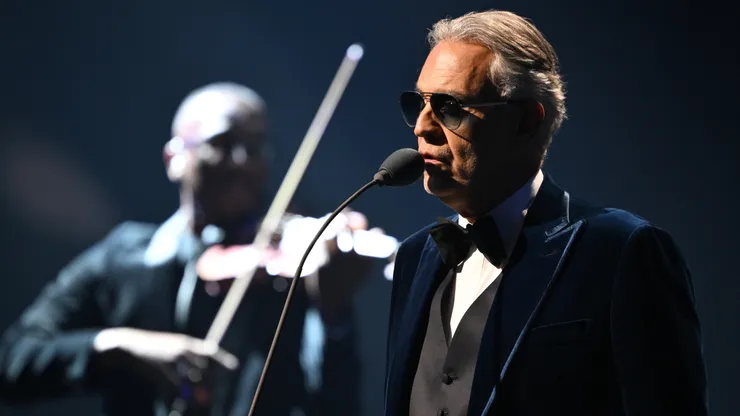
Andrea Bocelli’s career has been shaped by a rare balance between classical tradition and popular appeal. Emerging in the mid-1990s, his voice quickly crossed borders, finding space not only in opera houses but also on global radio charts.
Songs like “Con te partirò” marked a turning point, introducing a tenor capable of bringing lyrical intensity into mainstream culture without diluting its emotional weight. From that breakthrough onward, he built a catalog that blends romance, spirituality, and technical restraint.
His most essential songs trace a journey through collaborations, international stages, and shifting musical landscapes, revealing how a classically trained singer became one of the most recognizable voices of modern Italian music.
Con te partirò
This recording became the true foundation of Bocelli’s global recognition. Released at a time when classical crossover was still a risk, its success lay in restraint rather than excess. The measured phrasing, controlled dynamics, and gradual emotional rise allowed the song to travel far beyond Italy, becoming a defining moment in 1990s popular music. More than a hit, it set a blueprint for how Bocelli would balance accessibility with classical discipline throughout his career.
Time to Say Goodbye (with Sarah Brightman)
The duet transformed a national success into an international landmark. Its exposure at high-profile events and constant presence in European media helped cement Bocelli as a fixture of global pop culture. The pairing with Brightman added contrast and scale, turning the song into a ceremonial anthem that transcended language and genre, and extended its lifespan far beyond the charts.
Vivo per lei
Built around the idea of music as both companion and obsession, this piece revealed Bocelli’s ability to convey intimacy within a structured vocal framework. Its conversational tone made it approachable, while multiple language versions helped expand its reach across continents. The song reinforced his image as an artist deeply connected to the emotional core of music rather than technical display alone.
Nessun dorma
Taking on one of opera’s most demanding arias was a statement of intent. Bocelli’s interpretation favored emotional transparency over operatic bravura, making the piece resonate with listeners unfamiliar with traditional opera. Its widespread circulation helped bridge the gap between classical stages and mainstream audiences, contributing to a broader reintroduction of opera into popular culture.
The Prayer (with Céline Dion)
This collaboration showcased Bocelli’s adaptability within a contemporary framework. Recorded for a major film soundtrack, the song blended cinematic orchestration with restrained vocal performances, allowing both voices to coexist without overshadowing each other. Its enduring presence at award shows and benefit events reflects its status as one of his most universally recognized works.
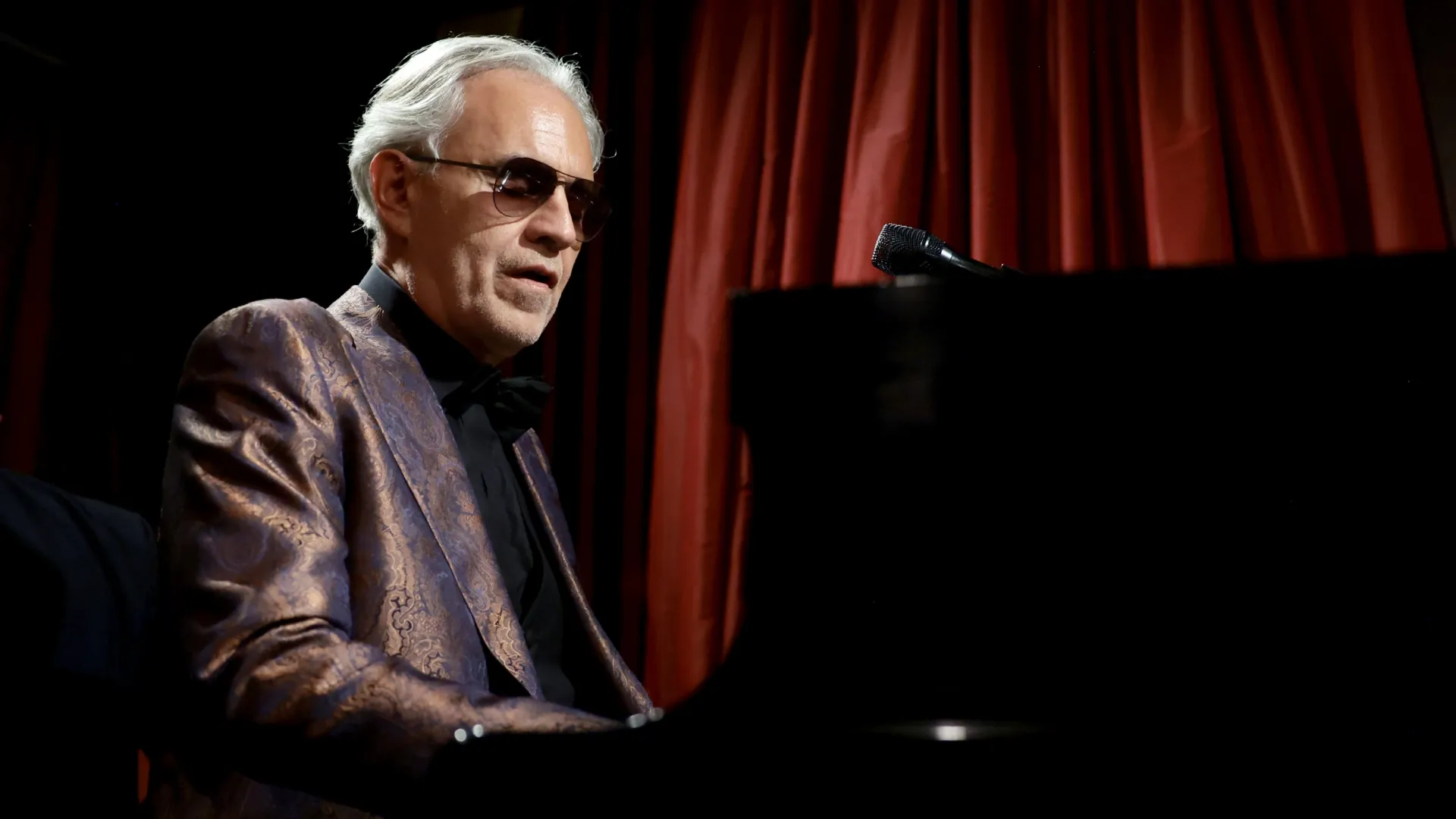
Andrea Bocelli performs onstage during the US premiere screening of “Andrea Bocelli 30: The Celebration” in 2024. (Source: Dimitrios Kambouris/Getty Images for Mercury Studios)
Canto della terra
Often viewed as a turning point, this recording leaned decisively toward classical form while retaining broad appeal. Its structure and orchestration demanded greater vocal control, highlighting Bocelli’s maturation as a performer. The piece marked a phase in his career where confidence in his classical roots became more pronounced, even within crossover contexts.
Fall On Me (with Matteo Bocelli)
This song introduced a deeply personal layer to Bocelli’s catalog. Sharing the recording with his son added narrative weight, while modern production elements aligned it with contemporary audiences. The result was a bridge between generations, reflecting both continuity and evolution in his musical identity.
Por ti volaré
The Spanish-language version played a key role in strengthening Bocelli’s presence in Latin America and Spanish-speaking markets. Its reception underscored how melody and emotion could transcend linguistic boundaries, reinforcing his reputation as an artist whose work resonates globally, regardless of language.
O sole mio
By revisiting this Neapolitan classic, Bocelli reaffirmed his connection to Italy’s musical heritage. His approach emphasized warmth and phrasing rather than vocal spectacle, presenting the piece as a living tradition rather than a museum artifact. It remains one of his most emblematic interpretations of traditional repertoire.
Ave Maria
Sacred music has consistently occupied a central place in Bocelli’s work, and this interpretation reflects that foundation. Often featured in ceremonial contexts, it highlights the spiritual dimension of his artistry. The piece reinforces the idea that his career extends beyond commercial success into a space shaped by faith, tradition, and reverence.