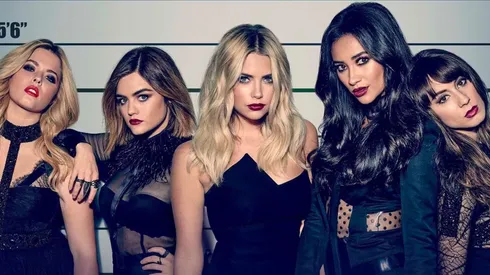
Got a secret, can you keep it?
Exactly 16 years ago today—on June 8, 2010—four black-clad high schoolers stood over a coffin in the rain while a cell phone buzzed in unison. With that simple, chilling text message from an anonymous, omnipresent villain known simply as “A,” Pretty Little Liars (PLL) officially entered the pop culture lexicon.
Looking back from 2026, I. Marlene King’s adaptation of Sara Shepard’s popular book series isn’t just a nostalgic relic of the early 2010s; it is the ultimate blueprint for the modern social-media thriller. The show took a basic “Desperate Housewives for teens” premise and weaponized it into a global phenomenon.
Here is why Pretty Little Liars remains an unkillable titan of teen television on its 16th anniversary.
Why ‘PLL’ Was an Absolute Visual and Social Juggernaut
Before PLL, networks judged a show’s success almost entirely by traditional Nielsen television ratings. Pretty Little Liars blew that antiquated system to pieces. It was the first series in history to completely conquer Twitter, routinely breaking records as the most-tweeted-about television broadcast on the planet.
The show was custom-built for the internet age:
- The Infinite Mystery: Every single episode provided clues, red herrings, and jaw-dropping cliffhangers that turned fans into digital detectives, analyzing everything from wallpaper patterns to the color of a character’s coat.
- The Fashion Culture: From Aria’s edgy boho-chic to Hanna’s rock-glam, Emily’s sporty streetwear, and Spencer’s academic preppiness, the show dictated fashion trends for an entire generation of young viewers.
- The “Ships”: The relationships (Ezria, Haleb, Spoby, Paily) created a fanatical shipping culture that drove intense online engagement, creating a direct feedback loop between the viewers and the writers.
Launching a New Generation of Hollywood Icons
PLL was an absolute star-making machine. The core ensemble—affectionately dubbed the “Liars”—stepped into the show as relatively unknown or up-and-coming actresses and left as global household names.
- Lucy Hale (Aria Montgomery): Already a familiar face, PLL solidified Hale as a definitive leading lady, paving the way for her future roles in Katy Keene, The Hating Game, and an active music career.
- Ashley Benson (Hanna Marin): Benson brought flawless comedic timing and deep emotional layers to Rosewood’s resident IT-girl, quickly parlaying her fame into major film projects like Harmony Korine’s Spring Breakers.
- Troian Bellisario (Spencer Hastings): Widely regarded as the dramatic anchor of the series, Bellisario’s powerhouse performance culminated in the wild twist of playing Spencer’s British twin, Alex Drake. She has since transitioned into an accomplished indie filmmaker, director, and stage actress.
- Shay Mitchell (Emily Fields): Emily’s groundbreaking storyline as a prominent, multi-ethnic LGBTQ+ main character on a teen network was historic. Mitchell used her massive platform to launch the wildly successful lifestyle brand BÉIS and continue her TV run in hits like You.
- Sasha Pieterse (Alison DiLaurentis): Pieterse was a mere 13 years old when she filmed the pilot, playing a manipulative queen bee who was supposed to be dead. Her maturity and screen presence anchored the entire mystery.
The Historic “Extra” Two Seasons and the Five-Year Jump
Most teen shows suffer from a fatal flaw: what happens when the characters graduate high school and go to college?
PLL handled this by scoring a massive two-season renewal (Seasons 6 and 7) before Season 5 even finished airing—making it the network’s longest-running original scripted series.
To keep the momentum going after finally unmasking “Big A” (Charlotte DiLaurentis) in Season 6, the writers pulled off a bold creative gamble: The “5 Years Forward” Time Jump. Skipping the college years entirely, the show aged the characters into their mid-twenties, giving them adult careers, new relationships, and a brand-new stalker named “A.D.” It was a chaotic, soap-opera-infused final chapter that gave fans 160 episodes of pure entertainment before wrapping up in 2017.
The Ever-Expanding Universe: Three Spinoffs
The PLL universe proved so lucrative that it actually spawned three distinct spinoff series over the years, attempting to capture that signature Marlene King lightning in a bottle.
1. Ravenswood (2013–2014)
Launched during the parent show’s fourth season, this short-lived spinoff took Tyler Blackburn’s Caleb Rivers and placed him in a nearby, cursed town. It leaned heavily into supernatural horror and ghosts but was canceled after 10 episodes.
2. Pretty Little Liars: The Perfectionists (2019)
A standalone sequel that brought Sasha Pieterse (Alison) and Janel Parrish (Mona) back to television. Set at a high-pressure college town, it mixed Sara Shepard’s other book series with the PLL formula but met a similar fate after one season.
3. Pretty Little Liars: Original Sin / Summer School (2022–2024)
The most successful expansion of the brand. This Max streaming series took a slasher-horror approach to the universe, focusing on a brand-new group of teens in Millwood being terrorized by a new “A.” It successfully ran for two critically acclaimed, blood-soaked seasons.Sixteen years later, the cultural footprint of Pretty Little Liars is undeniable. It taught Hollywood that teenage audiences wanted high-stakes mystery, proved that social media interaction could carry a television network, and left us with a theme song we still can’t get out of our heads.