In cinema, a single outfit can carry as much narrative weight as a line of dialogue. Long before fashion houses began mining the archives of Hollywood for inspiration, costume designers were shaping characters through fabric, silhouette and color.
The most iconic movie outfits endure because they capture a precise moment where storytelling, performance and design align. Each look altered fashion conversations beyond the theater doors, influencing designers, red carpets and street style for decades.
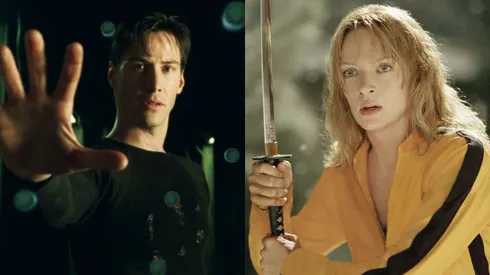
The Bride in Kill Bill: Vol. 1

Few costumes in modern cinema are as instantly recognizable as The Bride’s yellow tracksuit. Designed as a nod to Bruce Lee’s wardrobe in Game of Death, the sleek, high-contrast ensemble became shorthand for vengeance with surgical precision.
Against Quentin Tarantino’s stylized violence, the bold color choice transforms Uma Thurman’s character into a living warning sign—bright, fearless and impossible to ignore. The simplicity of the silhouette is part of its power.
Stripped of ornament, the suit allows movement to dictate style; every kick and sword swing turns the outfit into kinetic design. In the decades since its release, the look has been endlessly replicated for Halloween, fashion editorials and runway tributes, cementing its place as one of the defining action costumes of the 21st century.
Elle Driver in Kill Bill: Vol. 1
If The Bride’s yellow signaled vengeance, Elle Driver’s white uniform radiated clinical menace. The tailored nurse attire—complete with eye patch—turned Daryl Hannah’s assassin into a vision of controlled cruelty. It was a clever inversion of innocence: sterile white fabric masking lethal intent.
The minimalism sharpened her presence. In Tarantino’s hyper-stylized universe, color operates like mythology, and Elle’s stark palette carved out her own iconography. The look demonstrated how a costume can weaponize contrast, turning a seemingly ordinary uniform into something sinister and unforgettable.
Driver in Driver
Ryan Gosling’s unnamed protagonist in Drive redefined cool with a single garment: the ivory satin bomber jacket embroidered with a scorpion. The piece fused retro Americana with modern minimalism, echoing the film’s neon-lit Los Angeles mood. It was both costume and character study—quiet on the surface, dangerous underneath.
The jacket’s symbolism, drawn from the fable of the scorpion and the frog, added narrative depth without a word of exposition. Paired with slim jeans and leather gloves, the look sparked a wave of high-street imitations and confirmed that understatement can be just as iconic as extravagance.
Django in Django Unchained
In Quentin Tarantino’s revisionist Western, Django’s wardrobe charts his transformation from enslaved man to avenging hero. His electric-blue suit—deliberately anachronistic—announces liberation with operatic flair. It refuses subtlety, much like the film itself.
Later ensembles, including the dark tailored coats and sharp accessories, reinforce his autonomy and defiance. Costume becomes reclamation; style becomes power. In a genre traditionally dominated by dusty earth tones, Django’s bold palette disrupted expectations and rewrote the visual language of the Western.
Alex in A Clockwork Orange
Stanley Kubrick’s dystopian provocateur is inseparable from his all-white attire: bowler hat, suspenders, codpiece and combat boots. The uniform’s theatrical absurdity mirrors the film’s unsettling tone, blending Victorian echoes with futuristic menace.
Alex’s look became a cultural lightning rod—referenced in fashion, music and protest art for decades. It proved that costume design can be deliberately provocative, forcing audiences to confront discomfort through exaggerated style. The image remains one of the most controversial in film history.
Neo in The Matrix
When Neo steps fully into his role as “The One,” the wardrobe shift is unmistakable: long black coat, slim tailoring, impenetrable sunglasses. The aesthetic merged cyberpunk philosophy with late-’90s minimalism, instantly influencing streetwear and high fashion alike.
The costume’s severity mirrors the film’s digital dystopia. Black becomes armor; the coat flows like code unraveling in slow motion. Few outfits have so thoroughly defined an era’s visual identity, making Neo’s silhouette one of the most replicated in sci-fi cinema.
Patrick Bateman in American Psycho
Patrick Bateman’s wardrobe is Wall Street perfection sharpened to a blade. Immaculate suits, silk ties and the now-infamous transparent raincoat encapsulate the hollow excess of 1980s corporate culture.
Every detail—from the crisp business cards to the carefully styled hair—forms part of a meticulously constructed facade. The power of Bateman’s look lies in its plausibility. Unlike fantasy or dystopian costumes, this is luxury realism turned sinister.
It remains a touchstone for discussions about masculinity, consumerism and the dark side of aspirational style—proof that sometimes the most terrifying costume is the one that looks entirely at home in the real world.
Arthur Fleck in Joker
Arthur Fleck’s transformation is stitched, quite literally, into his wardrobe. The deep red suit, mustard vest and teal shirt mark the moment he steps out of invisibility and into infamy.
Against Gotham’s decaying urban palette, the colors burn with theatrical intensity, echoing both vintage clown iconography and 1970s character studies. The tailoring is sharp but slightly off-kilter, mirroring Arthur’s fractured psyche.
When he descends the Bronx staircase in full regalia, the suit stops being costume and becomes manifesto—a declaration of chaos wrapped in elegance. In a film built on discomfort and alienation, this look crystallized into one of the most talked-about images of the decade, instantly recognizable and endlessly dissected in fashion circles and pop culture analysis alike.