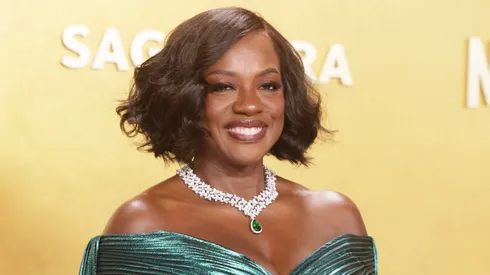
In an industry where stars rarely speak critically of their own critically acclaimed successes, Davis has stood out for her courage in addressing the film’s fundamental flaws, publicly explaining why playing Aibileen Clark left a painful mark on her artistic conscience.
When The Help debuted in 2011, it became a global box-office smash, earning over $216 million and landing four Oscar nominations. Adapted from Kathryn Stockett’s novel and directed by Tate Taylor, the story followed an aspiring white journalist (Emma Stone) in 1960s Mississippi who interviews Black domestic workers about their experiences serving wealthy white families.
However, as cultural conversations around “white savior” tropes evolved, Davis reflected on her decision to take the role. In a candid interview with Vanity Fair, she explained that while she signed on as a “journeyman actor” hoping the film would elevate her career, the final product compromised historical and emotional truth.
“There’s no one who’s not entertained by The Help,” Davis told Vanity Fair. “But there’s a part of me that feels like I betrayed myself, and my people, because I was in a movie that wasn’t ready to [tell the whole truth]. It was created in the filter and the cesspool of systemic racism.”
“It Wasn’t the Voices of the Maids That Were Heard”
Davis first expressed her regret during a New York Times interview, noting that although the film was marketed as an exploration of Black women’s lives, it ultimately prioritized white audience comfort over Black perspective.
“I just felt that at the end of the day, it wasn’t the voices of the maids that were heard,” Davis stated. “I know Aibileen. I know Minny. They’re my grandma. They’re my mom. And I know that if you do a movie where the whole premise is, ‘I want to know what it feels like to work for white people and to bring up children in 1963,’ I want to hear how you really feel about it. I never heard that in the course of the movie.”
Davis argued that stories like The Help treat Black humanity as an academic lesson for white viewers rather than honoring the full, unvarnished reality of Black lives.
Separating Her Co-Stars from the Systemic Problem
While Davis remains critical of the film’s overarching message, she has always been careful to separate the movie’s narrative framework from her experience with the cast and crew. She has consistently praised director Tate Taylor and her co-stars—including Octavia Spencer (who won a Best Supporting Actress Oscar for her role), Emma Stone, Jessica Chastain, and Bryce Dallas Howard.
“The friendships that I formed are ones that I’m going to have for the rest of my life,” Davis clarified. “I had a great experience with these other actresses, who are extraordinary human beings. And I could not ask for a better collaborator than Tate Taylor.”
For Davis, the regret was not about her colleagues, but rather about participating in a system that softened painful realities to make them palatable for mainstream consumption.
A Turning Point in Her Artistic Mission
Her experience on The Help served as a pivotal turning point in Davis’ career. It solidified her determination to seek out—and eventually produce—projects that depict Black figures with nuance, autonomy, and uncompromised authority.