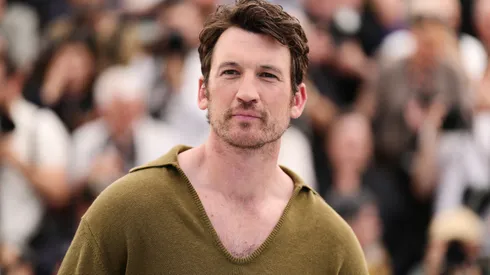
There was a moment in the mid-2010s when Miles Teller seemed destined to become Hollywood’s next untouchable leading man. Fresh off the acclaim of Whiplash and The Spectacular Now, the actor carried the kind of messy charisma studios once spent decades trying to manufacture — talented, confident, slightly abrasive, impossible to fully decode.
Then came a 2015 Esquire profile that opened with the writer wondering whether Teller was “a d*ck”, a line that rapidly escaped the magazine itself and hardened into internet folklore. More than ten years later, he now says the experience fundamentally changed the way he approaches publicity, calling the article “a violation” and accusing the piece of distorting both his words and personality.
What Did the Controversial Esquire Profile Actually Say About Miles Teller?
The controversy surrounding Miles Teller began with a 2015 Esquire profile that portrayed the actor as arrogant, combative and difficult to interview. Written during Teller’s rapid rise in Hollywood after films like Whiplash and Divergent, the article quickly became infamous online because of its blunt opening description calling the actor “kind of a d*ck”.
The profile painted Teller as a talented but intensely self-confident young star, describing moments throughout the interview in which the actor allegedly criticized other celebrities, complained about Hollywood culture and projected what the writer interpreted as ego.
One widely circulated section focused on Teller discussing his career ambitions and frustration with being underestimated inside the industry. Almost immediately after publication, the story exploded across entertainment media and social platforms.
Headlines summarized Teller as “Hollywood’s new bad boy”, while online discourse increasingly reduced the actor’s public image to the tone of that single article. At the time, Teller publicly rejected the profile’s framing, writing on X that the piece was “very misrepresenting” and insisting the writer had manipulated the interview into something more hostile than the actual conversation.
The situation became one of the clearest examples of how celebrity magazine profiles can permanently shape an actor’s reputation. Even though Teller continued starring in major projects — including Top Gun: Maverick years later — the Esquire article remained attached to his name online for more than a decade.
During the 2026 Cannes Film Festival, Teller revisited the controversy while promoting James Gray’s Paper Tiger, revealing that the experience pushed him away from longform magazine profiles entirely. He explained that he now prefers recorded interviews because they leave less room for interpretation or narrative framing by journalists.
The debate around the article has never fully disappeared. Some readers still defend the profile as sharp celebrity journalism, arguing that uncomfortable interviews can reveal genuine personality traits.
Others see it as an example of entertainment media creating caricatures for virality, especially during the 2010s era of “difficult celebrity” discourse. Some discussions surrounding Teller’s recent comments showed that opinions remain deeply divided even years later