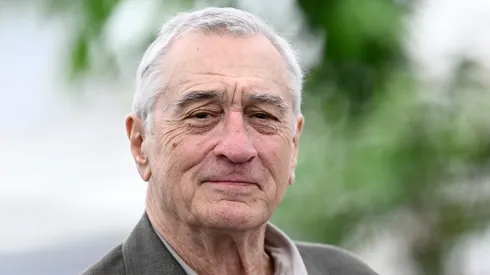
Across a legendary career spanning over six decades, De Niro’s partnership with director Martin Scorsese has yielded some of the greatest masterpieces in cinematic history—from Taxi Driver and Raging Bull to Goodfellas and The Irishman.
Yet, one of the most intriguing chapters in their creative dynamic involves a landmark film where De Niro was nowhere to be seen: Scorsese’s 2002 historical epic, Gangs of New York.
The Offer: William “Bill the Butcher” Cutting
When Scorsese finally secured studio backing for his long-gestating passion project set in 1860s Manhattan, he turned to his longtime muse. De Niro was offered the key role of William “Bill the Butcher” Cutting—the ruthless, eye-patched nativist kingpin who ruled the Five Points neighborhood with a bloody butcher’s cleaver.
On paper, it seemed like a dream pairing. De Niro had spent decades portraying intimidating, larger-than-life anti-heroes, and the character of Bill Cutting was tailor-made for his intense screen presence.
The Dealbreaker: Six Months in Rome
While De Niro was eager to collaborate with Scorsese once again, the film’s production logistics presented an insurmountable roadblock.
To recreate 19th-century New York on a massive scale, Scorsese built a colossal, sprawling set at the famous Cinecittà Studios in Rome, Italy. Accepting the role meant De Niro would have to relocate to Europe for at least six months of continuous filming.
Unwilling to spend half a year across the Atlantic away from his family and domestic commitments, De Niro ultimately made the difficult decision to withdraw from the project.
“I wanted to do it, but I just didn’t want to go to Europe for six months,” De Niro later reflected in interviews about passing on the role.
The Aftermath: Daniel Day-Lewis Steps In
De Niro’s departure opened the door for another acting powerhouse: Daniel Day-Lewis.
Having temporarily stepped away from professional acting to work as a cobbler in Florence, Day-Lewis was coaxed out of retirement by Scorsese and producer Harvey Weinstein. He threw himself into the role with terrifying method intensity, learning 19th-century butcher techniques and adopting an authentic period accent.
Day-Lewis’s performance as Bill the Butcher became the centerpiece of the film, earning him widespread critical acclaim and an Academy Award nomination for Best Actor. While film fans will forever wonder what De Niro’s take on the character might have looked like, his decision yielded one of the most iconic performances in 2000s cinema—and paved the way for De Niro and Scorsese to reunite down the road on their own terms.