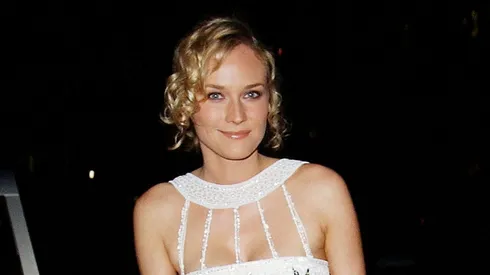
In the early 2000s, Diane Kruger was at a critical crossroads. She had spent her youth conquering the elite fashion runways of Paris, but she voluntarily turned her back on the glamour to pursue acting. Before she landed her massive breakthrough in Troy, she signed on to a tiny, ultra-low-budget French feature debut titled Frankie, directed by her longtime friend and auteur Fabienne Berthaud.
The film tracks Frankie, a 26-year-old model who has aged out of the brutal, predatory fashion industry. Left entirely isolated and mentally depleted by the commercial meat-grinder of Paris, Frankie suffers a severe emotional breakdown and is committed to a psychiatric clinic. Rather than faking the heavy, medicated, and deeply isolated atmosphere of an asylum on a comfortable studio backlot, Berthaud and Kruger chose a path of raw, uncompromising realism.
Three Weeks in Blois: Living Among the Shadows
To prepare for the film’s asylum-bound narrative, Kruger did something that would terrify even the most seasoned method actors. She, along with Berthaud and a skeleton crew, moved directly into an operational psychiatric hospital located in Blois, France.
Kruger lived inside the real psychiatric facility for three weeks. She slept in a ward bed, ate alongside the residents, and spent her days immersed in the quiet, heavy, and often catatonic atmosphere of the clinic to strip away her natural runway elegance.
The Only Professional on Set
The physical immersion was only the beginning of the film’s radical blueprint. When the cameras finally began rolling, Kruger found herself navigating a highly unpredictable, emotionally charged environment.
- Berthaud shot the film using a lightweight digital video camera, intentionally blurring the line between a scripted feature and an raw, fly-on-the-wall documentary.
- Kruger was the only professional actress present in the hospital scenes.
- Every single person surrounding her in the clinic—from the background residents to her immediate screen companions—was a real-life patient of the Blois institution portraying themselves.
The resulting performance is startlingly raw. Stripped of all makeup and clad in simple, oversized hospital garments, Kruger’s Frankie wanders the halls like a shell of her former self. By acting opposite real patients, Kruger had to abandon all traditional theatrical tricks, instead relying entirely on organic, quiet reactions to the real-world suffering and gentle humanity surrounding her.
The Crucible That Forged an Icon
Though Frankie was shot over a grueling, stop-and-start period of three years due to budget limitations, it was the ultimate, necessary crucible for Kruger. It allowed her to entirely shed the “pretty face” label before Hollywood could permanently typecast her.
By the time the film was released in 2005, Kruger had already transitioned into a major star. But the profound, fearless empathy she developed while living in the Blois psychiatric ward remained the secret weapon of her craft.