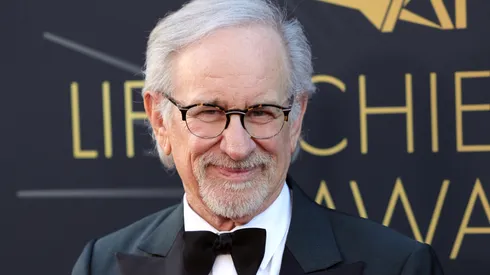
As of March 2026, Steven Spielberg has officially reclaimed the title of the world’s richest celebrity, sitting on a staggering $7.1 billion net worth. While icons like Jay-Z and Taylor Swift dominate headlines with touring and brand empires, Spielberg’s fortune operates on a different, more enduring frequency. His wealth is the result of a five-decade masterclass in “backend” negotiation—preferring a percentage of the film’s gross over a standard salary. This strategy, combined with a historic deal with Universal Parks, has ensured that every time a movie ticket is sold or a theme park gate turns, the world’s most successful director gets paid.
Some Incredible Films He Directed That Helped Him Achieve This:

Jurassic Park (1993)
While most directors would have been happy with a massive paycheck for the biggest movie of the decade, Spielberg opted for “points” on the gross revenue. This decision resulted in a reported $250 million payday—the equivalent of over $500 million today when adjusted for inflation. Jurassic Park didn’t just break box office records; it set the blueprint for Spielberg’s financial independence, proving that owning a piece of the “gross” is far more lucrative than any upfront fee.+1
Jaws (1975)
The film that invented the “summer blockbuster” also invented the Spielberg financial model. After the grueling production of Jaws, the young director negotiated for a significant share of the profits. Fifty years later, the film continues to generate millions through re-releases, including a massive 50th-anniversary theatrical run in late 2025. It remains a cornerstone of his portfolio, constantly feeding his net worth through home media, streaming rights, and merchandise.
E.T. the Extra-Terrestrial (1982)
E.T. was a cultural phenomenon that sat as the highest-grossing film of all time for a decade, but its financial impact on Spielberg went beyond the theater. Because he acted as both director and producer through Amblin Entertainment, he retained a massive share of the ancillary rights. From toys to video games, E.T. transformed into a multi-generational revenue stream that consistently delivers royalties to this day, particularly through its enduring presence in theme park attractions.
Saving Private Ryan (1998)
Spielberg’s visceral World War II epic was another case study in savvy deal-making. For a film that grossed nearly $500 million worldwide, Spielberg’s profit-participation agreement reportedly earned him an estimated $40 million from the initial release alone. More importantly, the film’s success led to the creation of spiritual successors like Band of Brothers and The Pacific, which Spielberg executive produced, creating a “prestige drama” wing of his financial empire.
The Indiana Jones Franchise (1981–2023)
The adventures of Henry Jones Jr. have been a gold mine for Spielberg for over forty years. As part of a legendary deal between himself, George Lucas, and Paramount, Spielberg secured a hefty percentage of the “first-dollar gross” for the original trilogy. Even for the more recent installments where he stepped into a producer role, such as 2023’s The Dial of Destiny, he continues to receive executive fees and legacy royalties that keep his bank account in the billions.
The “Universal” Secret: Theme Park Royalties
Perhaps the smartest move in Spielberg’s career happened off-camera in 1987. He signed a deal to act as a “creative consultant” for Universal Studios theme parks “in perpetuity.” As of 2026, it is estimated that he earns approximately $2.38 for every ticket sold at Universal parks worldwide (excluding Hollywood). This means that even in years when he doesn’t release a movie, he earns between $60 million and $70 million annually just for his films being the inspiration for iconic rides.