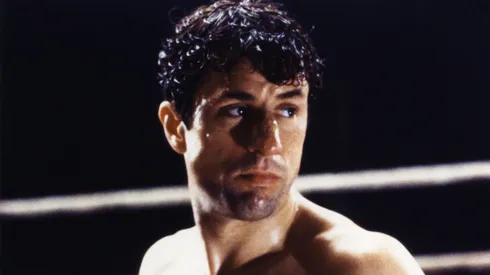
To play middleweight boxing champion Jake LaMotta, Robert De Niro didn’t just act—he physically remade his body twice. On his 83rd birthday, we look back at the relentless, body-altering commitment that redefined screen acting forever.
The 60-Pound Weight Gain
To shoot the early scenes depicting LaMotta’s prime fighting years, De Niro trained for months with the real-life Jake LaMotta, sparring over 1,000 rounds until LaMotta declared De Niro capable of competing professionally.
However, the film’s narrative required depicting LaMotta in his later years: a bloated, retired, washed-up nightclub host. Rather than using padding or prosthetics, De Niro insisted on gaining the weight naturally.
Scorsese shut down production for nearly four months. De Niro flew to Europe, embarking on an eating tour across France and Italy, consuming massive quantities of pasta, butter, desserts, and meat. He put on more than 60 pounds, growing his weight from a lean 145 pounds to over 215 pounds.
The rapid weight gain took a terrifying toll on his health. De Niro developed severe breathing difficulties, heavy panting, and skin rashes. Scorsese became so concerned for De Niro’s cardiovascular safety that he condensed the remaining shooting schedule to finish as quickly as possible.
Setting Records (and Breaking Ribs)
At the time, De Niro’s 60-pound weight gain set the official record for the most weight gained by an actor for a film role. That record stood until 1987, when Vincent D’Onofrio gained 70 pounds to play Private Pyle in Stanley Kubrick’s Full Metal Jacket. Decades later, actors like Christian Bale (Vice) and Jared Leto (Chapter 27) would push similar physical boundaries, but De Niro provided the original blueprint.
Yet, the weight gain wasn’t the only painful element of the production. De Niro’s insistence on physical realism in the ring extended to his co-stars.
During an improvised sparring scene with Joe Pesci (who played Jake’s brother and manager, Joey LaMotta), the two actors threw genuine punches to capture intense fraternal tension. De Niro struck Pesci with enough force to actually crack one of Pesci’s ribs. The audio of the blow and Pesci’s genuine groan of pain made the final cut of the film.
De Niro’s agonizing physical dedication paid off: he swept awards season, winning the Academy Award for Best Actor and solidifying Raging Bull as a high-water mark of cinematic realism.