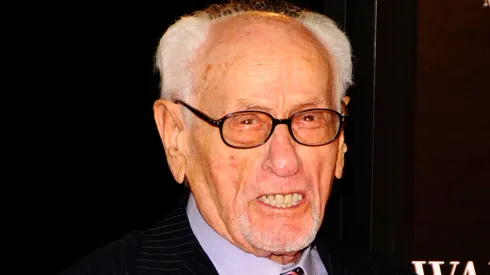
In the golden age of Hollywood, there were leading men who specialized in looking handsome on posters, and then there were actors who specialized in stealing movies right out from under them. Eli Wallach belonged firmly to the latter camp.
A proud, early graduate of Lee Strasberg’s famous Actors Studio, Wallach was a master of Method acting who treated every role like a clean slate. He could play a ruthless Mexican outlaw, a sophisticated theater director, or a frail mafia don, bringing a distinct, electric energy to every single frame. To honor his enduring memory on this anniversary, we are looking back at the definitive, historic performances that cemented his legacy as Hollywood’s ultimate scene-stealer.
1. Tuco in The Good, the Bad and the Ugly (1966)
There was simply no other place to begin. As Tuco Ramirez (the definitive “Ugly” of the title), Wallach didn’t just share the screen with Clint Eastwood—he completely walked away with the movie.
Playing a loud, treacherous, yet strangely lovable bandit, Wallach infused Sergio Leone’s masterpiece with its wild, chaotic soul. Whether he was frantically sprinting through a massive cemetery to Ennio Morricone’s operatic score or delivering his iconic line—“When you have to shoot, shoot, don’t talk”—his portrayal created the absolute gold standard for cinematic antiheroes.
2. Calvera in The Magnificent Seven (1960)
Six years before he became Tuco, Wallach established his legendary Western credentials by playing the primary villain in John Sturges’s American adaptation of Seven Samurai. As Calvera, a sophisticated, charismatic bandit chief who ruthlessly raids a helpless farming village, Wallach brought immense depth to a character that could have easily been a cartoon villain. His performance was so convincing that real-world audiences frequently forgot he was actually a Jewish guy born and raised in Brooklyn.
3. Arthur Abbott in The Holiday (2006)
For a whole generation of younger moviegoers, Wallach isn’t known for carrying a gun through the desert, but for carrying a walker into a Hollywood gala. In Nancy Meyers’s beloved romantic comedy, Wallach played a lonely, retired screenwriter from the Golden Age of cinema who forms a beautiful, cross-generational friendship with a heartbroken Iris (Kate Winslet).
His performance was pure magic—frail yet incredibly sharp, filled with authentic Old Hollywood wit, and reminding everyone watching of the power of classic storytelling.
4. Silva Vacarro in Baby Doll (1956)
Wallach’s feature film debut remains one of the most controversial, aggressively debated movies of the 1950s. Directed by Elia Kazan and written by Tennessee Williams, this southern gothic drama saw Wallach play a conniving cotton gin owner looking for revenge. His raw, highly charged performance shocked mid-century censors, earned him a BAFTA Award for Most Promising Newcomer, and immediately put the entire film industry on notice that a major new force had arrived.
5. Don Altobello in The Godfather Part III (1990)
When Francis Ford Coppola needed an actor who could play an ostensibly sweet, grandfatherly figure who is secretly a lethal, plotting mafia mastermind, he turned to Wallach. As Don Altobello, a long-time associate of the Corleone family who secretly orchestrates an assassination plot against Michael Corleone, Wallach was brilliant. His ultimate, poetic demise—eating a poisoned cannoli in an opera box—remains one of the standout highlights of the final chapter of the trilogy.