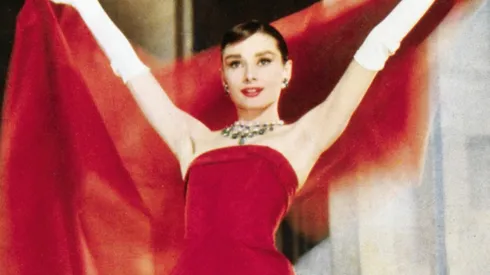
More than three decades after her death, Audrey Hepburn continues to stand as one of cinema’s most recognizable silhouettes, her career defined less by volume than by precision. She rose to international fame with Roman Holiday, a performance that earned her an Academy Award and immediately positioned her as a new kind of Hollywood lead—less bombshell, more understated elegance, yet equally magnetic.
Even though her on-screen career was relatively brief, spanning just over a decade of major output, her work continues to be revisited as a blueprint for classic storytelling. The question of her “greatest movies” is therefore less about discovery than about rediscovery—an ongoing reassessment of performances that still define cinematic grace and emotional clarity.
Roman Holiday (1953)
Audrey Hepburn achieved international fame with Roman Holiday, directed by William Wyler, where she played Princess Ann, a young royal who escapes her duties to explore Rome freely. The film was largely shot on real locations—uncommon at the time—giving it a visual authenticity that enhanced its modern fairytale tone.
Her performance was immediately praised by critics for its naturalness and freshness, breaking away from the more rigid style of classic Hollywood. That same year, Hepburn won the Academy Award for Best Actress for her first major film role, marking a breakthrough that would define her career.
Breakfast at Tiffany’s (1961)
Directed by Blake Edwards and based on the novel by Truman Capote, this film features Hepburn as Holly Golightly, a young New York socialite living between sophistication and emotional instability. The movie became a pop culture icon thanks to its aesthetic, its music, and its legendary opening scene in front of Tiffany & Co..
Hepburn’s portrayal redefined the original character from the book, adding a more human and elegant vulnerability. Her performance, combined with costumes designed by Hubert de Givenchy, helped create one of the most influential images in film and fashion history.
My Fair Lady (1964)
Based on the hit Broadway musical, My Fair Lady was directed by George Cukor and starred Hepburn as Eliza Doolittle, a London flower girl transformed into a high-society woman through speech and etiquette training. The production was one of Warner Bros.’ most ambitious projects of the decade.
Although her singing voice was dubbed in the musical numbers, her visual and emotional performance was widely praised by critics. The character’s transformation remains one of the most iconic narrative arcs in classic musical cinema.
Sabrina (1954)
Directed by Billy Wilder, Sabrina tells the story of Sabrina Fairchild, the chauffeur’s daughter of a wealthy family who returns from Paris transformed into a sophisticated woman, catching the attention of two brothers played by Humphrey Bogart and William Holden. The film subtly explores themes of social class, identity, and personal transformation within an elegant romantic comedy framework.
Hepburn’s performance was key to the film’s success, as she builds a believable evolution from initial innocence to the sophistication gained in Paris. Her presence holds the love triangle together without falling into dramatic excess, solidifying her image as an actress capable of balancing charm, intelligence, and emotional restraint.
Charade (1963)
Charade, directed by Stanley Donen, is a blend of romantic comedy, thriller, and mystery set in Paris. Hepburn plays Regina Lampert, a woman who discovers that her murdered husband was involved in a money heist, pulling her into a spy plot where no one seems entirely trustworthy.
The film is often described as a “light Hitchcock” due to its mix of suspense and romance. The chemistry between Hepburn and Cary Grant is one of the film’s main pillars, while her performance balances vulnerability and humor within a constantly shifting atmosphere of tension.
The Nun’s Story (1959)
Directed by Fred Zinnemann, this drama follows Gabrielle Van Der Mal, a young Belgian woman who enters a convent to become a nun, facing an internal conflict between her religious vocation and her personal identity. The film is characterized by its sober, realistic tone, far removed from typical Hollywood glamour.
Hepburn’s performance stands out for its emotional restraint and psychological depth. Her preparation included direct observation of religious life and basic medical training, adding authenticity to a character built around discipline, sacrifice, and inner doubt.
Funny Face (1957)
Funny Face, directed by Stanley Donen, combines musical, romantic comedy, and fashion in a story set between New York and Paris. Hepburn plays Jo Stockton, a shy intellectual who is discovered by a fashion photographer and drawn into the modeling world.
The film is notable for its strong connection to the fashion aesthetics and photography of the era, especially in its Paris-set sequences. Hepburn’s presence reinforces the idea of visual transformation as a central narrative device, cementing her association with style and elegance.
Wait Until Dark (1967)
Directed by Terence Young, this psychological thriller features Hepburn as Susy Hendrix, a blind woman trapped in her apartment while criminals search for a hidden object. The story unfolds almost entirely in a single setting, heightening the sense of claustrophobia and tension.
Hepburn’s performance is considered one of the most demanding of her career, requiring precise physical control and heightened sensory awareness. The film’s climax is especially remembered for its suspenseful construction, where the character’s vulnerability becomes the driving force of the narrative.