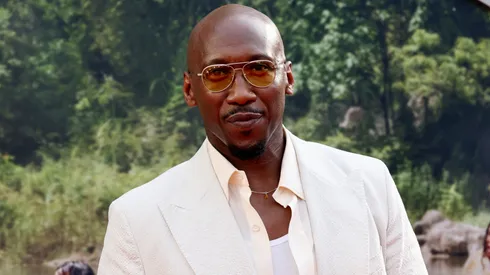
At 52, Mahershala Ali stands in a rare cinematic space: an actor whose presence rarely shouts, yet lingers with unmistakable force. Across two decades of film and television, his work has traced characters shaped by silence, restraint and the quiet tension beneath carefully measured words.
From the haunted dignity of “Moonlight” to the layered humanity of “Green Book“, the performances that define his career share a common pulse, emotion carried in stillness rather than spectacle.
Juan in Moonlight

In Barry Jenkins’ Moonlight (2016), Ali delivered the role that transformed his career into cultural currency. As Juan — a charismatic drug dealer who becomes a father figure to Chiron — his performance reframed empathy in cinema. He won the Academy Award for Best Supporting Actor for this grounded portrayal, one where compassion arises through restraint and presence rather than exposition.
Don Shirley in Green Book
In Green Book (2018), Ali embodied the celebrated pianist Dr. Don Shirley with elegance and gravitas. The role won him a second Oscar and showcased his ability to portray internal complexity — a man of intellect and isolation negotiating identity, class, and the conditioning of southern racism, all while holding deep emotional currents beneath meticulous control.
Wayne Hays in True Detective
Ali’s portrayal of detective Wayne Hays across three decades in True Detective (2019) revealed his exceptional range on the small screen. Navigating time shifts and fading memory with grace, he anchored the season with a performance steeped in quiet introspection and the fragmented nature of truth itself — an acting tour de force that played less in volume and more in emotional resonance.
Cottonmouth in Luke Cage
Ali infused the comic-book antagonist with theatrical melancholy, grounding violence in wounded psychology. Cottonmouth moved like a tragic figure aware of his own downfall, blending menace with vulnerability in a way rarely seen in superhero television. His early exit from the series only amplified the character’s impact, leaving behind a villain remembered less for brutality than for emotional depth and Shakespearean tone.
Jim Johnson in The Place Beyond the Pines
Though limited in screen time, Ali’s presence radiated moral steadiness inside a fractured generational drama. Jim became a quiet emotional anchor—supportive, perceptive, and deeply human amid cycles of violence and consequence. The role demonstrated Ali’s long-standing gift for elevating supporting characters into lasting emotional reference points within sprawling narratives.
Remy Danton in House of Cards
Smooth charisma met political calculation in Ali’s portrayal of Remy, a man navigating proximity to power without ever fully surrendering to it. His composure suggested constant internal negotiation—ambition balanced against conscience. Rather than explosive confrontation, Ali chose nuance, turning strategic silence into the character’s most revealing language.
Boggs in The Hunger Games: Mockingjay – Part 1 and Part 2
Inside a blockbuster world driven by spectacle, Ali grounded Boggs in loyalty and quiet authority. He played the soldier not as a symbol of war, but as a steady moral presence protecting fragile hope. The emotional resonance of the character emerged gradually, proving that even within franchise storytelling, restraint can leave the deepest impression.
Aaron Davis in Spider-Man: Into the Spider-Verse
Voicing Aaron Davis in Spider-Man: Into the Spider-Verse (2018), Ali brought deep emotion to an animated role. His voice work turned a moral paradox into a poignant anchor, adding warmth, weight and familial tension to this Oscar-winning animated story. Though not a live-action role, it remains one of his most resonant — emotionally rich and narratively meaningful.
Dr. Skyles in Alita: Battle Angel
Even in a brief appearance, Ali suggested unseen histories and hidden motives. His restrained menace hinted at broader power structures beyond the film’s immediate narrative, turning exposition into intrigue. The performance illustrated how minimal screen time, when shaped with intention, can still expand a world’s emotional and thematic scale.
G.H. Scott in Leave the World Behind
Ali’s calm intelligence became the emotional center of a story defined by uncertainty. Rather than panic, he offered composed awareness—an authority rooted in observation and empathy. The role reflects his later-career evolution: performances built not on transformation alone, but on the quiet command of presence that has come to define his screen identity.