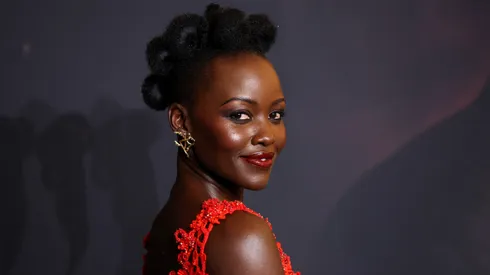
In her new Who What Wear cover story, the actress and advocate explores what it truly means to represent Black womanhood on a global stage, the dark-skinned icons who paved her way, and why she is fiercely breaking the silence surrounding a medical system that routinely dismisses women’s pain.
Overcoming the Insecurities of Colorism
Regal, striking beauty is a foundational pillar of Lupita Nyong’o’s global identity—whether she is commanding the screen as the fierce warrior-spy Nakia in Black Panther or stepping out as a suited Chanel ambassador. But that self-assurance was hard-won.
Nyong’o reveals she grew up feeling like an “ugly duckling,” an experience that directly inspired her 2019 children’s book, Sulwe.
“It took me a lot of conscious work to get rid of my insecurities and to free myself from the discrimination of my skin color,” she states.
The perspective shift began at age 16, when she moved to Mexico to study Spanish and noticed a jarring wave of attention: “I was like, ‘Wait a minute. I’m odd enough here. I’m singular enough that people are translating it as beauty.’ When people compliment me these days, I embrace it.”
The Power of Representation: From Whoopi to the Next Generation
Raised in a world far removed from the glitz of cinema—the daughter of a Kenyan politician/professor and a public health advocate—Nyong’o initially had narrow expectations for her future, assuming women could only be secretaries or businesswomen. That changed the moment she saw a dark-skinned woman commanding the silver screen.
The Epiphany: Seeing Whoopi Goldberg in multiple films opened her eyes to what was possible. “Because she was dark skinned, I really took note of her.”
Paying It Forward: Today, Nyong’o takes her position as a role model deeply to heart, stating, “I feel very honored to be anybody’s Whoopi.”
Breaking the Silence on Fibroids and Medical Bias
Part of owning her identity as a Black woman means speaking up about health issues that disproportionately impact her community. In her interview, Nyong’o gets incredibly candid about her decade-long battle with uterine fibroids, a condition that affects up to 80% of women by age 50 but remains chronically under-researched, underfunded, and routinely dismissed by the medical establishment.
After discovering her fibroids had returned in 2023—with more than 50 tumors packing her uterine lining—Nyong’o took matters into her own hands. While preparing for A Quiet Place: Day One, she deep-dived into the science of the female body, learning how estrogen feeds tumors, the importance of iron for liver health, and how a lack of vitamin D sun absorption in dark skin can impact fibroid growth.
Determined to spark a movement, Nyong’o recently launched the Make Fibroids Count campaign alongside the Foundation for Women’s Health. The initiative has already surpassed its original $200,000 goal, raising more than $230,000 to fund grants for less-invasive treatment methods.
“I would love for there to be more solutions for women than just cutting us open,” Nyong’o urges, proving her ultimate mission is to turn her personal pain into a collective triumph.