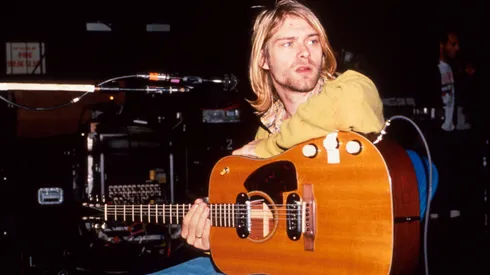
February 20 marks what would have been the 59th birthday of Kurt Cobain, the restless songwriter who turned distortion and disaffection into a generational anthem. Born in Aberdeen, Washington, he emerged as the reluctant voice of the early ’90s alternative explosion — a musician whose raw lyricism and fractured melodies helped redraw the boundaries of mainstream rock before his death in 1994 froze his image in cultural memory.
With Nirvana, he fused punk urgency with pop instinct, crafting songs that felt both abrasive and vulnerable, chaotic yet meticulously structured. From underground clubs in the Pacific Northwest to global stages, the band’s catalog captured a volatile era in American music, leaving behind tracks that continue to echo through radio waves, playlists and the mythology of modern rock.
Smells Like Teen Spirit (1991)
The opening blast of Smells Like Teen Spirit didn’t just introduce an album — it detonated a cultural shift. Released as the lead single from Nevermind, the track turned Nirvana into unlikely global superstars and dragged alternative rock into the mainstream.
Its quiet-loud-quiet structure, cryptic lyrics, and Cobain’s ragged howl became shorthand for Generation X’s restless energy. Even Cobain felt ambivalent about its ubiquity, but its impact remains undeniable: few songs have ever altered the direction of popular music so abruptly.
Come As You Are (1992)
Built around one of the most recognizable bass lines of the decade, Come As You Are revealed Cobain’s gift for contradiction. Lyrically inviting yet tonally eerie, the song balances accessibility with unease.
Also from Nevermind, it proved Nirvana’s breakthrough wasn’t a fluke. The track’s layered guitars and watery production created a hypnotic atmosphere, while its message of fractured acceptance felt both sincere and suspicious — a hallmark of Cobain’s writing.
Lithium (1992)
Lithium thrives on tension. Its verses simmer in restraint before exploding into cathartic choruses, mirroring the instability hinted at in its lyrics. The song’s dynamic shifts became a blueprint for countless ’90s bands. More than just a radio staple, it showcased Cobain’s ability to marry psychological turmoil with sharp pop instincts — a balance few could replicate with the same volatility.
Heart-Shaped Box (1993)
Dark, unsettling, and emotionally dense, Heart-Shaped Box marked a new chapter when it arrived as the lead single from In Utero. The song leaned into dissonance and abstraction, reflecting Cobain’s growing discomfort with fame and media intrusion. Its haunting melody and visceral imagery made it one of Nirvana’s most enduring later-era tracks — less explosive than “Teen Spirit,” but arguably more intricate.
All Apologies (1993)
Closing In Utero on a note of fragile resignation, All Apologies feels almost like a weary sigh set to music. Its circular melody and cryptic refrain hinted at both surrender and acceptance. When performed during the band’s iconic 1993 MTV Unplugged session, the song took on an even more intimate tone, cementing its place as one of Cobain’s most emotionally resonant compositions.

About a Girl (1989)
Long before global fame, About a Girl revealed Cobain’s melodic sensibility. Featured on Bleach, the track stood out from the album’s heavier sludge influences with its Beatles-inspired structure. It quietly forecast the direction Nirvana would later take — proof that beneath the distortion lay a songwriter deeply attuned to classic pop craft.
In Bloom (1992)
With razor-sharp irony, In Bloom addressed the band’s sudden influx of fans who sang along without grasping the subtext. Its bright, almost buoyant melody contrasts with its biting commentary on commercial success. The song captures Nirvana at their most self-aware, grappling with the paradox of underground credibility and mainstream adoration.
Rape Me (1993)
Few Nirvana tracks sparked as much controversy as Rape Me. Stark and confrontational, the song was widely misunderstood upon release. Cobain described it as an anti-violence statement, yet its blunt repetition unsettled radio programmers and critics alike. Musically raw and lyrically provocative, it underscored his refusal to dilute difficult themes for comfort.
The Man Who Sold the World (1993)
Though originally written by David Bowie, Nirvana’s 1993 MTV Unplugged rendition of The Man Who Sold the World introduced a new generation to the track. Cobain’s subdued vocal performance transformed it into something ghostly and intimate. The cover became one of the most celebrated moments of the band’s acoustic set, highlighting his interpretive depth.
Where Did You Sleep Last Night (1994)
The traditional folk lament Where Did You Sleep Last Night — popularized by blues musician Lead Belly — closed Nirvana’s MTV Unplugged performance with chilling intensity. Cobain’s final, piercing scream lingers as one of the most haunting moments in live television history. It wasn’t a Nirvana original, yet in that performance, it became inseparable from Cobain’s legacy.