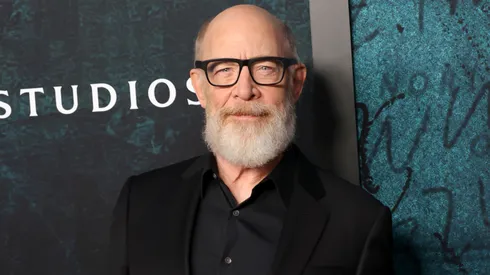
J.K. Simmons has spent a career slipping effortlessly between menace and warmth, often within the same scene. Born on January 9, 1955, his path to Hollywood prominence was anything but immediate, shaped by years in theater and steady television work before his face became instantly recognizable on the big screen.
His filmography reads like a masterclass in scene-stealing. From the relentless intensity that earned him an Academy Award to his long-running presence in major franchises and cult television series, he has shown an uncommon ability to define characters in a matter of seconds.
Terence Fletcher – Whiplash (2014)

At the peak of Simmons’ career stands Terence Fletcher, the ferocious jazz instructor at the heart of Whiplash. The film examines obsession, ambition, and the cost of greatness, and Fletcher embodies its central conflict. Simmons’ performance is relentless, volatile, and meticulously calibrated, transforming verbal abuse into a weaponized philosophy.
More than a villain, Fletcher became a cultural reference point for toxic mentorship, earning Simmons an Academy Award and cementing the role as his most enduring legacy.
Miles Roby – Counterpart (2017–2019)
In the sci-fi thriller Counterpart, Simmons took on the challenge of playing two versions of the same man from parallel universes. The series hinges on subtle distinctions, and Simmons delivered two fully realized characters—one hardened and authoritative, the other insecure and introspective. The dual performance became a masterclass in control and nuance, underscoring his technical skill and emotional range within a high-concept narrative.
Omni-Man – Invincible (2021–Present)
Omni-Man begins as a familiar archetype: the world’s greatest hero and devoted father. What follows is one of the most shocking character deconstructions in modern animation.
Simmons navigates the shift with terrifying control, blending warmth, rage, and ideological certainty. His voice performance is central to Invincible’s impact, transforming Omni-Man into a symbol of corrupted heroism and redefining expectations for the genre.
J. Jonah Jameson – Spider-Man franchise
Few castings in comic-book history feel as definitive as Simmons’ J. Jonah Jameson. Across Sam Raimi’s Spider-Man trilogy—and later surprise returns in the MCU—Simmons turned the Daily Bugle editor into a rapid-fire force of chaos.
His timing, physicality, and vocal rhythm made Jameson endlessly quotable, transcending the role’s original scope. In a genre filled with superpowers, Simmons proved that personality alone could steal entire scenes.
Vern Schillinger – Oz (1997–2003)
Simmons’ portrayal of Vern Schillinger in HBO’s Oz remains one of television’s most disturbing performances. The series’ unfiltered depiction of prison life demanded total commitment, and Simmons delivered a character defined by cruelty, manipulation, and ideological hatred.
There was no attempt to soften Schillinger or make him palatable. Instead, Simmons leaned into discomfort, establishing himself early as an actor unafraid of confronting the ugliest aspects of human behavior.
Ford Pines – Gravity Falls (2015–2016)
When Simmons joined Gravity Falls as Ford Pines, the series took on a deeper emotional and narrative complexity. Ford is a brilliant but flawed scientist whose intellect isolates him from others, including his family.
Simmons’ voice performance balances arrogance, regret, and sincerity, elevating the animated series into something unexpectedly mature. His arrival reframed the show’s mystery-driven humor into a story about consequence and reconciliation.
Ray King – Patriots Day (2016)
In the procedural drama Patriots Day, Simmons portrays Ray King, an FBI official overseeing the Boston Marathon bombing investigation. The film prioritizes realism and collective effort over heroics, and Simmons matches that tone perfectly.
His performance is measured, professional, and emotionally grounded, reflecting leadership under immense pressure. Rather than dramatizing authority, Simmons embodies it quietly, reinforcing the film’s sober and respectful approach.
Kai – Kung Fu Panda 3 (2016)
As the supernatural villain Kai, Simmons embraced operatic scale. Kung Fu Panda 3 expands the franchise into mythological territory, and Kai embodies that shift—an ancient warrior harvesting the power of fallen masters.
Simmons’ booming voice gives the character theatrical menace, while his rhythmic delivery adds unexpected humor. The role showcased Simmons’ ability to command animated worlds with the same authority he brings to live-action performances.
Mac MacGuff – Juno (2007)
In Juno, Jason Reitman’s sharply written coming-of-age film, J.K. Simmons plays Mac MacGuff, the quietly supportive father at the center of a nontraditional family dynamic. While the story leans on wit and youthful irreverence, Simmons brings emotional gravity through restraint.
His Mac is uncomfortable with vulnerability but deeply present, offering stability without grand gestures. The performance became one of the film’s emotional anchors, proving Simmons’ strength in subtle, human storytelling rather than dominance.
Bill – La La Land (2016)
In La La Land, Damien Chazelle’s modern Hollywood musical, Simmons appears as Bill, the no-nonsense owner of a struggling jazz club. Though a supporting role, his presence is crucial to the film’s thematic backbone. Bill represents the economic reality behind artistic dreams, grounding the film’s romanticism with pragmatic tension.
Simmons brings weary authority and quiet frustration to the role, reinforcing the film’s central question: how much compromise art demands to survive. His scenes subtly echo the larger conflict between idealism and reality that defines the movie.