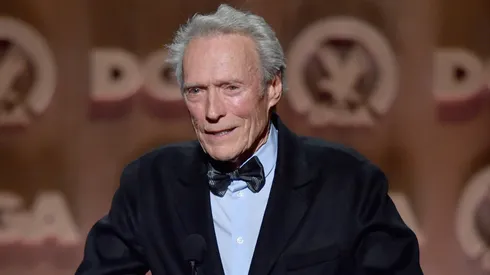
Rising from television’s Rawhide to become a defining face of 20th-century cinema, Eastwood’s name is entirely synonymous with uncompromising grit and quiet, simmering intensity. Whether he is squinting into the sun through cigar smoke, daring a punk to “make my day,” or directing himself to multiple Academy Awards, his incredible legacy spans decades of masterful storytelling.
To honor the four-time Oscar winner’s monumental milestone, we are counting down 10 of his most exceptional, genre-defining performances that permanently cemented his status as Hollywood royalty.
1. “The Man with No Name” in The Good, the Bad and the Ugly (1966)
While he originated the poncho-wearing antihero in A Fistful of Dollars, it was Sergio Leone’s epic finale to the “Dollars Trilogy” that truly immortalized the character. Eastwood transformed the classic Western protagonist from a spotless do-gooder into a morally ambiguous, cigar-chewing drifter who spoke volumes without saying a word. His intense, quiet charisma completely redefined the genre, creating a cinematic archetype that continues to heavily influence modern action stars today.
2. Inspector Harry Callahan in Dirty Harry (1971)
“You’ve got to ask yourself one question: ‘Do I feel lucky?'” With those legendary words, Eastwood officially introduced the world to the ultimate loose-cannon cop. Trading the Wild West for the gritty, crime-ridden streets of 1970s San Francisco, his performance as a ruthless detective willing to bend the rules to stop a serial killer tapped directly into the cultural anxieties of the era. The massive blockbuster spawned a sprawling franchise and created the definitive template for the modern renegade cop movie.
3. William Munny in Unforgiven (1992)
Directing himself to his first Best Picture and Best Director Academy Awards, Eastwood delivered a devastatingly raw and brilliant deconstruction of his own mythological screen persona. Playing an aging, regret-filled former gunslinger dragged back into a brutal life of violence, he brought a haunting, profound vulnerability to the screen. The masterpiece served as his definitive, deeply moving farewell to the traditional Western genre.
4. Frankie Dunn in Million Dollar Baby (2004)
Proving his emotional depth extended far beyond holding a loaded Magnum, Eastwood broke audiences’ hearts as the curmudgeonly, guilt-ridden boxing trainer who reluctantly takes a determined female fighter (Hilary Swank) under his wing. He beautifully balanced gruff exterior toughness with a profound, fatherly tenderness, rightfully earning another Best Picture and Best Director Oscar win, alongside a Best Actor nomination.
5. Walt Kowalski in Gran Torino (2008)
In a performance that essentially felt like a tragic epilogue to the “Dirty Harry” persona, Eastwood played a bitter, racist Korean War veteran who unexpectedly bonds with his Hmong American neighbors in blue-collar Detroit. Despite his character’s incredibly abrasive exterior, Eastwood managed to infuse Walt with a redemptive arc, turning what could have been a one-dimensional caricature into a deeply moving meditation on aging, prejudice, and ultimate sacrifice.
6. Josey Wales in The Outlaw Josey Wales (1976)
Taking the reins as both director and star, he delivered a fiercely independent, revisionist Western set following the devastation of the Civil War. As a peaceful Missouri farmer pushed into vengeance and subsequently joining a ragtag group of outcasts, Eastwood showcased a deeper emotional resonance than his earlier “Spaghetti Western” days. It remains one of his most universally beloved and frequently quoted historical epics.
7. Robert Kincaid in The Bridges of Madison County (1995)
Completely shattering his tough-guy image, Eastwood shocked audiences by effortlessly sliding into a deeply romantic, tender drama alongside Meryl Streep. Playing a traveling National Geographic photographer who engages in a brief, life-altering affair with an Iowa housewife, he proved he possessed the quiet grace, warmth, and charm of a classic Hollywood leading man.
8. Frank Horrigan in In the Line of Fire (1993)
In Wolfgang Petersen’s incredibly taut thriller, Eastwood delivered a masterful performance as an aging, haunted Secret Service agent who failed to save JFK and is now tasked with protecting the current president from a brilliant assassin (John Malkovich). The physically demanding, psychologically complex role brilliantly weaponized his real-life age, making him an incredibly relatable, highly vulnerable action hero.
9. Preacher in Pale Rider (1985)
Serving as a spiritual successor to High Plains Drifter, Eastwood rode back into town to defend a struggling mining camp from a ruthless conglomerate. Playing a mysterious figure who might literally be the Angel of Death, he combined the quiet menace of his early Westerns with a heavy dose of supernatural dread. It was the highest-grossing Western of the 1980s and successfully proved his enduring box office draw in the genre.
10. Frank Morris in Escape from Alcatraz (1979)
Teaming up with director Don Siegel for the fifth and final time, Eastwood tackled the tense real-life story of the infamous 1962 prison break. Playing the fiercely intelligent inmate Frank Morris, he relied on an incredibly restrained, icy performance driven by intense stares and meticulous physical acting rather than heavy dialogue. It is an absolute masterclass in building slow-burn, claustrophobic tension.