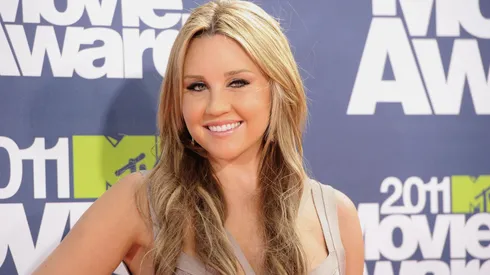
At a time when teen comedies ruled multiplexes and cable reruns shaped an entire generation’s sense of humor, Amanda Bynes emerged as one of the most magnetic young performers of the early 2000s.
But her rise was more than a string of box office hits; it captured a specific cultural moment, when teen stardom felt both larger-than-life and intimately familiar. Whether sharing the screen with Colin Firth or reinventing Shakespearean comedy for a new audience, her performances blended physical humor with a rare self-awareness.
Viola Hastings – She’s the Man
Few performances capture Bynes’ full comedic range quite like Viola Hastings, a role that demanded both precision and spontaneity. Loosely inspired by Shakespeare’s Twelfth Night, the film hinges on her ability to convincingly pass as her twin brother while navigating romance, identity, and teenage chaos. Her physical comedy—awkward walks, forced mannerisms, perfectly timed reactions—became the backbone of the film’s humor.
Beyond the laughs, the performance revealed a sharp awareness of tone. Bynes didn’t just parody masculinity; she layered vulnerability beneath the disguise, particularly in moments opposite Channing Tatum. Over time, She’s the Man evolved into a cult favorite, and her portrayal remains one of the most defining comedic turns of the decade.
Daphne Reynolds – What a Girl Wants
In What a Girl Wants, Bynes stepped into the classic fish-out-of-water narrative, bringing warmth and irreverence to Daphne Reynolds, an American teenager navigating British high society.
The film’s charm relies heavily on her ability to balance earnest emotion with playful defiance, especially in scenes that contrast her free-spirited nature with rigid aristocratic expectations.
Her dynamic with Colin Firth anchors the story, giving it emotional weight beneath the glossy teen-comedy surface. At a time when the genre often leaned into formula, Bynes infused Daphne with a sense of authenticity that resonated with younger audiences, helping the film secure its place as an early-2000s staple.
Sydney White – Sydney White
Released at a moment when college comedies were shifting toward edgier territory, Sydney White offered a softer, more idealistic alternative. Bynes plays the titular character with a grounded optimism, reimagining the Snow White archetype in a modern campus setting filled with social hierarchies and Greek life politics.
Rather than leaning solely on parody, her performance emphasizes sincerity—Sydney’s determination to challenge exclusionary systems feels surprisingly earnest.
That balance between humor and heart allowed the film to stand apart from its contemporaries, reinforcing Bynes’ ability to carry a story that blends satire with feel-good storytelling.
Penny Pingleton – Hairspray
In an ensemble bursting with energy, Bynes’ Penny Pingleton could have easily faded into the background. Instead, she carved out one of the film’s most endearing arcs, transforming from a sheltered, anxious teen into a character defined by confidence and independence.
Her comedic instincts shine early on, particularly in her rigid, almost mechanical delivery. As the story unfolds, however, Bynes subtly shifts Penny’s demeanor, allowing warmth and spontaneity to emerge.
Acting alongside performers like Zac Efron and John Travolta, she holds her ground in a production that thrives on larger-than-life performances, proving her adaptability within a musical format.
Marianne Bryant – Easy A
By the time Easy A arrived, Bynes was stepping into a different phase of her career, taking on roles that leaned into sharper, more satirical humor. As Marianne Bryant, she plays a hyper-religious high schooler whose moral rigidity borders on absurdity, offering a pointed critique of performative virtue.
What makes the performance memorable is its commitment. Bynes doesn’t soften Marianne; she embraces the character’s intensity, creating a foil that enhances Emma Stone’s more understated lead. The result is a comedic dynamic that feels both exaggerated and eerily recognizable, reflecting the film’s broader commentary on reputation and judgment.
Holly Tyler – Big Fat Liar
One of her earliest big-screen roles, Big Fat Liar introduced Bynes to a wider audience beyond Nickelodeon. As Holly Tyler, she plays the sharp, resourceful best friend who helps orchestrate an elaborate plan against a deceitful Hollywood producer. Even at this stage, her timing and delivery stand out.
The film thrives on its playful sense of chaos, and Bynes matches that energy beat for beat alongside Frankie Muniz. More importantly, her presence signals a transition—from child star to teen actress capable of leading theatrical releases—marking a pivotal step in her rise.
Jenny Taylor – Love Wrecked
In Love Wrecked, Bynes leans fully into romantic comedy territory, playing a teenager who finds herself stranded on a tropical island with a pop star crush. The premise is unabashedly escapist, but her performance injects enough self-awareness to keep it from feeling overly saccharine.
She navigates the film’s more exaggerated moments with a wink, grounding the fantasy in relatable awkwardness. While not as critically recognized as her other projects, the role contributes to the broader image of Bynes as a defining face of mid-2000s teen escapism.
Anna – Family Guy
At the height of her popularity, Amanda Bynes’ presence extended beyond teen comedies into mainstream adult animation, including a brief but notable voice appearance in Family Guy.
She voiced the character Anna in the episode “Long John Peter,” a small role that nonetheless reflected how recognizable her voice and persona had become in the broader entertainment landscape.
While the cameo itself was limited in screen time, its significance lies in context. Family Guy has long relied on culturally relevant figures for its rotating cast of voices, and Bynes’ inclusion positioned her firmly within that pop culture orbit. Even outside leading roles, she remained a reference point of the 2000s—her comedic identity strong enough to translate across formats and audiences.
Multiple Characters – The Amanda Show
Before becoming a box office draw, Bynes built her foundation on The Amanda Show, a Nickelodeon sketch-comedy series that ran from 1999 to 2002 and was designed entirely around her comedic instincts.
Created by Dan Schneider as a spin-off of All That, the show placed her at the center of a fast-paced format where she played a wide range of eccentric characters.
That structure proved crucial in shaping her career. Each sketch demanded a different rhythm—whether absurd, satirical, or physical—which allowed Bynes to refine the versatility that would later define her film work.
Industry figures at the time even highlighted her “star quality” at a young age, and the show’s success made her one of Nickelodeon’s most recognizable faces, effectively launching her transition into mainstream teen stardom.
Holly Tyler – What I Like About You
Running for four seasons on The WB, What I Like About You marked a pivotal shift in Bynes’ career, placing her in a more traditional sitcom structure aimed at a slightly older audience.
As Holly Tyler, she played a lively, impulsive teenager who moves to New York to live with her older sister, creating a dynamic that blended classic sitcom conflict with early-2000s sensibilities.
The series, which produced 86 episodes between 2002 and 2006, allowed Bynes to develop a more sustained character arc compared to her sketch work. Over time, Holly evolved from comedic chaos to a more grounded presence, mirroring Bynes’ own transition into film roles.
Notably, the actress herself has later described the show as one of her most enjoyable experiences, underscoring its importance not just professionally, but personally within her career trajectory.