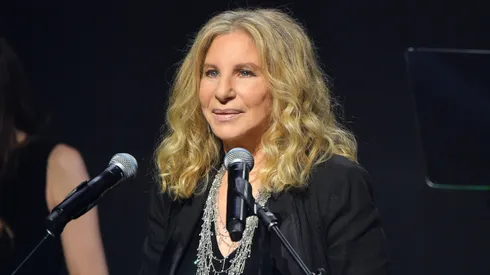
There are careers that unfold and then there are those that seem to compose themselves over time. At 84, Barbra Streisand stands as one of the rare figures whose presence has moved seamlessly from Broadway stages to Hollywood sets without losing its distinct voice.
Her breakthrough in Funny Girl (1968), reprising her original Broadway role, didn’t just introduce her to film audiences—it earned her an Academy Award for Best Actress and redefined what a leading star could look like at the time, challenging industry expectations around image and performance.
What followed was not a repetition of success, but an expansion of it. Her work behind the camera in Yentl (1983) marked a historic step—becoming the first woman to write, produce, direct and star in a major studio film, earning a Golden Globe for Best Director in the process.
Funny Girl (1968)
Barbra Streisand’s leap to cinema with Funny Girl didn’t feel like a debut—it felt like an arrival already in progress. Having originated the role of Fanny Brice on Broadway, she transitioned to film with unusual authority for a first-time movie actress, carrying both the emotional weight and comedic rhythm of the character almost instinctively.
The performance earned her the Academy Award for Best Actress, marking one of the most iconic film debuts in Hollywood history and cementing her status as a star capable of reshaping the musical genre from within.
Beyond the award, Funny Girl became a cultural imprint. Songs like “Don’t Rain on My Parade” evolved into defining statements of her artistic identity, blending vulnerability with defiance in a way that would become her signature.
The role also redefined what a leading woman could embody on screen—less polished fantasy, more personality-driven force—setting the tone for a career built on control, presence, and emotional precision.
Hello, Dolly! (1969)
Arriving just a year after her breakthrough, Hello, Dolly! placed Streisand inside a lavish Gene Kelly production designed to celebrate classic Hollywood musical spectacle. She played Dolly Levi, a witty matchmaker navigating romance and ambition in turn-of-the-century New York.
The film leaned heavily into big studio tradition—grand sets, choreographed sequences, and theatrical scale meant to echo the golden age of musicals. However, the reception marked an early complexity in Streisand’s film trajectory.
While her vocal performance and screen charisma were widely acknowledged, the film itself became emblematic of changing audience tastes in the late 1960s, where traditional musicals were beginning to lose cultural dominance.
Still, her presence anchored the production, and her interpretation of Dolly reinforced her image as a performer capable of commanding even the most extravagant cinematic environments.
The Way We Were (1973)
In The Way We Were, Streisand moved into more politically and emotionally layered territory as Katie Morosky, a passionate activist navigating love and ideological conflict in mid-century America.
Opposite Robert Redford, her character becomes a portrait of conviction and contradiction—someone whose personal ideals constantly collide with romantic possibility. The film’s lasting impact owes much to Streisand’s ability to anchor emotional tension without oversimplifying the character’s intensity.
The story unfolds across shifting political eras, but it is her performance that gives it cohesion, turning personal memory into something almost mythic. The theme song, performed by Streisand herself, extended the film’s emotional reach and helped transform it into one of the most recognizable romantic dramas of the decade.
A Star Is Born (1976)
Streisand’s role as Esther Hoffman in A Star Is Born reframed a well-known Hollywood narrative through the lens of 1970s music culture. Set against the rise of rock stardom, the film follows the relationship between an emerging singer and a fading star, played by Kris Kristofferson.
The dynamic allowed Streisand to merge acting and musical performance in a way few film roles had previously enabled. Her interpretation of Esther centers on creative independence and emotional resilience, portraying a woman whose career ascends even as her partner’s declines.
The film’s soundtrack, particularly “Evergreen,” which won the Academy Award for Best Original Song, reinforced her dual identity as both actress and recording artist. The role ultimately positioned her at the intersection of two industries—film and music—without subordinating one to the other.
What’s Up, Doc? (1972)
With What’s Up, Doc?, Streisand stepped into screwball comedy with a performance defined by timing, chaos, and controlled unpredictability. Playing Judy Maxwell, she drives the film’s fast-paced narrative of mistaken identities, romantic confusion, and physical comedy, opposite Ryan O’Neal in a story that deliberately echoes classic Hollywood farce.
The film stands out for how effortlessly she navigates comedic escalation—turning rapid dialogue and absurd situations into a structured rhythm rather than disorder.
It also helped revive interest in the screwball genre during the 1970s, proving that her range extended well beyond musicals and drama. Judy Maxwell became one of her most dynamic screen personas, built on spontaneity but executed with precision.
The Prince of Tides (1991)
With The Prince of Tides, Streisand shifted into a more restrained and emotionally grounded territory. She played Dr. Susan Lowenstein, a psychiatrist treating a man dealing with childhood trauma, portrayed by Nick Nolte.
The story unfolds through therapy sessions that gradually expose buried family pain, blending psychological drama with intimate character study. What makes this film especially significant is Streisand’s dual role as both lead actress and director.
Her direction focuses on emotional pacing rather than spectacle, allowing silence and dialogue to carry weight. The film earned multiple Academy Award nominations, including Best Picture, and marked one of her most respected efforts behind the camera, showing her evolution from performer to full creative author.
The Mirror Has Two Faces (1996)
In The Mirror Has Two Faces, Streisand returned to the romantic drama genre with a story centered on self-image, love, and transformation. She played Rose Morgan, a literature professor who enters a marriage based more on companionship than physical attraction, opposite Jeff Bridges.
The film explores emotional insecurity and romantic idealism through a deliberately stylized narrative. As director, Streisand shaped the film into a classic Hollywood-inspired romance, emphasizing emotional clarity and visual elegance.
Critics at the time were divided, but many noted the film’s strong performances and its ambitious attempt to revisit old-fashioned romantic storytelling through a modern lens. It also stands as one of her most personal directorial projects, reflecting recurring themes in her career: identity, perception, and self-worth.
The Owl and the Pussycat (1970)
In The Owl and the Pussycat, Streisand embraced contemporary comedy, playing Doris, a bold and outspoken woman whose chaotic personality collides with a reserved writer, played by George Segal.
Unlike her earlier musical roles, this film leaned heavily into dialogue-driven humor and urban realism, reflecting a shift in Hollywood storytelling at the time. The chemistry between the leads became the driving force of the film, which explored unlikely relationships with sharp comedic tension.
Streisand’s performance stood out for its improvisational energy and fearless delivery, proving she could move beyond musicals and into modern romantic comedy with ease. The film became a commercial success and helped expand her versatility early in her screen career.
Nuts (1987)
Nuts presented Streisand in one of her most intense dramatic roles as Claudia Draper, a high-class sex worker accused of killing a client. The narrative unfolds largely inside a courtroom and psychiatric evaluation setting, where her character fights to prove her sanity and avoid institutionalization.
The role demanded emotional volatility and sustained dramatic pressure. Streisand also took creative control as a producer, shaping the film’s tone around psychological tension and legal drama.
While the film received mixed critical reception, her performance was widely noted for its intensity and commitment. It reinforced her willingness to take on complex, often uncomfortable characters that challenge perceptions of femininity, power, and control.
Meet the Parents (2000)
By the early 2000s, Barbra Streisand stepped back into Hollywood with a very different kind of role in Meet the Fockers, the sequel to Meet the Parents. She played Roz Focker, the openly expressive and unconventional mother of Greg Focker, joining a cast that included Robert De Niro, Ben Stiller, Dustin Hoffman and Blythe Danner.
The film leaned heavily into generational and cultural contrast, with Streisand’s character representing a bold shift in tone from the more rigid and traditional Byrnes family dynamic. What made her presence stand out was how sharply it contrasted with her earlier career-defining roles.
Roz is a sex therapist, confident and uninhibited, often used as a comedic counterbalance to the tension between the two families. The role marked Streisand’s return to the big screen after years away from acting, and it introduced her to a new generation of audiences through mainstream comedy rather than musical or dramatic prestige projects.
Over time, the performance became one of her most recognizable late-career appearances, not because it defined her artistic peak, but because it showed her ability to shift registers completely.
In Meet the Fockers, Streisand wasn’t playing myth or icon—she was playing rhythm, timing, and chaos inside a modern ensemble comedy, proving that her screen presence could adapt even to the most commercial corners of Hollywood.