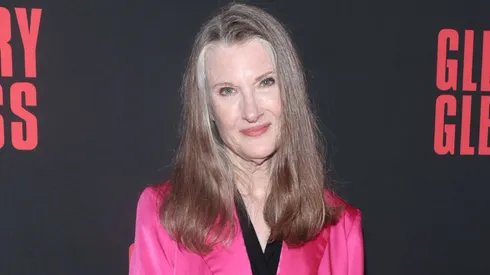
There’s a certain kind of performer who never quite belongs to a single era, and Annette O’Toole has spent more than five decades proving exactly that. From her early appearances in television during the 1960s to scene-stealing roles in major studio films and modern prestige series, her career has unfolded with a quiet versatility that often defies easy categorization.
What makes her filmography particularly compelling is not just its longevity, but its range. She has moved seamlessly between drama, horror and family-driven narratives, building a body of work that feels both familiar and constantly evolving.
Smallville (Martha Kent)
For many modern audiences, Annette O’Toole became the emotional backbone of Smallville. As Martha Kent, she brought warmth, moral clarity, and quiet strength to a character often overshadowed in superhero lore. Her performance grounded the series, giving Clark Kent’s journey a deeply human core.
What made her portrayal stand out was its restraint. Rather than leaning into melodrama, O’Toole played Martha as a steady, thoughtful presence—someone whose influence shaped a hero long before the world knew his name. It remains one of the most beloved interpretations of the character on screen.
Superman III (Lana Lang)
Long before stepping into the Kent household, O’Toole entered the Superman universe as Lana Lang in Superman III. Her performance offered a grounded contrast to the film’s more comedic tone, bringing sincerity to a story that often veered into spectacle.
As Clark Kent’s childhood friend, Lana represented a link to a simpler past, and O’Toole played her with an understated charm that resonated beyond the film itself. Decades later, her dual connection to the Superman mythos remains a unique footnote in her career.
Cat People (Alice Perrin)
In Paul Schrader’s atmospheric remake of Cat People, O’Toole delivered a performance that balanced vulnerability with curiosity. As Alice, she becomes entangled in a story where desire and danger blur together, navigating a world that feels both sensual and threatening.
Her presence adds emotional texture to a film defined by mood and symbolism. Rather than being overtaken by its stylized direction, O’Toole anchors the narrative with a performance that feels grounded, making the surreal elements all the more unsettling.
48 Hrs. (Elaine)
In 48 Hrs., O’Toole steps into a gritty, fast-paced world alongside Eddie Murphy and Nick Nolte. As Elaine, she brings a sense of realism to a film driven by sharp dialogue and high-energy action.
Her role may not dominate the screen, but it provides an essential counterbalance. In a story fueled by tension and conflict, O’Toole’s performance offers moments of emotional grounding, proving her ability to leave an impact even in supporting roles.
It (Beverly Marsh – Adult)
In the 1990 adaptation of Stephen King’s It, O’Toole portrays the adult version of Beverly Marsh, bringing depth to a character shaped by trauma and resilience. Her performance captures the lingering effects of childhood fear while emphasizing strength and survival.
The miniseries leans heavily on its ensemble, but O’Toole’s Beverly stands out for its emotional authenticity. She conveys both vulnerability and determination, making the character’s return to Derry feel personal rather than purely narrative-driven.
Nash Bridges (Lisa Bridges)
Television in the late ’90s gave O’Toole another platform to explore long-form storytelling with Nash Bridges. As Lisa Bridges, she navigates the complexities of family, relationships, and personal identity within a procedural framework.
Her performance adds dimension to a series often centered on action and crime-solving. By focusing on emotional nuance, O’Toole helps expand the show beyond its genre, offering a more layered portrayal of its central characters’ lives.
Virgin River (Hope McCrea)
In Virgin River, O’Toole reintroduced herself to a new generation as Hope McCrea, a character defined by sharp wit and emotional depth. The role allows her to move between humor and drama with ease, reflecting decades of experience.
What makes this performance particularly compelling is its complexity. Hope is not simply a supportive figure; she’s flawed, outspoken, and deeply human. O’Toole embraces those contradictions, making the character feel lived-in and authentic.
The Huntress (Dorothy “Dot” Breslin)
In The Huntress, O’Toole plays a matriarch in a family of bounty hunters, blending toughness with a strong moral compass. The role gave her the opportunity to explore a character who operates in a traditionally male-dominated world.
Her performance stands out for its balance. She brings authority without losing warmth, creating a character who feels both formidable and relatable. It’s a reminder of her ability to adapt to evolving television landscapes.
One on One (Janet Hays)
Early in her career, O’Toole appeared in One on One, a drama that explored ambition and personal growth through the lens of college basketball. Her role as Janet Hays showcased her ability to bring sincerity to character-driven storytelling.
Even at this stage, her performance hinted at the versatility that would define her career. There’s a naturalism in her acting that makes the character feel immediate, setting the foundation for decades of compelling work.
Foolin’ Around (Susan)
In Foolin’ Around, O’Toole takes on a lighter, more romantic role, demonstrating her range beyond drama and suspense. The film’s tone allows her to explore a more playful side of her screen presence.
While not as widely discussed as some of her later work, the performance highlights an important aspect of her career: adaptability. O’Toole has never been confined to a single genre, and roles like this underscore her ability to shift seamlessly between tones.