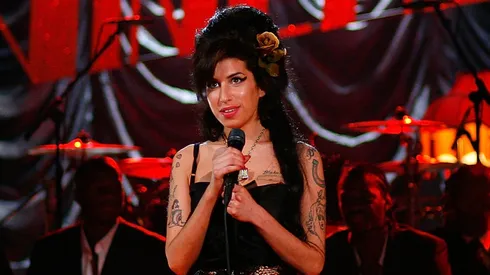
In the early 2000s, pop radio was dominated by polished, heavily produced tracks. Then came a young woman from North London with a acoustic guitar, a jazz singer’s soul, and an unfiltered attitude that refused to conform to industry standards.
Amy Winehouse did not just sing; she poured her deepest heartbreaks, flaws, and desires directly onto the record. On this 15th anniversary of her passing, we look back at her whirlwind life, her legendary career, and how her legacy continues to reshape popular culture.
The North London Jazz Prodigy: Frank (2003)
Born on September 14, 1983, in Enfeld, London, Amy Jade Winehouse grew up surrounded by jazz music, heavily influenced by her grandmother and jazz-musician uncles.
After honing her craft at the Sylvia Young Theatre School and the BRIT School, she released her debut album, Frank, in October 2003 at age 20. Named after Frank Sinatra, the record showcased her razor-sharp songwriting and deep, smoky vocals on tracks like “Stronger Than Me” and “F*** Me Pumps.” Critics praised her as a once-in-a-generation talent, earning her an Ivor Novello Award and a Mercury Prize nomination.
The Global Explosion: Back to Black (2006)
If Frank made her a critical darling, her sophomore album, Back to Black, transformed her into a global phenomenon.
Teaming up with producers Mark Ronson and Salaam Remi, Winehouse fused 1960s girl-group soul with contemporary hip-hop beats and brutal personal honesty. Released in late 2006, the album spawned iconic singles:
- “Rehab”: A defiant, brass-heavy anthem detailing her refusal to enter treatment at her former manager’s request.
- “Back to Black”: A dark, orchestral masterpiece about heartbreak and grief.
- “Tears Dry on Their Own”: A Motown-infused track sampling Marvin Gaye and Tammi Terrell.
At the 50th Annual Grammy Awards in February 2008, Winehouse made history by winning five Grammy Awards in a single evening—including Best New Artist, Song of the Year, and Record of the Year.
“I don’t think I’m gonna be at all famous. I don’t think I could handle it. I would probably go mad.” — Amy Winehouse (2003)
The Media Circus and Tragic Passing
As her stardom skyrocketed, so did relentless tabloid scrutiny. Winehouse fought a very public battle with severe drug and alcohol addiction, bulimia, and toxic relationships—all played out under the harsh lens of paparazzi flashbulbs.
Despite her personal struggles, her musical genius remained intact whenever she stepped into a recording studio. Her final studio recording was a duet of “Body and Soul” with Tony Bennett at Abbey Road Studios in March 2011. Bennett later called her “one of the most natural jazz singers” he had ever heard.
On July 23, 2011, Winehouse was found unresponsive in her Camden home, having succumbed to accidental alcohol poisoning. Her passing triggered an outpouring of grief from artists, fans, and world leaders alike.
The Legacy: 15 Years Later
Fifteen years after her death, Amy Winehouse’s influence on modern music is everywhere.
- Paving the Way for Modern Soul: Her massive success proved that audiences craved authentic, raw soul music, clearing a path for artists like Adele, Duffy, Florence and the Machine, and Lana Del Rey.
- Changing the Conversation Around Mental Health: The media frenzy surrounding her downfall led to a major cultural reckoning regarding how the press and public treat vulnerable female artists dealing with addiction and mental illness.
- The Amy Winehouse Foundation: Established by her family shortly after her death, the foundation works to prevent drug and alcohol abuse among young people and provides support for vulnerable youth across the UK.
Forever Back to Black
Amy Winehouse was a brilliant, funny, fragile, and uniquely talented artist who gave everything she had to her craft. Today, 15 years after her passing, we remember not just how her story ended, but the incredible music, passion, and soul she gave to the world.