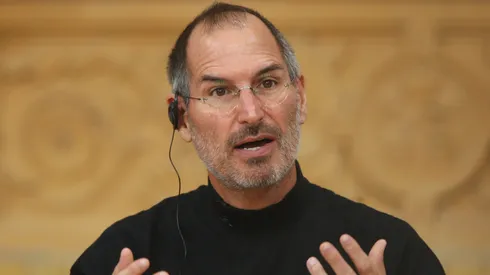
More than a decade after his passing, Steve Jobs remains one of the most compelling figures in both technology and cinema. Hollywood and documentarians alike have returned repeatedly to his story, interpreting the rise of Apple and the man at its center through very different lenses.
Together, some films map a cinematic journey as layered as his real-world impact — revealing not just how Apple transformed technology, but how narrative and personality have shaped public memory of one of the most influential innovators of our time.
Pirates of Silicon Valley – The Origin Story of Tech Rivals

Pirates of Silicon Valley is a television film that explores the early rivalry between Steve Jobs and Bill Gates from the 1970s through the mid-1990s. Based on the book Fire in the Valley, the film dramatizes the creation of Apple and Microsoft, highlighting the ambition, innovation, and competition that fueled the personal computer revolution.
Starring Noah Wyle as Jobs and Anthony Michael Hall as Gates, the film became known for its energetic storytelling and sharp portrayal of two visionary but contrasting personalities. While it takes creative liberties, it remains one of the earliest and most influential screen depictions of Silicon Valley’s founding era. Jobs himself commented on the film’s portrayal, reportedly criticizing the script while acknowledging the performance.
Jobs – From College Dropout to Tech Icon
Jobs (2013), starring Ashton Kutcher, traces Steve Jobs’ journey from his days at Reed College to the early success of Apple and the launch of the iPod in 2001. The film premiered at the Sundance Film Festival and attempts to chronicle the rise of Jobs as a cultural and technological force.
Although the movie received mixed critical reviews, it provides a chronological look at Jobs’ partnership with Steve Wozniak and the formation of Apple in a garage setting. It focuses heavily on ambition, personality, and the defining moments that shaped his career trajectory.
Steve Jobs – A Dramatic Portrait Behind the Launches
Directed by Danny Boyle and written by Aaron Sorkin, Steve Jobs (2015) takes a unique structural approach. Rather than telling a traditional life story, the film unfolds across three major product launches, exploring the tension behind the scenes at pivotal moments in Jobs’ career.
Starring Michael Fassbender in the title role, the film draws from Walter Isaacson’s biography and focuses on Jobs’ relationships, leadership style, and personal conflicts. It received strong praise for its screenplay and performances, offering a more character-driven and psychological interpretation than earlier biopics.
Steve Jobs: The Man in the Machine – The Myth and the Man
Directed by Alex Gibney, this documentary examines both the accomplishments and controversies surrounding Jobs. Rather than presenting a purely celebratory narrative, it explores his leadership methods, personal complexities, and the cultural mythology built around him.
Through interviews and archival material, the film analyzes how Jobs’ public image was constructed over time, offering a critical perspective on his legacy. It encourages viewers to consider both the technological achievements and the ethical debates associated with his influence.
Steve Jobs: The Lost Interview – Jobs in His Own Words
Steve Jobs: The Lost Interview features a full-length 1995 conversation conducted by Robert X. Cringely. Recorded before Jobs’ return to Apple, the interview captures his thoughts on innovation, competition, and the future of technology at a turning point in his career.
Unlike dramatizations, this documentary presents Jobs speaking directly in his own voice. It provides valuable insight into his philosophy and vision during a transitional period that would later redefine Apple’s global position.