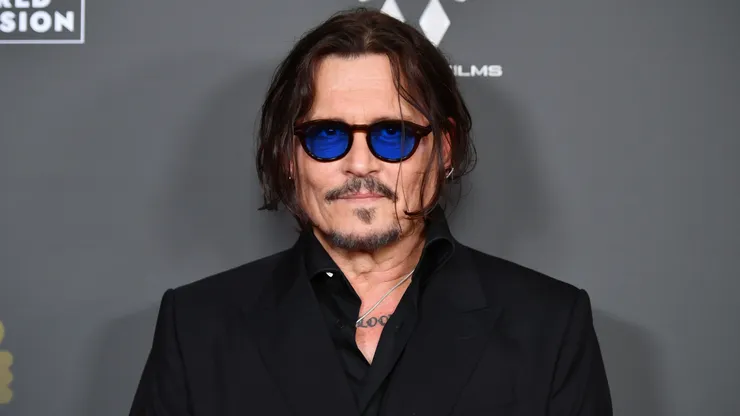
Few Hollywood careers have generated as much intense media analysis, polarized public debate, and dramatic shifts in public perception as that of Johnny Depp. Over the past decade, headlines surrounding his highly publicized legal battles and personal life have frequently eclipsed his work, leaving behind a complicated and deeply divided cultural legacy.
However, from a cinematic standpoint, Depp’s footprint on the industry remains an influential chapter in modern film history. Rejecting the traditional “heartthrob” path laid out for him in the late 1980s, he built his multi-billion-dollar box-office status on a foundation of eccentric outsiders, silent-era-inspired physical comedy, and heavily stylized transformations.
The 10 most critically acclaimed and culturally significant performances of his acting career:
1. Edward in Edward Scissorhands (1990)
This is the pivotal performance that fundamentally rescued Depp from the teen-idol trajectory of 21 Jump Street. In his first collaboration with director Tim Burton, Depp delivered a performance driven almost entirely by body language and facial expressions, speaking fewer than 170 words in the entire film. Drawing heavy inspiration from silent film stars like Charlie Chaplin, he infused the unfinished, blade-handed creation with a fragile, tragic innocence that became the blueprint for his entire career as an on-screen outsider.
2. Captain Jack Sparrow in Pirates of the Caribbean: The Curse of the Black Pearl (2003)
It is difficult to overstate how much of a gamble this performance was in 2003. Disney executives famously panicked over early dailies, terrified by Depp’s decision to model the swashbuckler on a cocktail of Keith Richards and Pepé Le Pew. However, his slurred delivery, erratic swagger, and gold-toothed charisma completely revitalized a dead genre. The role earned him his first career Academy Award nomination and launched one of the highest-grossing cinematic franchises of all time.
3. Ed Wood in Ed Wood (1994)
While blockbusters brought him global fame, many critics still consider this black-and-white biographical comedy to be Depp’s finest hour. Portraying the real-life historical figure widely dubbed the “worst director of all time,” Depp resisted the urge to play the character as a cheap joke. Instead, he infused Wood with a relentless, wide-eyed optimism and a Buster Keaton-esque charm, turning a story about creative failure into a deeply empathetic love letter to Hollywood’s fringes.
4. Donnie Brasco / Joe Pistone in Donnie Brasco (1997)
For audiences who believed Depp could only operate in the realms of fairy tales and gothic fantasy, Mike Newell’s gritty mob drama offered a stark reality check. Sharing the screen with Al Pacino, Depp played an undercover FBI agent slowly losing his identity to his criminal persona. The performance is remarkably restrained, relying on quiet paranoia, shifting loyalties, and a slow, internal rot rather than theatrical eccentricities.
5. Raoul Duke in Fear and Loathing in Las Vegas (1998)
To bring Hunter S. Thompson’s legendary, drug-fueled gonzo journalism to life, Depp underwent an extreme level of method immersion—even living in Thompson’s basement for months and letting the author shave his head. Under Terry Gilliam’s chaotic direction, Depp’s performance as the hallucinating, cigarette-holder-clenching Raoul Duke is a masterclass in physical comedy, capturing a fractured, manic energy that has since become a major cult-classic artifact.
6. Gilbert Grape in What’s Eating Gilbert Grape (1993)
Lasse Hallström’s tender family drama showcases a side of Depp that Hollywood rarely utilized in the decades that followed: a completely ordinary, grounded young man. Serving as the quiet, stoic straight man to a breakout Leonardo DiCaprio, Depp anchored the film with a heavy, deeply internal sense of quiet desperation, capturing the suffocating weight of small-town domestic responsibility without relying on a single makeup effect or vocal tic.
7. Sweeney Todd in Sweeney Todd: The Demon Barber of Fleet Street (2007)
Taking on a complex Stephen Sondheim musical is a daunting task for a non-traditional singer, but Depp’s dark, punk-rock-inspired vocal delivery worked perfectly for this blood-soaked gothic adaptation. As the vengeful, murderous barber of Fleet Street, he traded his usual whimsical charm for a cold, nihilistic fury. The performance earned him his third Academy Award nomination and won him a Golden Globe for Best Actor in a Comedy or Musical.
8. Ichabod Crane in Sleepy Hollow (1999)
In this highly stylized reimagining of Washington Irving’s classic tale, Depp made the conscious decision to subvert the traditional, stoic action-hero archetype. Instead of playing Ichabod Crane as a fearless detective, he portrayed him as a squeamish, hyper-rational coward who frequently shrieks at bugs and faints at the sight of blood. This comedic choice injected the dark, atmospheric horror film with an essential sense of levity.
9. J.M. Barrie in Finding Neverland (2004)
Released just a year after his bombastic debut as Jack Sparrow, Marc Forster’s Finding Neverland served as a poignant reminder of Depp’s capacity for gentleness. Portraying the Scottish playwright behind Peter Pan, Depp delivered a quiet, melancholy performance centered on grief, imagination, and childlike wonder. The performance resonated strongly with the industry, securing him his second consecutive Academy Award nomination for Best Actor.
10. James “Whitey” Bulger in Black Mass (2015)
In the later chapters of his career, this biographical crime drama stood out as a sharp return to critical favor. Buried under severe prosthetics and sporting a piercing, icy stare, Depp portrayed the notorious Boston mob boss with a calculating, sociopathic stillness. Stripping away all trace of his signature theatrical playfulness, he delivered a genuinely chilling, predatory performance that reminded the industry of his underlying dramatic weight.