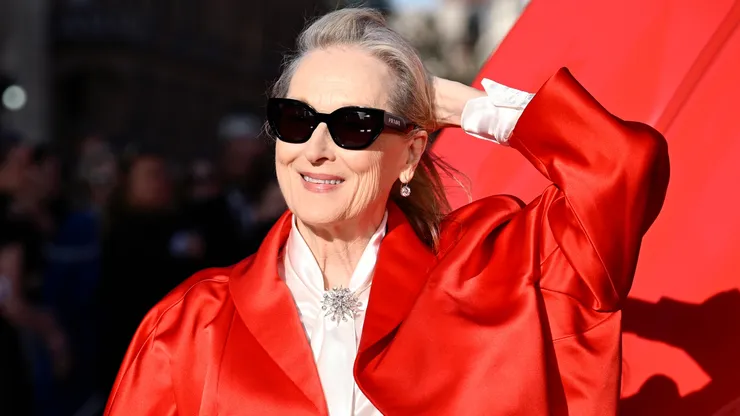
The word “legend” is thrown around loosely in modern media, but it feels altogether inadequate when applied to Meryl Streep. For half a century, she hasn’t just participated in the cinematic landscape—she has fundamentally dictated its baseline of excellence.
Far from settling into a lifetime achievement sunset, Streep remains a dominant, contemporary disruptor. Her box office power was just on full display this spring with the spectacular global success of The Devil Wears Prada 2, which raked in over $670 million worldwide and proved that her commercial magnetism is completely timeless.
Beyond the ticket sales, her foundational legacy rests on a mountain of industry milestones that will likely never be touched by another performer. Here is the remarkable story of how she scaled the heights of Hollywood to become an institution unto herself.
The Genesis: Trading Opera for the Stage
Long before she was rewriting the rulebooks of cinema, Mary Louise Streep was a cheerleader from New Jersey with a powerhouse voice. Originally trained in opera, she pivotally redirected her focus toward acting during her time at Vassar College, eventually honing her formidable craftsmanship at the prestigious Yale School of Drama.
When she arrived in New York City in the mid-1970s, theater directors instantly recognized her uncanny, chameleonic ability to absorb complex psychological profiles. While many actors of her era relied entirely on personal charisma or typecasting, Streep approached characters like a scientist—dissecting posture, internal motivations, and localized speech patterns. That technical mastery allowed her to jump instantly from small theater stages to major features, racking up her first major industry honors before the decade even closed.
By the Numbers: The Unrivaled Metrics of Greatness
To truly appreciate the shadow Streep casts over the creative arts, one must look at the purely mathematical reality of her trophy cabinet. She doesn’t just hold industry records; she has effectively built a firewall around them.
- The Academy Vanguard: She has been nominated for an Academy Award an unprecedented 21 times (17 for Best Actress in a Leading Role and 4 for Best Supporting Actress). To put that into perspective, her closest peers in acting history, Katharine Hepburn and Jack Nicholson, maxed out at 12 nominations each.
- The Golden Globe Dynasty: Across her historic run, she has amassed a staggering 34 nominations at the Golden Globes, taking home 9 competitive trophies alongside the prestigious Cecil B. DeMille lifetime honor.
- The Triple Threat Tally: She remains one of the highly exclusive, elite performers to capture major competitive wins across the Academy Awards, the Primetime Emmy Awards, and the Screen Actors Guild.
Overturning Hollywood’s Ageist Directives
Perhaps the most monumental component of Streep’s legacy isn’t the number of awards she has won, but when she won them. Historically, mainstream film studios notoriously cast aside female leads once they crossed into their forties. Streep single-handedly shattered that structural glass ceiling.
Headed into her fifties and sixties, instead of fading into quiet supporting roles as the years progressed, her commercial leverage actually intensified. She anchored massive, culture-shifting box office hits like Mamma Mia!, the original The Devil Wears Prada, and It’s Complicated. By translating her prestige theatrical clout into multi-million-dollar ticket sales, she structurally proved that mature female leads could out-earn and out-perform the traditional youth-obsessed studio machines.
A Contemporary Living Blueprint
As she steps into her 77th year, Streep’s artistic curiosity continues to look forward rather than backward. Her recent multi-season run on Hulu’s acclaimed murder-mystery comedy Only Murders in the Building showed a brilliant willingness to experiment with television formats, bringing an effortless comedic touch and critical gold to the streaming landscape.