In an industry where most theatrical releases rarely exceed the two-hour mark, a handful of filmmakers have repeatedly tested the limits of cinematic endurance. From epic historical dramas to experimental art projects, the history of cinema includes films whose running times stretch far beyond conventional storytelling.
Over the decades, experimental workshave turned duration itself into the subject of the film. Some of these projects last ten hours, others stretch across entire days, blurring the line between movie, installation and endurance test. In a medium defined by time, these extraordinary productions ask a curious question: how long can a film actually be before it stops behaving like one?
Gone with the Wind (1939) — Runtime: 3 hours, 58 minutes

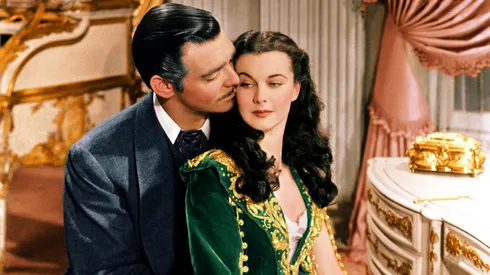
When it premiered in 1939, Gone with the Wind already felt monumental. Directed by Victor Fleming and starring Vivien Leigh and Clark Gable, the sweeping Civil War epic pushed the limits of mainstream studio filmmaking at the time. Its nearly four-hour runtime allowed the film to unfold with an operatic sense of scale, chronicling the fall of the American South through the turbulent life of Scarlett O’Hara.
While modern audiences are accustomed to long blockbusters, in the late 1930s this kind of length was an event in itself—complete with an intermission and elaborate roadshow screenings.
Cleopatra (1963) — Runtime: 4 hours, 8 minutes
Few films in Hollywood history carry the legend of Cleopatra. Directed by Joseph L. Mankiewicz and starring Elizabeth Taylor, the lavish historical epic became famous for its enormous budget and turbulent production.
Its four-hour runtime reflects the film’s ambition: a sprawling political and romantic saga centered on the Egyptian queen’s alliances with Julius Caesar and Mark Antony.
Designed as a cinematic spectacle, the film’s scale—massive sets, elaborate costumes, and sweeping storytelling—helped cement its place among the longest and most extravagant studio productions ever made.
Satantango (1994) — Runtime: 7 hours, 30 minutes
Hungarian filmmaker Béla Tarr redefined patience in cinema with Satantango, an atmospheric black-and-white epic that unfolds over seven and a half hours. Based on the novel by László Krasznahorkai, the film follows the slow collapse of a rural Hungarian community after the fall of communism.
Famous for its hypnotic long takes and deliberate pacing, Satantango is often screened with intermissions and has become a landmark of slow cinema—an experience that asks viewers to surrender completely to time.
Tie Xi Qu: West of the Tracks (2003) — Runtime: 9 hours, 11 minutes
Documentary filmmaking reaches an extraordinary scale in Tie Xi Qu: West of the Tracks. Directed by Chinese filmmaker Wang Bing, the nearly nine-hour film chronicles the decline of a vast industrial district in Shenyang, China.
Divided into multiple sections, the documentary captures the lives of factory workers and families affected by economic transformation. Its length mirrors the enormity of the social changes it documents, creating a portrait of a disappearing world with remarkable depth and intimacy.
Out 1: Noli Me Tangere (1971) — Runtime: 12 hours, 40 minutes
French New Wave director Jacques Rivette pushed narrative boundaries with Out 1: Noli Me Tangere, a mysterious and sprawling exploration of secret societies, theater groups, and conspiracy. Running for over twelve hours, the film weaves together multiple storylines across Paris, featuring performers such as Jean-Pierre Léaud.
Long considered nearly mythical due to its limited screenings, the film eventually gained renewed attention after restorations allowed modern audiences to experience Rivette’s ambitious cinematic labyrinth.
La Flor (2018) — Runtime: 13 hours, 40 minutes
Argentine filmmaker Mariano Llinás created one of the most unusual cinematic experiments of the 21st century with La Flor. Divided into six episodes that shift between genres—spy thriller, musical, melodrama, and more—the film runs nearly fourteen hours.
The project was filmed over nearly a decade and stars the members of the theater group Piel de Lava. Rather than telling a single story, La Flor plays like an evolving anthology, constantly reinventing itself and celebrating the endless possibilities of storytelling.
Resan (The Journey) (1987) — Runtime: 14 hours, 33 minutes
Swedish director Peter Watkins crafted an ambitious global documentary with Resan (The Journey). Blending interviews, archival footage, and dramatized sequences, the film examines nuclear weapons, war, and the fragile political balance of the Cold War era.
Spanning more than fourteen hours, the project moves across continents and cultures, presenting a wide-ranging reflection on humanity’s relationship with conflict and survival.
Heimat (1984) — Runtime: 15 hours, 40 minutes
Though often categorized as a television miniseries, Edgar Reitz’s Heimat is frequently discussed within conversations about extraordinarily long cinematic works.
The epic German saga follows several generations of a family living in the fictional village of Schabbach throughout the 20th century. Spanning nearly sixteen hours, the project combines intimate personal stories with sweeping historical context, offering a deeply layered portrait of German life across decades.
Logistics — Runtime: 857 hours (35 days, 17 hours)
At the extreme edge of cinematic experimentation lies Logistics, the longest film ever created. Directed by Swedish artists Erika Magnusson and Daniel Andersson, the film runs for an astonishing 857 hours—more than 35 days.
The project traces the journey of a simple electronic pedometer backward through the global supply chain, from a retail store in Sweden to its manufacturing origins in China.
What begins as a seemingly mundane investigation evolves into an enormous meditation on globalization, labor, and the hidden routes behind everyday objects. In Logistics, duration itself becomes the story.