The history of the Academy Awards is often defined as much by who was left out as by who took home the gold. While the Best Picture category usually grabs the headlines for its upsets, some of the most baffling decisions occur in the individual craft and performance categories.
Whether it is a legendary director never receiving a competitive trophy or a transformative performance losing to a sentimental favorite, these “snubs” frequently become the lens through which we view the Academy’s shifting tastes. As we look back through decades of cinematic history, including the shocking 2026 results, these ten instances remain the most debated examples of the Oscar going to the “wrong” person.
Guillermo del Toro for Best Director (2026)
In one of the most polarizing omissions of the modern era, Guillermo del Toro was completely left out of the Best Director lineup for his 2025 masterpiece, Frankenstein. Despite the film earning nine nominations and del Toro receiving a crucial nod from the Directors Guild of America (DGA), the Academy’s directing branch opted for international newcomers instead. This decision was met with immediate backlash from critics who argued that del Toro’s atmospheric, faithful reimagining of Mary Shelley’s work was the most visionary achievement of his storied career.
Demi Moore for Best Actress (2025)
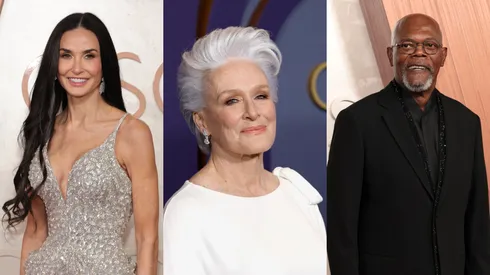
Entering the 97th Academy Awards, Demi Moore was considered the absolute “lock” for her fearless, career-best performance in The Substance. She had swept the Golden Globes and the SAG Awards, fitting the perfect “comeback” narrative that the Academy traditionally rewards. However, in a stunning late-night upset, the trophy went to Mikey Madison for Anora. While Madison’s work was widely praised, the industry was left in shock that Moore’s high-wire act of physical and emotional endurance was bypassed at the final hour.
Alfred Hitchcock for Best Director (Lifetime)
Perhaps the most famous “obvious” winner to never actually win, Alfred Hitchcock was nominated five times for Best Director without ever securing a competitive Oscar. From the suspense of Rear Window to the technical brilliance of Psycho, the “Master of Suspense” was consistently overlooked in favor of more traditional dramas. Although the Academy eventually granted him an honorary Irving G. Thalberg Award, the fact that the most influential director in history never won a standard directing statue remains the Academy’s most enduring embarrassment.
Angela Bassett for Best Supporting Actress (2023)
The 95th Oscars saw a massive outpouring of support for Angela Bassett’s powerful performance as Queen Ramonda in Black Panther: Wakanda Forever. After winning the Golden Globe and the Critics’ Choice Award, she seemed poised to become the first actor to win an Oscar for a Marvel Cinematic Universe role. In a major upset, Jamie Lee Curtis took the award for Everything Everywhere All at Once. The visible disappointment on Bassett’s face during the ceremony became a viral moment, sparking a national conversation about how the Academy rewards veteran legends.
Glenn Close for Best Actress (2019)
With seven previous nominations and no wins, Glenn Close entered the 2019 ceremony as the overwhelming favorite for The Wife. The evening was widely expected to be a coronation for her decades of service to the craft, especially after her wins at the Golden Globes and SAG. Instead, Olivia Colman won for The Favourite, a result so unexpected that even Colman herself apologized to Close during her acceptance speech. Close now holds the record for the most acting nominations without a win, a statistic that many feel is a major oversight.
Samuel L. Jackson for Best Supporting Actor (1995)
The character of Jules Winnfield in Pulp Fiction is one of the most quoted and iconic roles in movie history, largely due to Samuel L. Jackson’s electrifying delivery. While he was the critical favorite and the definitive standout of the year, the Academy gave the Supporting Actor trophy to Martin Landau for Ed Wood. While Landau’s performance was a lovely tribute to Bela Lugosi, Jackson’s work fundamentally changed the “cool” factor of 90s cinema, and his loss remains a point of contention for fans of the genre.
Lauren Bacall for Best Supporting Actress (1997)
Hollywood history was seemingly set for a sentimental victory when Lauren Bacall was nominated for The Mirror Has Two Faces. As a legend of the Golden Age, she had already won the Golden Globe and the SAG award, making her the “obvious” winner for an honorary-style victory. In one of the biggest shocks in Oscar history, Juliette Binoche won for The English Patient. Binoche herself was so surprised that she famously told the audience, “I didn’t prepare anything… I thought Lauren was going to win.”
Martin Scorsese for Best Director (1981)
Martin Scorsese’s Raging Bull is frequently cited as one of the greatest directorial achievements in the history of the medium, featuring innovative camerawork and visceral editing that redefined the sports biopic. Despite its immense critical standing, the Academy awarded Best Director to Robert Redford for his directorial debut, Ordinary People. While Redford’s film was a sensitive and successful drama, the decision to pass over Scorsese’s technical masterpiece is often seen as the moment the Academy established its long-running “neglect” of Scorsese’s genius.
Chadwick Boseman for Best Actor (2021)
The 93rd Academy Awards ended in total confusion when the producers moved the Best Actor category to the very end of the night, presumably to conclude with a posthumous tribute to Chadwick Boseman for Ma Rainey’s Black Bottom. Boseman had won nearly every precursor and his win felt inevitable. However, the name in the envelope was Anthony Hopkins for The Father. Hopkins, who wasn’t even present at the ceremony, later posted a gracious video from Wales, but the anticlimactic finish left a bittersweet taste for many viewers.
Amy Adams for Best Actress (2017)
In a snub that occurred before the ceremony even began, Amy Adams was famously omitted from the Best Actress nominations for her leading role in Arrival. Critics had hailed her subtle, emotional performance as the heart of the sci-fi epic, and she had secured every major precursor nomination. When the list was read and her name was missing, “Amy Adams” immediately trended worldwide. Her lack of a nomination that year—and her subsequent losses for other roles—has made her the poster child for modern Oscar oversights.